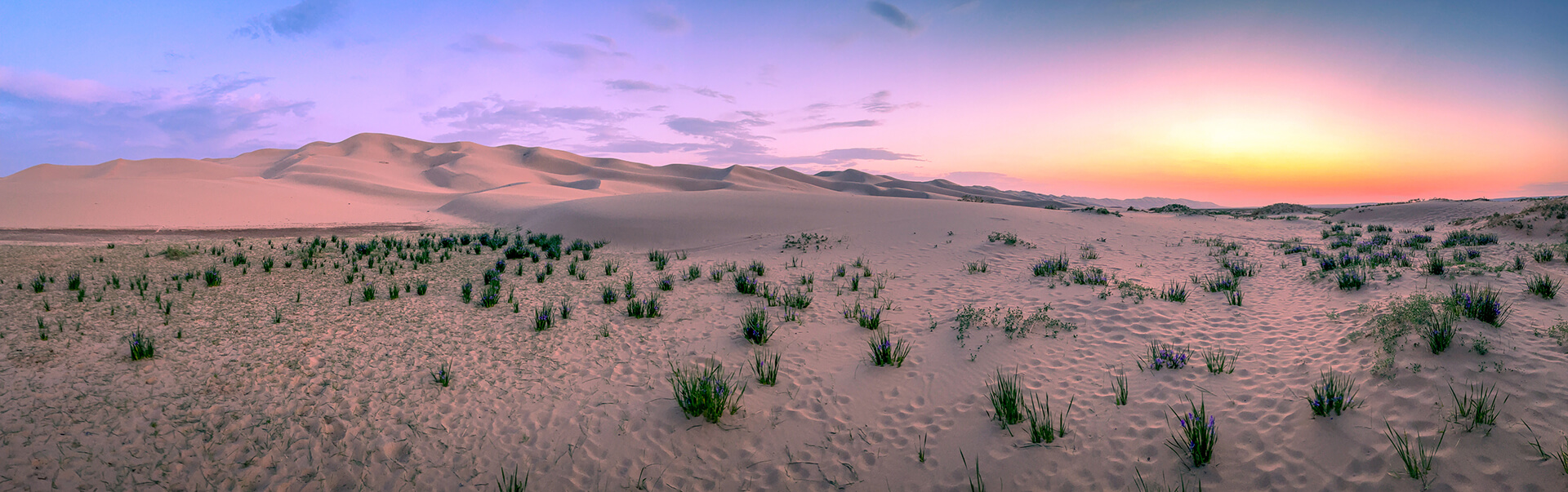

In the Gobi Desert, Mongolia, travel feels simple at first glance. Sand dunes, red cliffs, wide open space. It looks empty and easy. It is not.
The Gobi takes time and effort. Here, you will spend long hours on the road, often without basic facilities, and deal with heat, winds, and dust. But if you plan it right, it becomes one of the most rewarding trips you can take, especially if you value space, unique landscapes, and a slower pace of travel.
This guide covers what you can expect to see and experience in the Gobi Desert, how to get there, how much time you need, and whether such a trip fits your travel style.
Read in this article:
What is the Gobi Desert in Mongolia
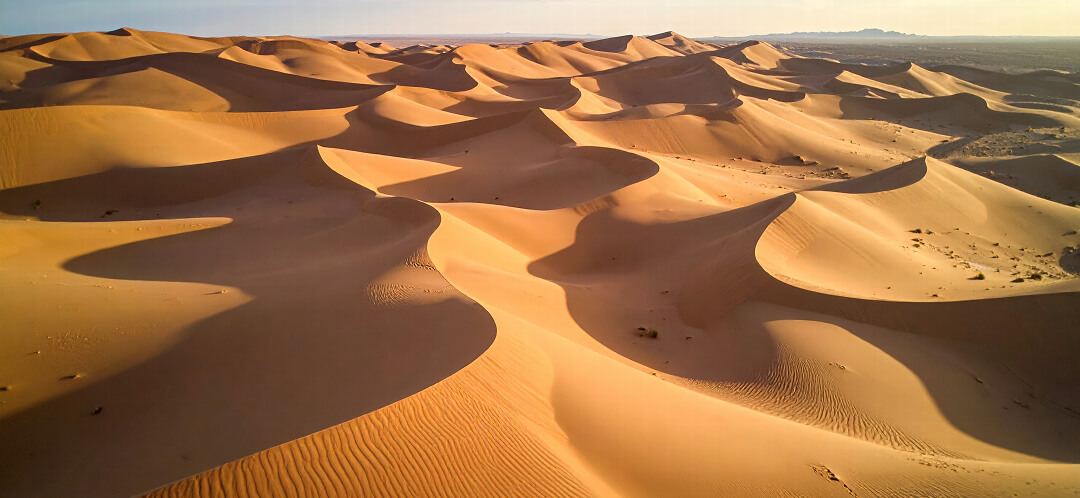
The Gobi Desert is not a sea of sand, and the word “Gobi” in Mongolian refers to a dry, open landscape. Thus, more than 30 different Gobi regions exist across the country. They stretch across southern Mongolia into northern China and cover about 808,800 square miles (1.3 million square km). In many parts, fewer than one person lives on a square mile, so you can travel for hours without seeing another camp or vehicle.
Most of what you see here is not dunes. Gobi is mostly long stretches of flat steppe, gravel plains, and exposed rock. Vegetation comes down to shrubs and dry grass. There are no towns, restaurants, or services. Just land.
In some areas, dunes rise out of flat ground. In others, cliffs form bands of red rock, or narrow valleys cut into colder, shaded terrain. These changes break the Gobi into distinct zones instead of one continuous landscape. Experiencing Gobi usually means moving between these different environments and spending long hours on the road.
Next in this series: Catatumbo Lightning Explained: Is It Dangerous and Why It Happens
Khongoryn Els
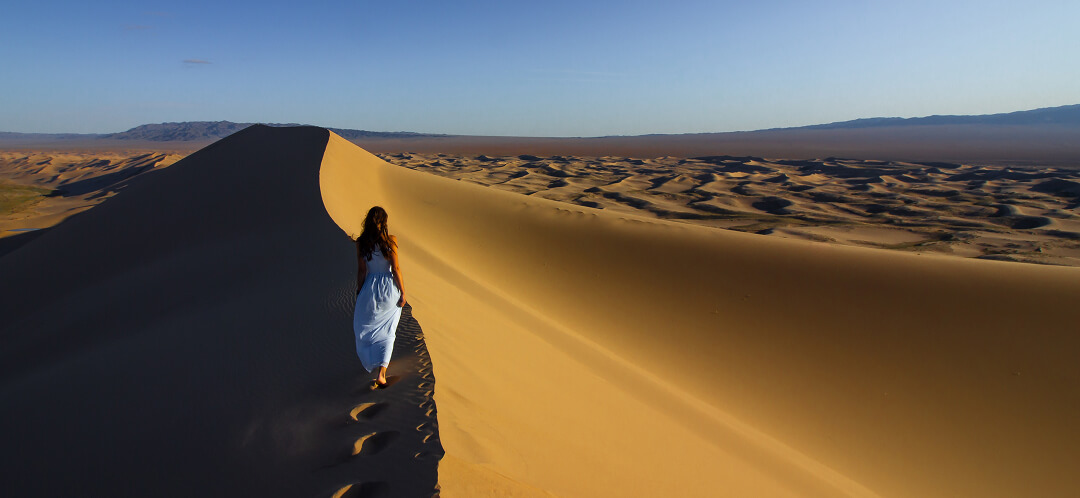
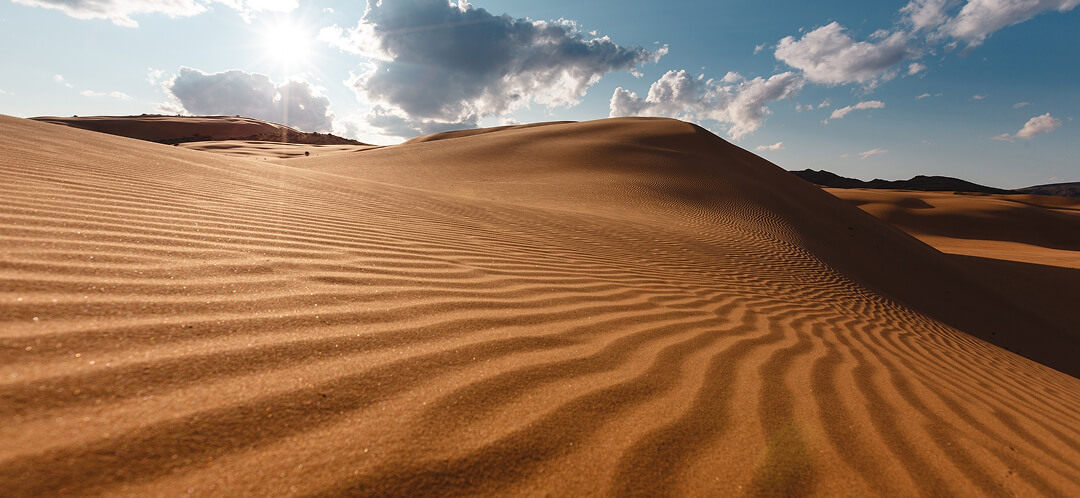
One of the most famous areas of the Gobi Desert is the singing dunes of Khongoryn Els. They stretch for more than 62 miles (100 km), with ridges rising up to 980 feet (300 meters). From a distance, they appear as a thin line along the horizon. As you get closer, that line breaks into long waves of sand that rise out of otherwise flat ground.
How are the dunes singing?
When wind moves across the slopes, dry sand begins to slide and vibrate, producing a low, steady sound that travels along the ridges. It is not usually loud. Most of the time, it sounds like a deep hum, similar to a distant engine or a low note held for a long time. In the right conditions, when the sand is very dry and starts to move in larger amounts, the sound can build into a deeper, more noticeable rumble. You hear it best when you stop moving and stand still near the top.
During your journey, you will most likely hear different stories about the origins of the sound from local people. Some say an ancient monastery lies buried under the dunes. Others speak of large creatures moving beneath the surface and shaping the sand over time.
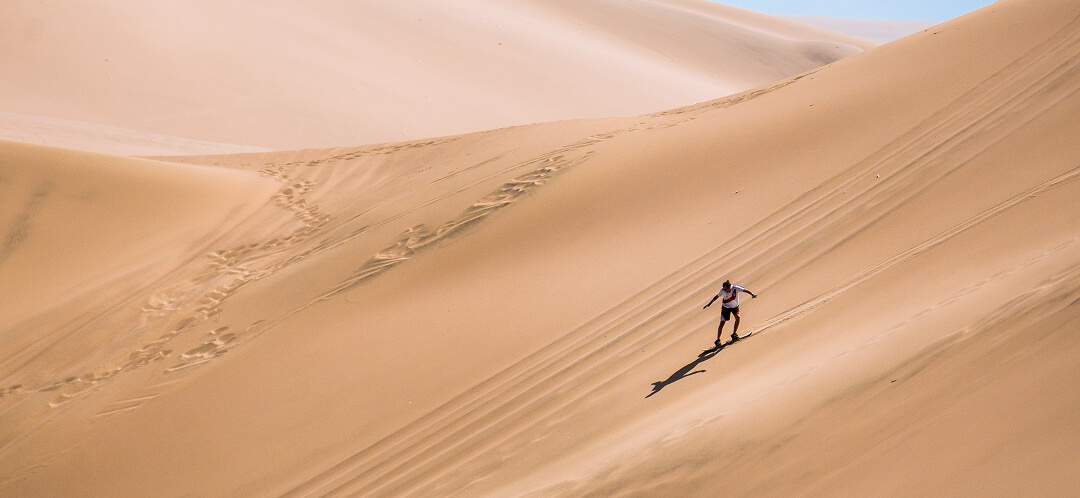
Most travelers come here to climb the dunes and usually stay in nearby ger camps run by local families or small operators. The best time to head out toward the dunes is late afternoon, when the light makes the ridges easier to see, and the sand is more stable underfoot. The climb is more challenging than it looks. Each step sinks slightly, which slows your pace, and distances look shorter than they really are. Expect to stop several times on the way up.
Next in this series: 10 Places and Natural Events Around the World That Seem Unreal
Things to do in the Gobi Desert

Tsagaan Suvarga (White Stupa)
Tsagaan Suvarga, known as the White Stupa, is a large rock formation that rises abruptly from the flat desert. It is known for its layered structure, with bands of white, orange, and rust visible across the cliffs.
Most visits focus on walking along the base and climbing to higher viewpoints. The area is easy to access by vehicle, and you do not need technical hiking skills, but the terrain can be uneven.
Timing matters here. The colors become more defined in the late afternoon as the light changes, which is when most travelers plan their visit. You can expect to spend about one to two hours exploring the area.
Camel trek in the Gobi Desert
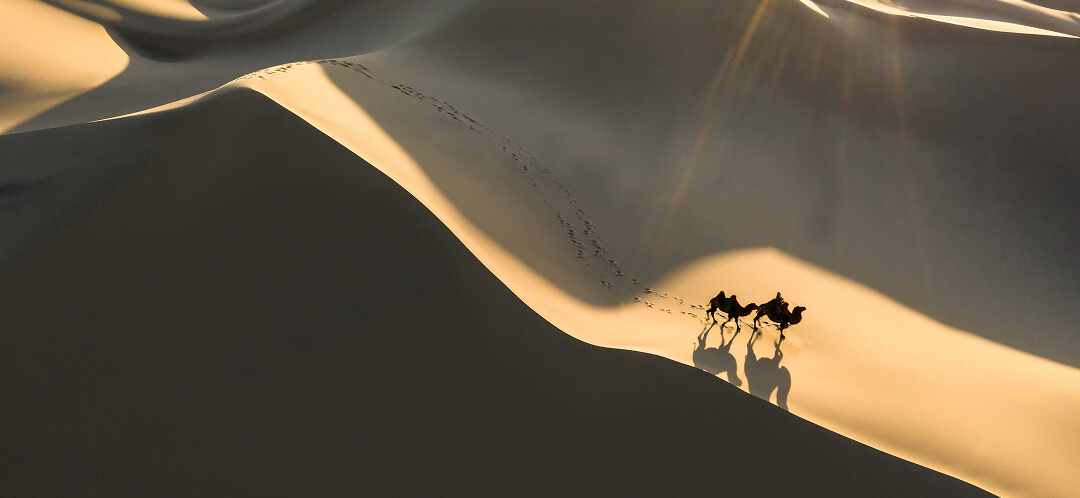
Camel trekking is one of the most common activities in the Gobi, and you can find it near most camps. Rides usually take place on Bactrian camels, which are adapted to the desert environment.
Most treks last between one and two hours and follow simple routes across dunes or open steppe. The pace is slow, and the ride is steady once you adjust to the movement.
Some rides include a stop at a herder’s ger, where you can step inside, sit down, and drink salted milk tea before heading back out.
Bayanzag (Flaming Cliffs)
Bayanzag is one of the most historically significant sites in the Gobi. The area is known for its red rock formations and for being the location where the first dinosaur eggs were discovered.
You can walk along marked paths and explore the base of the cliffs. The terrain is dry and fragile, so movement is limited to certain areas.
Most visits happen in the late afternoon, when the color of the cliffs becomes more pronounced. Plan to spend around 1 to 2 hours here.
You can still see fossils on the surface, but removing them is illegal. Guides may point out fragments during the visit.
Yolyn Am Canyon
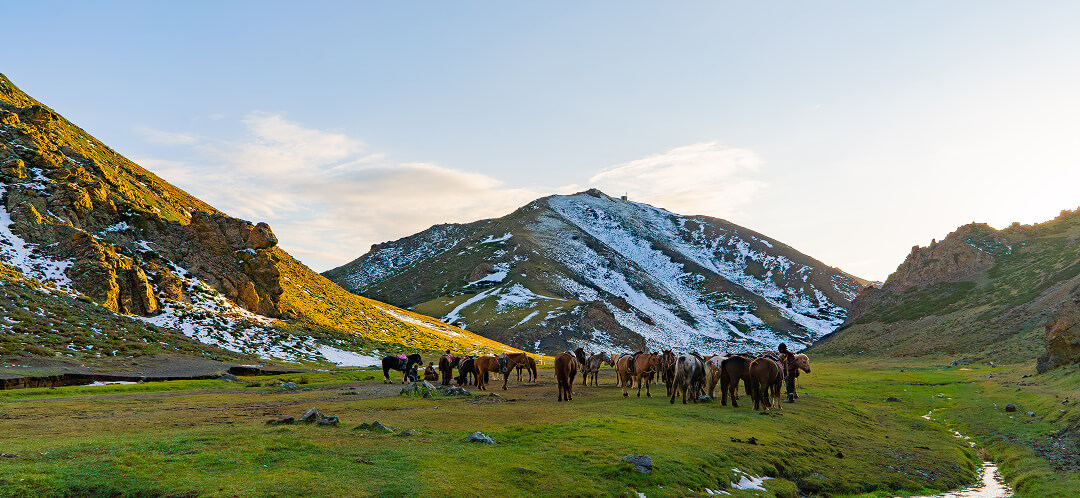
Yolyn Am is a narrow canyon that cuts through the desert landscape, offering a completely different environment from the surrounding areas. Temperatures are lower here, especially in shaded sections.
You can walk along the valley floor on a defined path that follows a small stream. The full canyon extends for several miles, but most visits cover a shorter section before turning back.
Depending on the season, you may still find ice in shaded areas, even during warmer months. The walk is relatively easy but requires a stable footing on uneven ground.
Wildlife exists in the area, but sightings are rare. The main draw is the contrast between the canyon and the open desert.
Next in this series: 10 Most Underrated Budget-Friendly Countries to Visit
Best time to visit the Gobi Desert
The best time to visit the Gobi Desert is in May and September. Days are warm without extreme heat, and winds tend to be less disruptive than in early spring or late autumn.
The Gobi is a cold desert with large temperature swings between seasons and between day and night. Summer brings the highest temperatures, often above 104°F (40°C). Midday heat makes travel and walking difficult, so most activities shift to early morning and late afternoon. This is also the busiest time, especially around the Naadam festival, when camps fill up, and domestic flights sell out.
Spring and autumn bring strong winds. The wind can make driving slower, reduce visibility, and limit the time you can spend outside. In winter, temperatures drop well below freezing, and most tour operators do not run standard Gobi itineraries because of the cold and road conditions.
Bring extra layers no matter when you go. Even on warm days, temperatures drop quickly after sunset, especially in open areas like the dunes.
Next in this series: Socotra Travel: Your Gateway to the World’s Most Alien Island
How to get to the Gobi Desert
Getting to the Gobi Desert from the US involves two main steps: flying to Ulaanbaatar, the capital of Mongolia, and then continuing south into the desert.
Flights from the US to Mongolia
Flights from the US to Ulaanbaatar require at least one layover. There are several carriers operating flights to Mongolia from different parts of the US:
- East Coast:
New York (JFK) → Istanbul (IST) → Ulaanbaatar (UBN) with Turkish Airlines - Midwest:
Chicago (ORD) → Istanbul (IST) → Ulaanbaatar (UBN) with Turkish Airlines - West Coast:
Los Angeles (LAX) → Seoul (ICN) → Ulaanbaatar (UBN) with Korean Air or Asiana Airlines
Total travel time usually falls between 20 and 24 hours, depending on the duration of your layover. Round-trip economy fares typically range from $900 to $1,400, rising to $1,900–$2,100 during the busy summer period. You will find the best deals if you plan your trip 3 to 4 months in advance.
You will arrive at Chinggis Khaan International Airport (UBN) in Ulaanbaatar. This is a small and easy-to-navigate airport that has a few cafes, currency exchange counters, and basic services, but not much beyond that. The UBN sits about 12.5 miles (20 km) from central Ulaanbaatar, and the drive into the city takes 30 to 45 minutes.
Ulaanbaatar to the Gobi Desert

From Ulaanbaatar, most travelers continue to the Gobi on a guided tour. Your guide usually meets you at the airport, takes you to your hotel, and helps you prepare for your journey south. This often includes a stop at a supermarket to pick up supplies.
Some tours include a domestic flight to Dalanzadgad (DLZ), the closest airport to the main Gobi destinations, which takes just over an hour. In some cases, the flight is included in the tour price, while in others, travelers have to pay for it separately.
Driving takes longer but allows for stops along the way. Overland itineraries often split the journey across two days, with a stop at Ongiin Khiid, the ruins of a former monastery set along a river in the middle of the desert. It gives you a place to rest and breaks up the long drive south.
Tip: When buying supplies for your trip, get at least 2 packs of wet wipes because of the limited shower availability in the desert.
Next in this series: Mendenhall Ice Caves: Alaska’s Surreal Frozen Wonder
Listen to the singing dunes with Ovago
Compare flights and pick what works for you and your budget
Gobi Desert itinerary: how many days you need
Gobi Desert tours range from short 4 to 5-day itineraries to longer trips of 10 days or more. The difference comes down to how many places you visit and how much time you spend both on the road and at each stop.
- Short tours of 4 to 5 days work well if you want to see the main sights and experience the desert without turning the trip into an endurance test. The trade-off is spending more time driving relative to time at each location. These trips usually fall in the range of about $1,200 to $1,600 per person, partly because they often include a flight or more comfortable transport to cover long distances in less time.
- Tours that last 7 to 8 days are the sweet spot. Such trips allow enough time to reach major sights like the Khongoryn Els sand dunes, Bayanzag flaming cliffs, and Yolyn Am gorge without excessive rushing. Prices for such tours typically range from $1,400 to $2,200.
- Longer tours of 10 days or more suit travelers who feel comfortable spending more time on the road and want a deeper, more immersive experience. These trips often start at about $1,800 and can reach $3,000 or more, depending on route and accommodation.
The desert is demanding, especially for first-time visitors. It is easy to get tempted by longer itineraries that include camel trekking, dune climbing, and other activities, but you still spend much of your time in harsh conditions. These include temperature swings, strong winds, dust, bumpy roads, and limited access to showers and power.
Before choosing a longer trip, we advise asking your tour operator what level of comfort to expect and making sure you are ready for it.
Next in this series: Red Crab Migration on a Budget: How to Experience “It’s Raining Crabs”
Mongolia desert camps
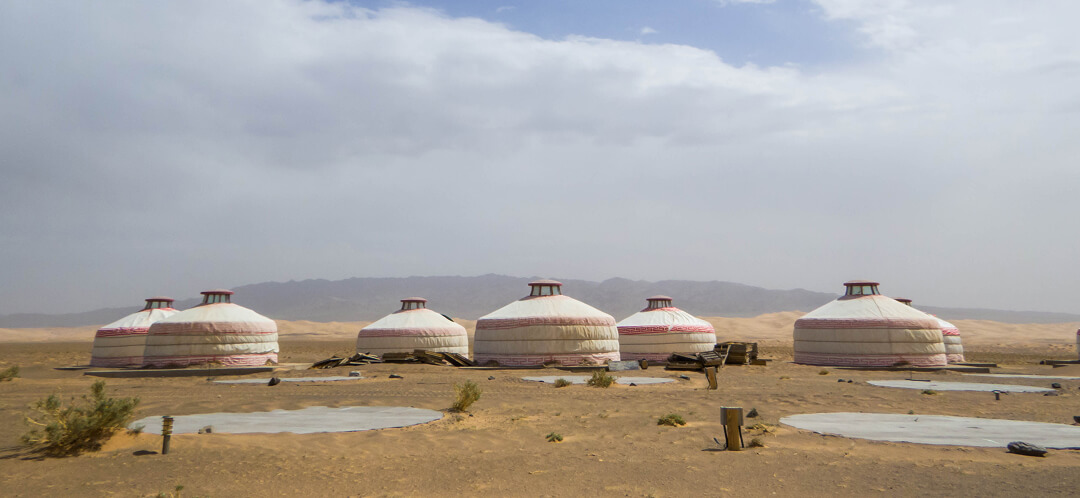
Most travelers stay in ger camps in the Gobi, and you usually do not need to book them yourself. If you travel with a guide, accommodation is included in the tour.
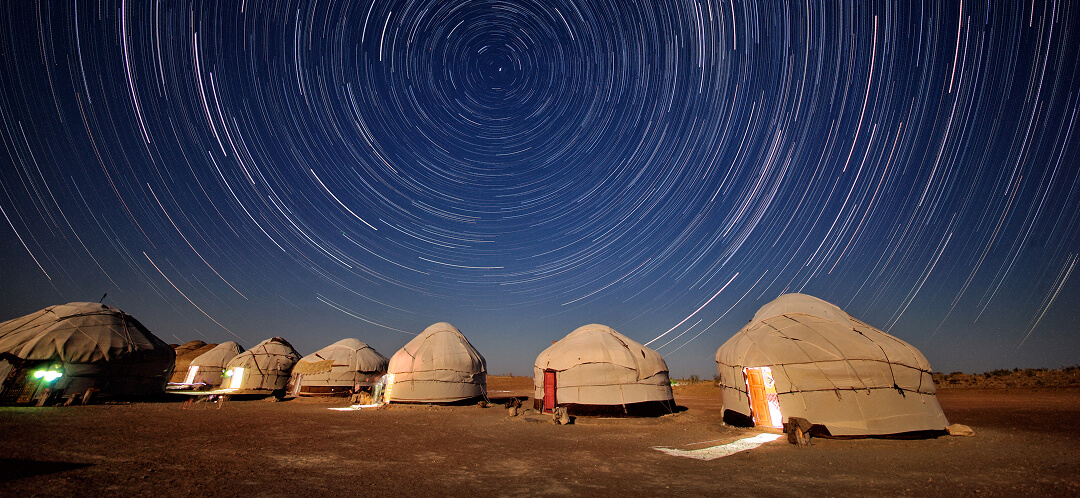
Each camp consists of round felt tents set on open ground (gers), often arranged around a central dining ger or a low main building. Inside your ger, you get two to four beds, a small table, and a stove or heater. Bathrooms are separate, with toilets and showers in shared buildings a short walk away.
Electricity comes from generators and runs only during set hours, usually in the evening. Shower availability depends on the camp. Some offer hot water for a limited time, others do not have it at all.
If you travel independently, you can book camps yourself, but there are only a limited number of options, and they require careful planning in both booking and logistics. Most standard camps cost about $40 to $70 per person per night, usually including meals. Mid-range camps fall between $60 and $120, with slightly better facilities. Higher-end properties like Three Camel Lodge start at roughly $250 per night and offer private bathrooms, more reliable electricity, and a higher level of comfort.
Next in this series: Bite Around the World: 10 Street Food Cities Worth Traveling For
Things to do in Ulaanbaatar
Ulaanbaatar is where your trip to the Gobi Desert begins, and you will likely spend a night there before heading into the Gobi. You can cover the main sites in a day without crossing long distances.
Start with Gandan Monastery. This is an active place of worship, not a museum, so you will see monks pray inside the temple. The main hall holds an 85-foot (26-meter) statue of Migjid Janraisig, a Buddhist figure of compassion.
From there, walk to Sukhbaatar Square. It sits at the center of the city and connects government buildings and museums. You can visit the National Museum of Mongolia nearby, which will give you useful context for what you will see later in the desert, especially regarding the nomadic culture.
Most hotels in Ulaanbaatar are in the city center. Mid-range options cost between $80 and $150 a night, while higher-end hotels like Shangri-La or Kempinski cost more, usually between $200 and $300. You can compare hotels based on your budget and preferences using our hotel finder, which will help you narrow down the suitable options.
Tip: Before you leave the city, get a local SIM card, withdraw enough cash, and check all of your other bookings. Once you head into the Gobi, the service becomes limited.
Is the Gobi Desert worth visiting?
Yes, but not for everyone.
The Gobi rewards patience. You do not come here for convenience or variety packed into a short time. You come for space, distance, and landscapes that change slowly as you move through them.
If you value that kind of travel, the Gobi is absolutely worth it. If you prefer faster trips with easier logistics, it will likely feel too demanding.