
What makes natural wonders look unreal? These unusual places aren’t shaped by just one force, but by several working together: chemistry, light, geology, and timing. Some real places that look like another planet appear only at certain moments. Others rely on visual illusions that make them seem completely different from what they really are. Add extreme environments like heat, dryness, or isolation, and the result is something truly unexpected.
Many of these strange natural phenomena are also constantly changing, which means what you see today may not look the same tomorrow. The good news is that you can visit them with the right timing and a bit of planning. Read on, choose your destination, and start mapping out a trip to places that genuinely look unreal.
Read in this article:
Types of unusual natural phenomena that look unreal
Not all unusual places are unreal for the same reason. Some play tricks on your eyes, some depend on rare timing, and others are shaped slowly by the Earth itself. Together, these natural wonders show just how many ways nature can surprise you.
Optical illusions in nature
Some places look unreal because your brain reads them the wrong way. Light, water, and perspective create scenes that seem impossible at first glance. Think of the underwater waterfall in Mauritius or the layered waters of Cenote Angelita. They are real, but they don’t look like it.
Rare natural phenomena
Other destinations depend on specific conditions. Timing is everything. Blue lava at Ijen appears only at night. The Black Sun in Denmark happens during migration seasons. These are natural phenomena examples you can’t see at any time, which makes them even more special.
Geological formations
Some landscapes look unreal simply because of how they were formed over time. Wind, minerals, and erosion shape places like Zhangjiajie’s towering pillars, Mono Lake’s tufa towers, or the dunes of the Gobi Desert. These geological wonders may be slow to form, but their impact is immediate.
Each of these types reveals a different side of nature, yet they remain very real and possible to visit.
Read also: Top Global Dark Tourism Destinations
10 unusual places you can visit around the world
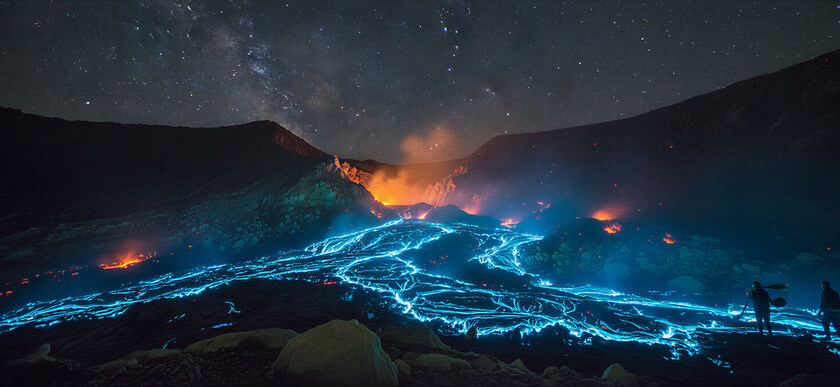
1. Blue Lava of Ijen Volcano, Indonesia
Standing on the slope in the dark, you watch the ground flicker with blue fire, quiet and almost hypnotic. The air is sharp, the silence broken only by footsteps and wind, and it feels like you’ve stepped into something not meant to be seen in daylight.
- Why it looks unreal: Electric-blue light moves across dark volcanic rock, creating a glow you would never expect from lava.
- What causes it: Burning sulfuric gases ignite as they escape the crater, producing blue flames rather than molten rock.
- Best time to visit: After dark, before sunrise, when the glow is clearly visible.
- How accessible it is: Moderate. Requires a night hike with a guide on uneven terrain.
- Travel tip: Bring a respirator or mask. Sulfur fumes can be intense near the crater.
Did you know? The crater lake at Ijen is one of the most acidic natural lakes on Earth, with a pH close to zero, similar to battery acid. Its striking turquoise color comes from dissolved sulfur and metals, and the water is so corrosive that direct contact can cause serious burns.
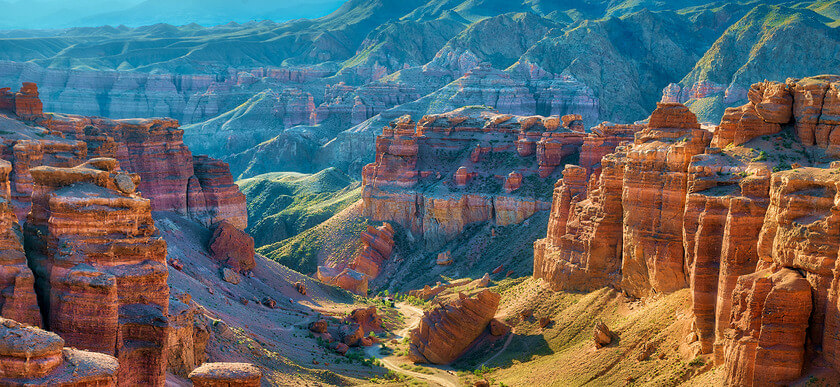
2. Charyn Canyon, Kazakhstan
Walking through the canyon, the walls rise so high and close that the outside world disappears. Every turn feels enclosed and quiet, with only the sound of your steps echoing between the rocks.
- What makes it unusual: Sharp rock towers rise like a natural city, with narrow corridors and dramatic vertical walls.
- What causes it: Millions of years of erosion carved sedimentary rock into layered formations.
- Best time to visit: Spring and early fall for milder temperatures.
- How accessible it is: Easy to moderate. Reachable by car from Almaty, with walking trails below.
- Travel tip: Go early or late in the day for softer light and fewer visitors.
Did you know? Some of Charyn Canyon’s rock formations are over 12 million years old, shaped slowly by wind, water, and temperature shifts. What you see today is just one stage in an ongoing process, as the canyon continues to change with every season.
3. Underwater Waterfall, Mauritius
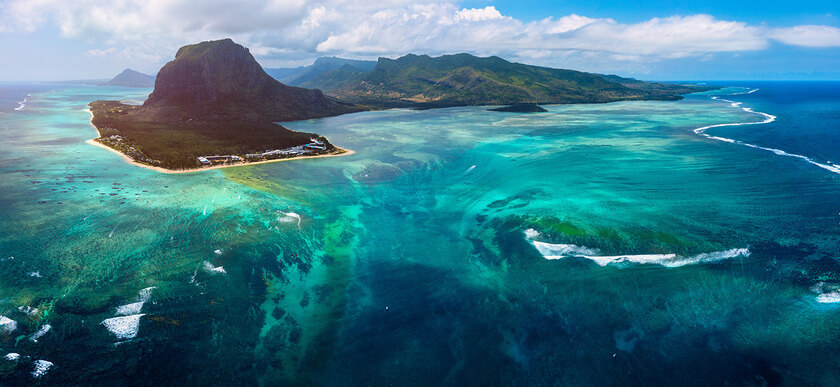
From the air, you look down and instinctively expect motion, as if the ocean is spilling away beneath you. The contrast between shallow turquoise and deep blue feels almost too sharp to be real.
- Why it looks unreal: From above, the ocean appears to drop off like a waterfall into deep space.
- What causes it: Sand and sediment slide along an underwater slope, creating an optical illusion through clear water.
- Best time to visit: Year-round, but best seen in calm weather with good visibility.
- How accessible it is: Easy. Viewable only from helicopter or seaplane.
- Travel tip: Book flights in the morning when water clarity is usually best.
Did you know? The underwater waterfall illusion is only visible from above because it relies on contrast and perspective. From ground level or at sea, the effect disappears completely. The shifting sand and depth changes blend into the surrounding water and look like a normal ocean floor.
Read also: Mauritius Travel Tips
4. Cenote Angelita, Mexico
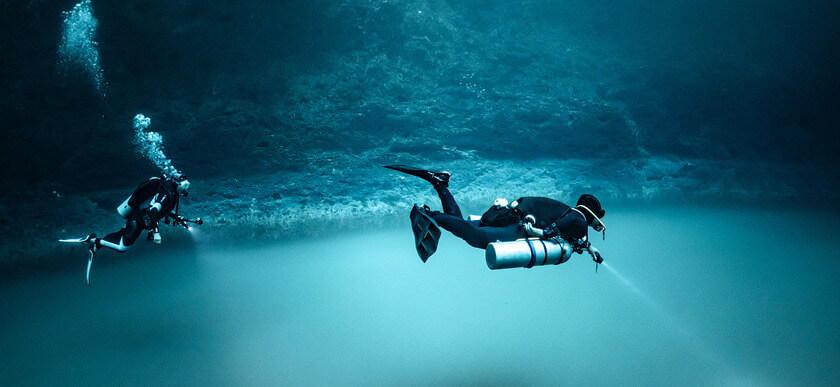
As you pass through the “cloud” inside Cenote Angelita, visibility drops for a moment before clearing again below. This creates the rare feeling of moving between two completely separate underwater worlds.
- What makes it unusual: A thick, cloud-like layer underwater looks like a river flowing inside the cenote.
- What causes it: A layer of hydrogen sulfide forms between fresh and salt water, creating a visible boundary.
- Best time to visit: Dry season (December to March) for clearer water conditions.
- How accessible it is: Moderate. Primarily a diving site with guided access.
- Travel tip: Even if you don’t dive, nearby cenotes offer easier ways to experience similar formations.
Did you know? The cloud-like layer in Cenote Angelita forms at around 100 feet below the surface. You won’t see its full effect unless you go deep enough. Above it, the water appears completely clear, hiding what looks like a separate world below.
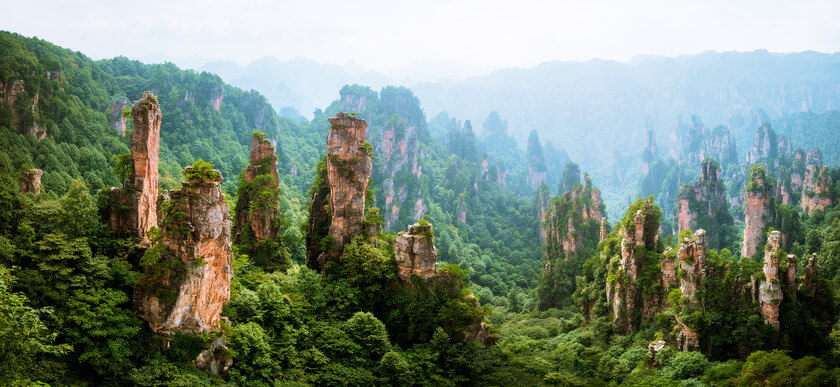
5. Zhangjiajie National Forest Park, China
From the viewpoints, the pillars seem to fade in and out of the clouds. You lose a sense of scale, unsure how far or high anything really is, as the landscape shifts with the moving mist.
- What you’ll notice first: Tall stone pillars rise through mist, often appearing to float above the forest.
- What causes it: Erosion and weathering shaped quartz sandstone into vertical columns over time.
- Best time to visit: Spring or fall, when mist enhances the visual effect.
- How accessible it is: Easy to moderate. Extensive park infrastructure with transport options.
- Travel tip: Visit after rain for the most dramatic cloud and fog conditions.
Did you know? The towering pillars of Zhangjiajie helped inspire the floating mountains in Avatar. Director James Cameron and his design team studied the park’s dramatic vertical landscapes. They were used as a visual reference when creating the world of Pandora, especially the iconic Hallelujah Mountains.
Read also: How to Visit China’s Avatar Mountains
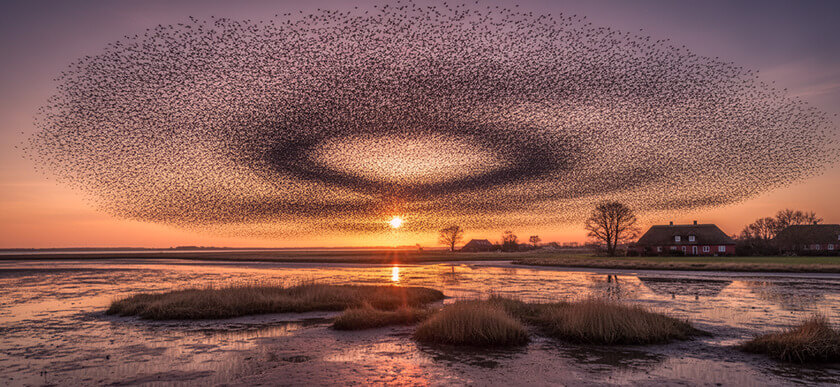
6. Black Sun Phenomenon, Denmark
You watch the sky change shape in real time, the movement so fluid it almost feels controlled. For a few moments, the light dims. Everything becomes quieter and more focused on the shifting patterns above.
- What makes it unusual: Huge flocks of birds move as one shifting shape, briefly darkening the sky.
- What causes it: Starlings gather in large numbers during migration, forming coordinated flight patterns.
- Best time to visit: Spring and autumn at sunset.
- How accessible it is: Easy. Reachable viewing areas across the Wadden Sea region.
- Travel tip: Join a local guide to find the best viewing spots on the day.
Did you know? The Black Sun phenomenon can involve hundreds of thousands of starlings moving as one coordinated mass. Their synchronized flight isn’t random. It’s a defense strategy, making it harder for predators to single out one bird from the group.
7. Lençóis Maranhenses, Brazil
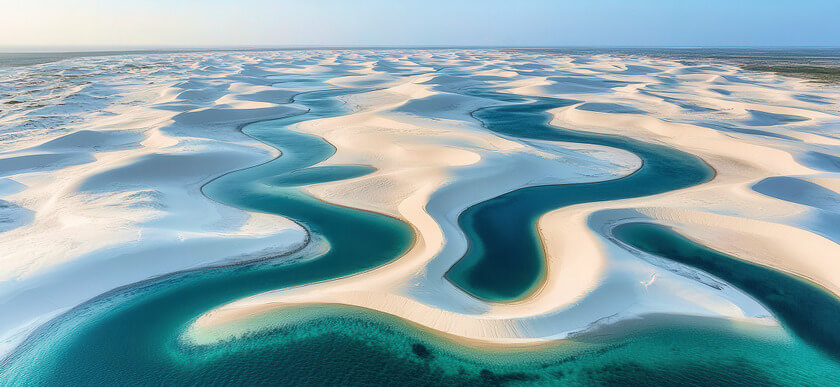
You walk over warm sand, then suddenly step into cool, clear water. The contrast repeats again and again, making it hard to believe both landscapes exist in the same place.
- What you’ll notice first: Bright lagoons appear between endless white dunes, creating a mix of desert and water.
- What causes it: Seasonal rains fill low points between dunes with freshwater.
- Best time to visit: June to September, when lagoons are full.
- How accessible it is: Moderate. Requires guided transport across sand terrain.
- Travel tip: Aim for sunset visits when colors and reflections are at their best.
Did you know? Despite its desert-like appearance, Lençóis Maranhenses receives up to 1,200 mm of rainfall each year. This seasonal rainwater collects between the dunes, creating thousands of temporary lagoons that can stretch for miles before gradually disappearing again.
Planning to visit Lençóis Maranhenses? You can explore great flight deals to Brazil with flexible options and better routing choices.
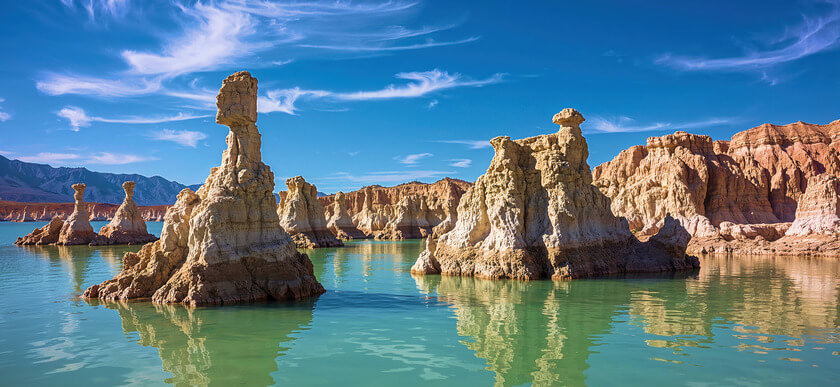
8. Mono Lake, California, the US
The lake feels quiet and still, with wide open space in every direction. The formations stand motionless, and the lack of movement makes the scene feel almost suspended in time.
- Why it looks surreal: Stone towers rise from still water, forming a stark and unusual shoreline.
- What causes it: Mineral-rich water interacts with underwater springs, building limestone formations over time.
- Best time to visit: Spring and fall for comfortable weather and fewer crowds.
- How accessible it is: Easy. Short walks from parking areas to key viewpoints.
- Travel tip: Visit at sunrise for calm water and clearer reflections.
Did you know?: Mono Lake is estimated to be over one million years old, making it one of the oldest lakes in North America. Unlike most lakes, it has no natural outlet. Minerals have built up over time, giving the water its high salinity and helping form the lake’s distinctive tufa towers.
9. Khongoryn Els, Gobi Desert, Mongolia
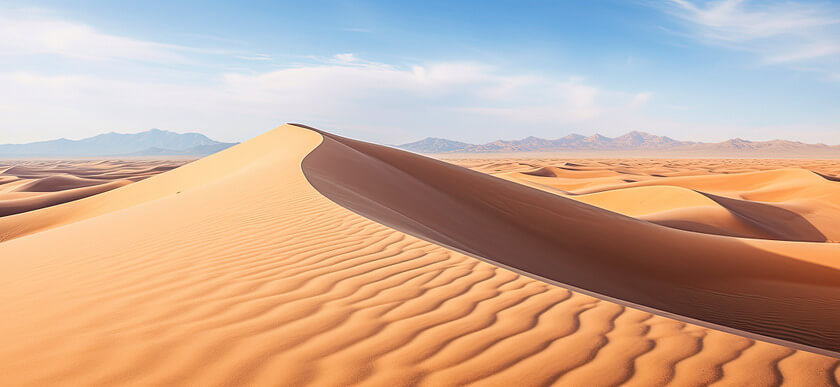
Khongoryn Els is often called the “singing dunes” because the sand can produce a deep, vibrating hum when it shifts. Climbing the dunes takes effort. At the top, the landscape opens into endless waves of sand. When the wind picks up, you can hear a deep, subtle sound that travels across the surface.
- Why it looks fascinating: Massive dunes stretch like a golden wall across the desert, shifting with the wind.
- What causes the sound: It happens when dry, uniform grains slide together in large volumes, creating a low-frequency vibration that can carry across the desert.
- Best time to visit: Late spring or early autumn to avoid extreme temperatures.
- How accessible it is: Challenging. Remote location requiring off-road travel.
- Travel tip: Stay overnight in a local ger camp to experience the dunes at different times of day.
Did you know? The humming sound of Khongoryn Els can travel for miles across the open desert. In the stillness, you may hear a low, distant vibration before you even see the dunes, as the shifting sand carries the sound far beyond the slopes themselves.
10. Fly Geyser, Nevada, the US
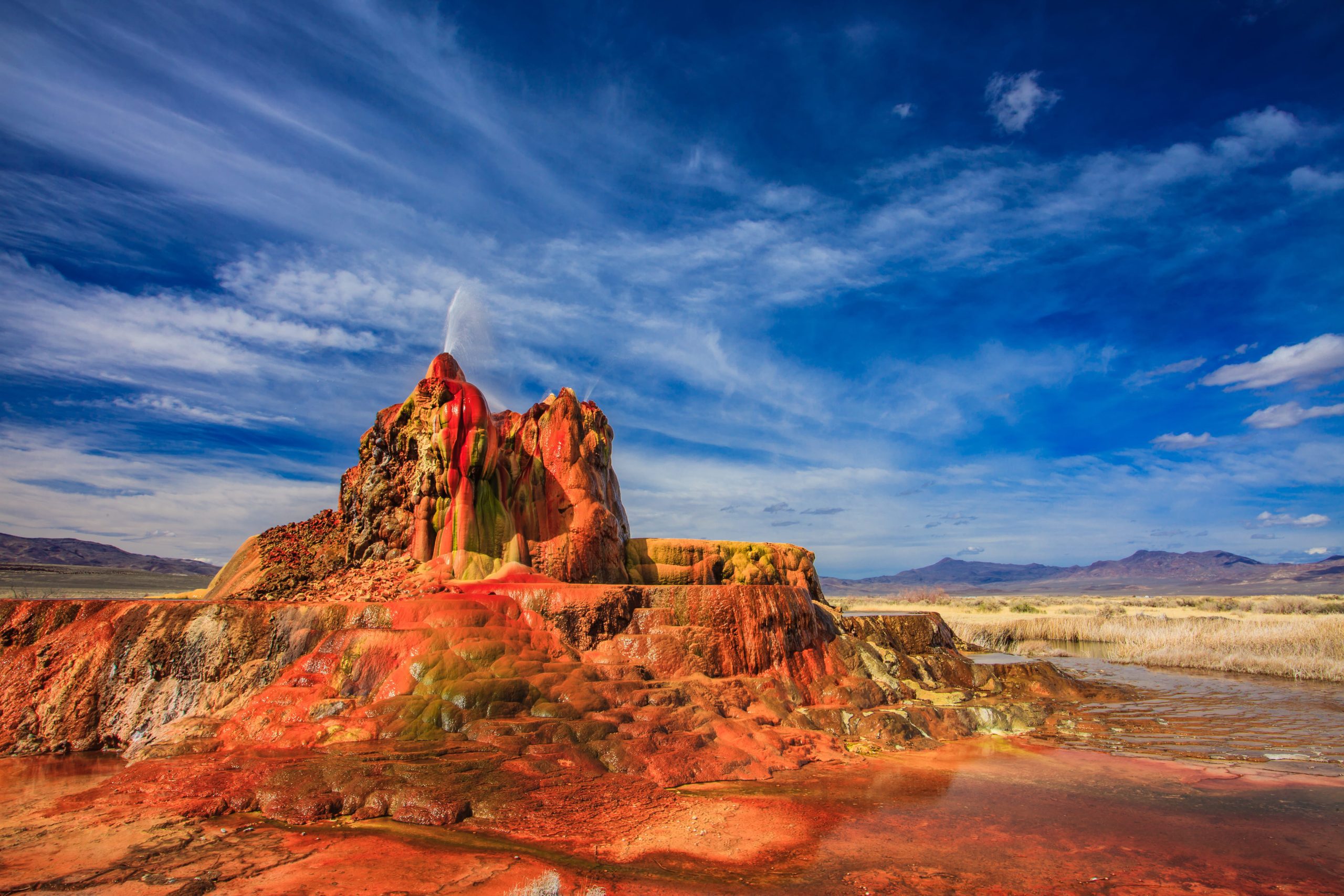
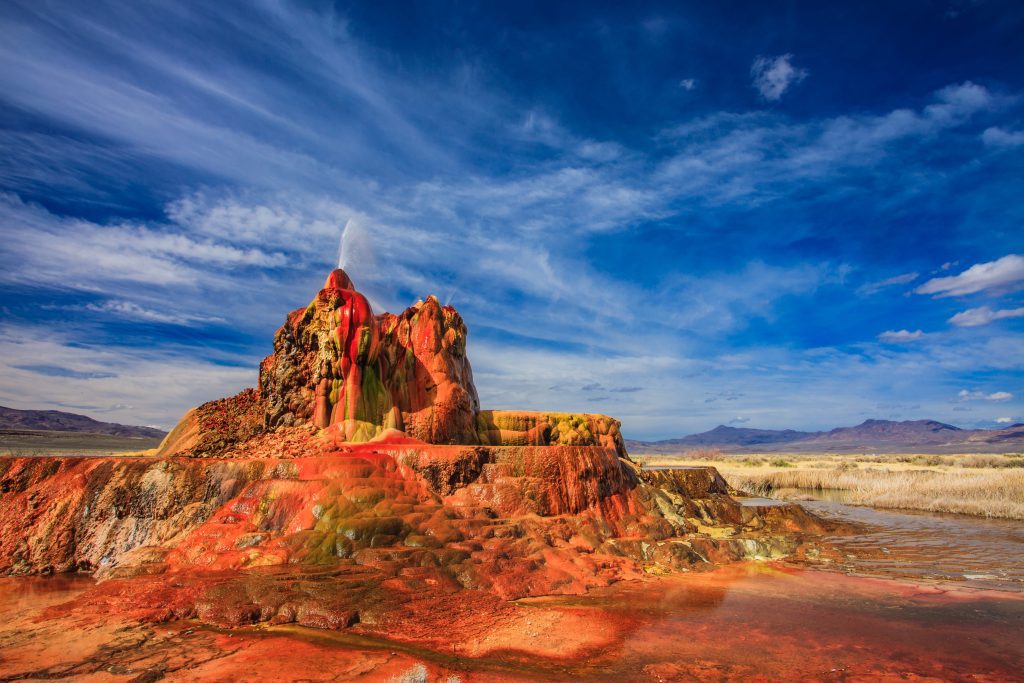
Steam rises continuously, and the colors appear more vivid the closer you look. The contrast between the geyser and the flat desert around it makes the scene feel unexpected and slightly out of place.
- Why it looks unrealistically: Bright colors cover a growing mound that constantly releases water and steam.
- What causes it: Mineral deposits and heat-loving algae build up around geothermal vents.
- Best time to visit: Year-round, with morning light offering better contrast.
- How accessible it is: Moderate. Access is limited to guided tours on private land.
- Travel tip: Bring a camera with a zoom lens to capture details without getting too close.
Did you know? Fly Geyser wasn’t formed naturally. It appeared by accident in 1964 after a geothermal drilling project punctured an underground water source. Since then, mineral deposits have continued to build up, slowly changing its shape and colors year after year.
Where to see unusual places that look unreal
| Place | Type | Best time | Difficulty |
| Blue Lava of Ijen, Indonesia | Rare natural phenomenon (volcanic) | Night, year-round | Moderate |
| Charyn Canyon, Kazakhstan | Geological formation | Spring, early fall | Easy–Moderate |
| Underwater Waterfall, Mauritius | Optical illusion | Year-round (calm weather) | Easy |
| Cenote Angelita, Mexico | Optical illusion / natural phenomenon | December–March | Moderate |
| Zhangjiajie, China | Geological formation | Spring, fall (misty days) | Easy–Moderate |
| Black Sun, Denmark | Rare natural phenomenon (wildlife) | Spring, autumn | Easy |
| Lençóis Maranhenses, Brazil | Seasonal natural phenomenon | June–September | Moderate |
| Mono Lake, the US | Geological formation | Spring, fall | Easy |
| Khongoryn Els, Mongolia | Geological formation (desert dunes) | Late spring, early autumn | Challenging |
| Fly Geyser, the US | Geothermal formation | Year-round | Moderate |
On mobile, scroll sideways to see all details.
Fly to Fly Geyser and other out-of-this-world destinations with Ovago.
We offer great flight deals, 24/7 human support, and flexible payment options.
When to visit strange natural phenomena
The best time to see natural phenomena is rarely about picking a single “perfect” month. It’s about understanding what conditions make each place look unreal and planning around them.
Some destinations depend on light. Early mornings, sunsets, or nighttime can completely change how a place looks, from glowing colors to dramatic shadows. Others rely on seasonal cycles, where rain, migration, or temperature shifts bring the phenomenon to life for a limited window each year.
Weather also plays a bigger role than most travelers expect. Clear skies, calm water, or even mist can define the entire experience. In some cases, what seems like “bad weather” actually creates the most striking visuals.
A good approach is to plan your trip around three factors:
- Timing trigger – what needs to happen for the effect to appear
- Visibility conditions – light, weather, or clarity
- Stability window – how long the phenomenon typically lasts
When you align these elements, you don’t just visit unusual places, you experience them at their most vivid.
Plan your trip: how to reach unusual places without overpaying
Traveling to unusual places often sounds complicated, but the challenge is rarely the destination itself. It’s how you get there. With the right approach, even remote natural wonders become surprisingly manageable.
- Think in routes, not destinations: Many of these places are not final stops but segments of a journey. For example, reaching Lençóis Maranhenses means flying into São Luís first, while Ijen Volcano is easiest via Bali or Surabaya. Instead of searching one route, break your trip into parts and combine them.
- Use flexible entry points: Flying directly is not always the smartest option. Nearby hubs often offer better prices and more availability. A flight to Cancun, for instance, opens access to multiple cenotes, not just one. The same applies to Reno for Mono Lake and Fly Geyser.
- Time your booking, not just your visit: You already know when to visit these places. The next step is knowing when to book. Flights to remote or seasonal destinations tend to rise quickly once demand builds. Booking earlier for places like Mongolia or Brazil can make a noticeable difference in price.
- Combine experiences in one region: Instead of planning one “unreal” stop, group a few together. Southeast Asia, for example, can combine volcanic landscapes with coastal phenomena. The US West Coast connects Mono Lake with desert and geothermal sites. This reduces overall travel costs and maximizes the trip.
- Plan for logistics, not just flights: Remote locations often require transfers, guided access, permits, or visas. This is where many trips become stressful or overpriced if planned last minute. Knowing the full route in advance helps avoid unnecessary costs on the ground.
- Let experts simplify complex routes: This is where Ovago becomes especially useful. Instead of searching endlessly across platforms, you get access to flight deals that already factor in route complexity, flexible options, and combinations that are hard to build manually. Whether it’s reaching the Gobi Desert or coordinating flights to Brazil’s northern coast, our expert support helps you avoid overpaying and saves time.
Exploring natural wonders that look unreal does not require extreme planning, but it does reward a smarter approach. With the right routes, timing, and support, you can visit places that feel distant without making the journey complicated.