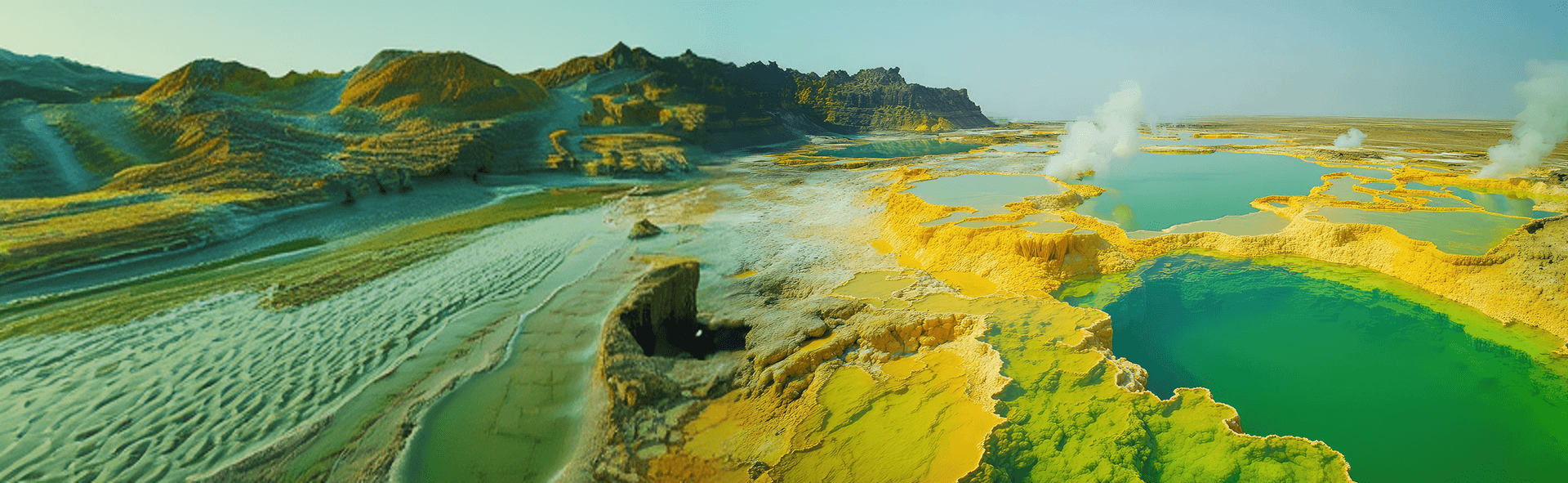

The Danakil Depression in Ethiopia is one of the hottest places on Earth. It is known for its extreme temperatures, hydrothermal activity, and volcanic landscape. The area’s intense heat, averaging above 116°F (47°C) in peak months, makes it one of the world’s most extreme environments. With no hotels or paved roads, this destination requires careful planning and close attention to local regulations.
Access to the Danakil Depression is restricted, and people are not allowed to travel there independently due to security concerns and the harsh terrain. If you want to visit this place, you must join a guided tour with armed escorts and travel in 4×4 convoys.
This guide explains how to reach the Danakil Depression and why visiting requires organized tours. It also covers key safety considerations, travel logistics, and typical costs you should expect. Explore more unusual places to add to your bucket list.
Read in this article:
Where is the Danakil Depression in Ethiopia?
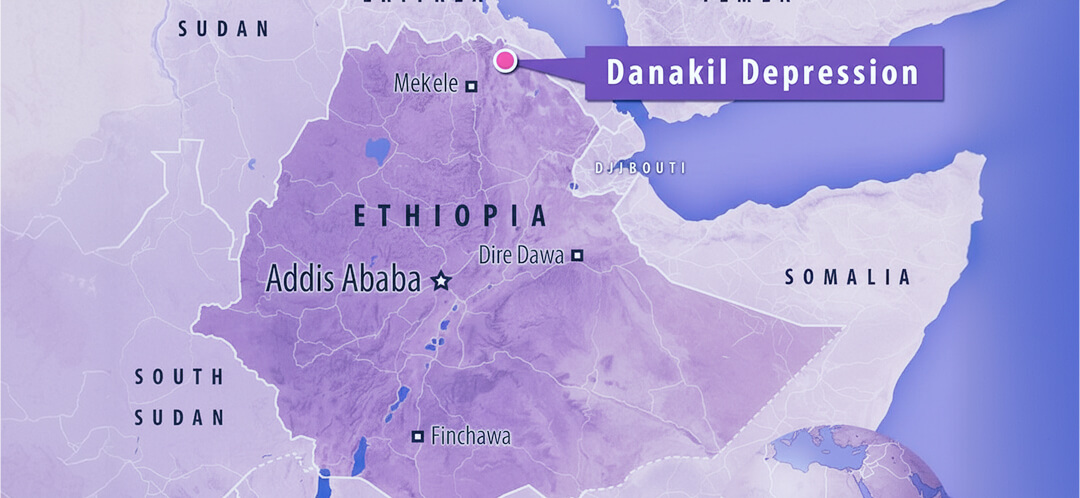
The Danakil Depression is located in the Afar region of northeastern Ethiopia, near the Eritrea border. It lies within the Great Rift Valley, a tectonically active region about 370 miles (600 km) from Addis Ababa. The Danakil basin drops below sea level, forming one of the lowest land areas in Africa.
Due to its remoteness, there are no direct roads or highways connecting the depression to major cities. Visitors rely on small regional airports, long overland drives, and off-road 4×4 tracks. Extreme heat, limited infrastructure, and security regulations make travel there challenging.
The Danakil Depression sits at the meeting point of three tectonic plates: the African, Arabian, and Somali plates. Scientists call this location the Afar Triple Junction. The crust slowly pulls apart here, which explains the region’s volcanoes, geothermal pools, and constant ground fractures.
Next in this series: Catatumbo Lightning Explained: Is It Dangerous and Why It Happens
Why is the Danakil Depression called the hottest place on Earth?
The Danakil Depression ranks among the hottest places on Earth based on its extreme year-round temperatures. Its average annual temperature is 97°F (36°C), while peak daytime temperatures regularly exceed 116°F (47°C). This heat is fueled by the region’s volcanic rift system and ongoing geothermal activity.
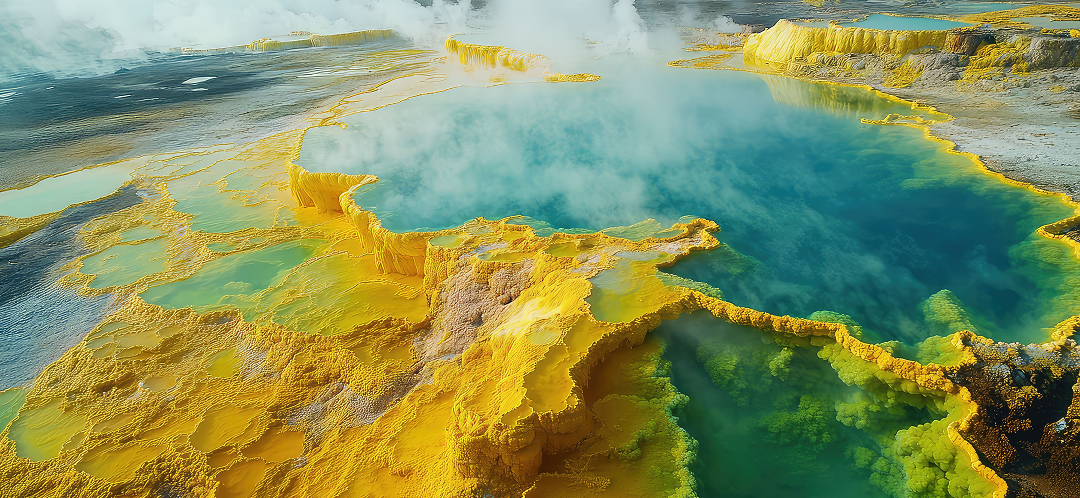
The landscape is dotted with sulfur fields, hydrothermal springs, and acid pools. One of the most famous sites here is Dallol, a hydrothermal area known for its brightly colored mineral formations. There, you can see vivid pools in neon shades of orange, red, lime, and white bubbles with mineral-rich water. This creates an alien-like atmosphere where toxic gases mix with colorful mineral deposits.
The bright colors at Dallol come from mineral reactions in hydrothermal pools and salt deposits. Iron creates orange tones, sulfur produces yellows, and salt crystals form white crusts. These colors form through chemical reactions between heat, minerals, and acidic water, not from plants or algae.
Next in this series: 10 Places and Natural Events Around the World That Seem Unreal
Do you need a tour to visit the Danakil Depression?
Independent travel to the Danakil Depression is not permitted. Government regulations in the Afar region require visitors to join organized tours with armed escorts for safety. Local Afar authorities enforce these rules because the area is remote, temperatures are extreme, and parts of the region lie close to the Eritrea border, where security conditions can be unstable.
The terrain is rough and requires a mandatory 4×4 convoy system to safely navigate through volcanic fields and harsh desert conditions.
These safety measures and logistical complexities make tours not just recommended, but necessary for exploring this remote and extreme part of Ethiopia.
Tip: Bring electrolyte tablets or rehydration salts when visiting the Danakil Depression. The heat drains fluids faster than most travelers expect. Local guides often recommend drinking small amounts of water frequently rather than waiting until you feel thirsty.
Next in this series: Nazaré Giant Waves: Watching the Atlantic Breathe
How to get to the Danakil Depression
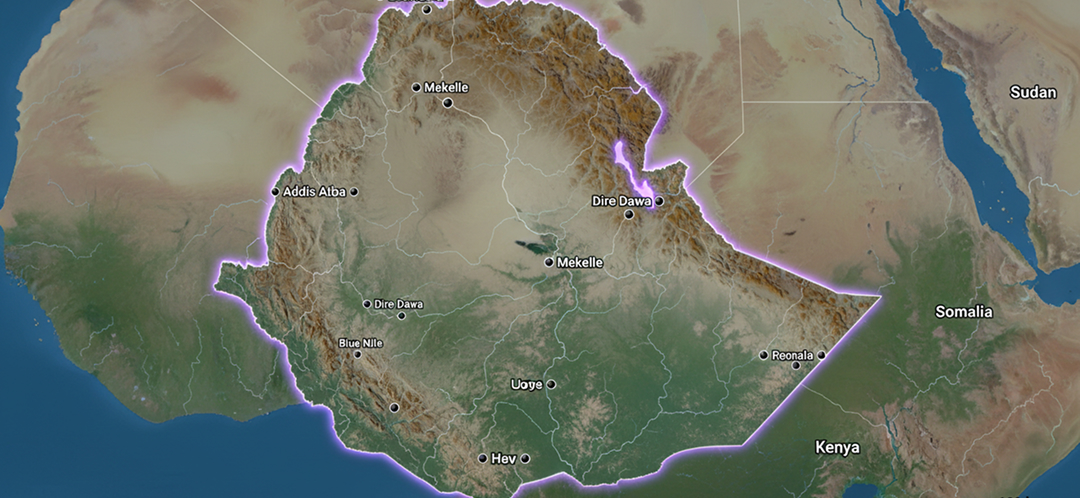
Your journey to the Danakil Depression begins at Addis Ababa Bole International Airport (ADD), Ethiopia’s main international hub. Travelers from the United States usually reach Addis Ababa through major connections via Doha (DOH), Istanbul (IST), or Frankfurt (FRA).
From Addis Ababa, most visitors take a domestic flight to Semera Airport (SZE), located about 200 miles (320 km) from the Danakil Depression. Ethiopian Airlines operates this route, and the flight takes about 1 hour and 30 minutes. Semera serves as the nearest functional access point for tours entering the Danakil Depression.
Alternatively, some expeditions depart from Mekelle in northern Ethiopia if the route is operational. The overland drive from Mekelle to the Danakil region usually takes 6 to 8 hours, depending on road conditions and local security conditions.
After arriving in Semera, you will join a 4×4 convoy organized by tour operators. The drive into the Danakil Depression typically takes 3 to 5 hours, depending on the sites included in the tour itinerary.
Find affordable flights to Africa
Compare routes and book confidently with Ovago
Next in this series: Socotra Travel: Your Gateway to the World’s Most Alien Island
Best time to visit the Danakil Depression
The Danakil Depression stays hot year-round, but temperatures and travel conditions still vary by season, which doesn’t follow the usual seasonal patterns most people are used to. Choosing the right time to visit can make a significant difference for both safety and comfort.
Winter: November to February
Winter offers the most manageable conditions in the Danakil Depression. Daytime temperatures usually range from 97°F to 105°F (36°C to 40.5°C), which is hot but more tolerable than in other months.
What to expect:
- Most reliable tour departures
- More comfortable night temperatures for camping
- Easier logistics and safer field conditions
Spring: March to April
Temperatures begin climbing quickly during spring. Daytime heat often reaches 105°F–113°F (40.5°C–45°C), which makes physical activity more demanding.
What to expect:
- Fewer crowds than in winter
- Cooler temperatures in the early morning and evening
- Tours may adjust schedules to avoid midday heat
Summer: May to September
Summer brings the most extreme conditions. Temperatures regularly exceed 116°F (47°C), and many operators reduce or pause tours during this period.
What to expect:
- Highest heat-stress risk
- Very few travelers
- Harsh conditions for vehicles and equipment
Autumn: October
October acts as a transition period. Temperatures remain high at 107°F (42°C), but tour activity is starting to increase again.
What to expect:
- Lower visitor numbers
- The heat still requires careful planning
- Access to roads can be rough after seasonal changes
| Season | Weather | Crowd level | Best for |
|---|---|---|---|
| Winter (Nov–Feb) | Milder heat, daytime 97°F–105°F (36°C–40.5°C) | Moderate | Travelers who like manageable weather conditions |
| Spring (Mar–Apr) | Rising heat, 105°F-113°F (40.5°C–45°C) | Lower | Travelers who prefer small crowds and can handle hotter days |
| Summer (May–Sep) | Extreme heat, often >116°F (>47°C) | Very low | Travelers with a high heat tolerance |
| Autumn (Oct) | Transitional heat, 116°F (47°C) | Low | Travelers who can handle heat well, but prefer not to risk |
Quick reminder:
The least crowded months are also the hottest. Summer has fewer visitors largely because conditions become dangerous. Most tour operators recommend November through February, when temperatures and logistics are more manageable.
Planning your visit within this window helps reduce heat exposure and makes multi-day expeditions easier to handle.
Next in this series: Mendenhall Ice Caves: Alaska’s Surreal Frozen Wonder
How many days do you need in the Danakil Depression?
Most travelers spend 2 to 4 days in the Danakil Depression. The region covers a vast area, and key sites are far apart from each other. Rough roads and extreme heat slow travel, so tour operators build itineraries that balance long drives with short explorations.
2-day express tour
A 2-day tour gives you a quick introduction to the region’s main landscapes.
Typical schedule
- Day 1: Fly to Semera, then drive by 4×4 convoy into the desert. Tours usually stop at salt flats and sometimes the Dallol hydrothermal area.
- Day 2: Visit Lake Asale and nearby sites, then return to Semera for your flight.
This itinerary moves quickly. You will start early, spend many hours driving, and have limited time at each stop. It works best for travelers who want to see the Danakil Depression without trekking to Erta Ale.
3-day standard tour (most common)
Most visitors choose the 3-day itinerary because it covers the region’s key highlights.
Typical schedule
- Day 1: Drive from Semera to desert camps near Hamed Ela or Dodom, crossing salt flats along the way.
- Day 2: Visit the colorful Dallol area, then continue to Erta Ale volcano. Many groups hike to the crater in the evening and camp nearby.
- Day 3: Drive back across desert roads to Semera.
This itinerary includes both Dallol and Erta Ale and gives you a fuller view of the region while keeping the schedule manageable.
4-day extended expedition
A 4-day tour gives you more time at each site and reduces daily driving pressure.
Typical schedule
- Day 1: Enter the depression and stop at geological points along the way.
- Day 2: Spend more time around Erta Ale, viewing the volcano at sunset and sunrise.
- Day 3: Explore Lake Asale salt flats and nearby desert areas.
- Day 4: Return to Semera.
This option suits travelers who prefer a slower pace, longer exploration stops, and more time for photography.
Physical demands and travel distances
Every Danakil Depression tour requires stamina. You should expect:
- Long drives on rough desert tracks, often several hours between stops
- Extreme heat, which makes even short walks feel harder
- Short but demanding hikes, especially the climb to Erta Ale’s crater rim.
Tip: Pack closed shoes with thick soles rather than sandals. Sharp salt crystals and volcanic rocks can quickly damage thin footwear during short walks around Dallol or Erta Ale.
Next in this series: Red Crab Migration on a Budget: How to Experience “It’s Raining Crabs”
What you actually see on a Danakil Depression tour
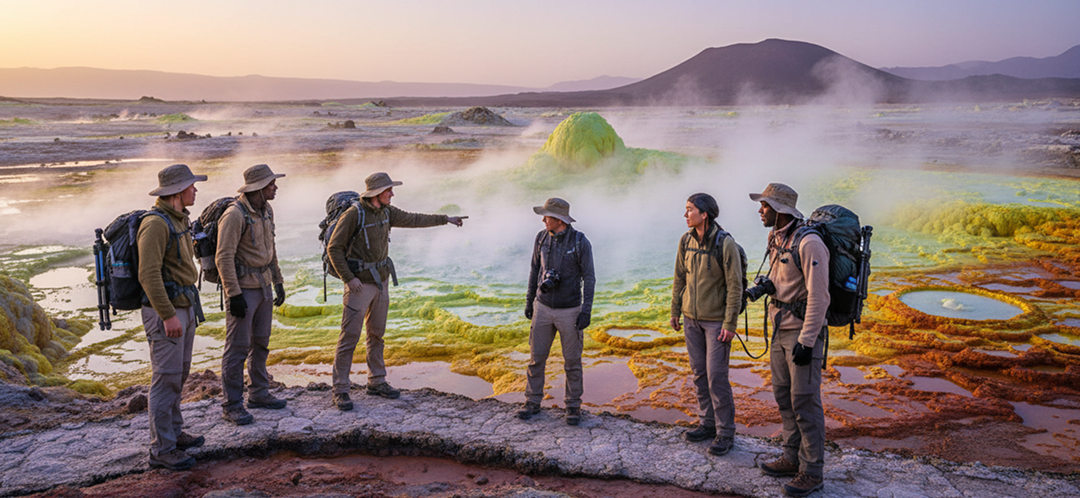
Tours through the Danakil Depression reveal landscapes shaped by heat, salt, and volcanic activity. Conditions remain harsh. Extreme heat, unstable ground, and volcanic gases require your constant awareness. Guides mark safe paths and lead every stop across fragile terrain.
Dallol sulfur springs
The Dallol sulfur springs create one of the most unusual landscapes in the Danakil Depression. Mineral-rich pools bubble in bright yellow, green, and orange tones. Hydrothermal vents release steam and gases from deep within the Earth.
- Expect short walks over uneven, cracked ground.
- Your guide will mark safe paths away from fragile crust.
- Take a bandana or mask with you in case the sulfur fumes are strong.
Minerals create the vivid colors you see across the ground. The terrain often looks painted, but it is natural chemical reactions that produce every shade.
Erta Ale volcano
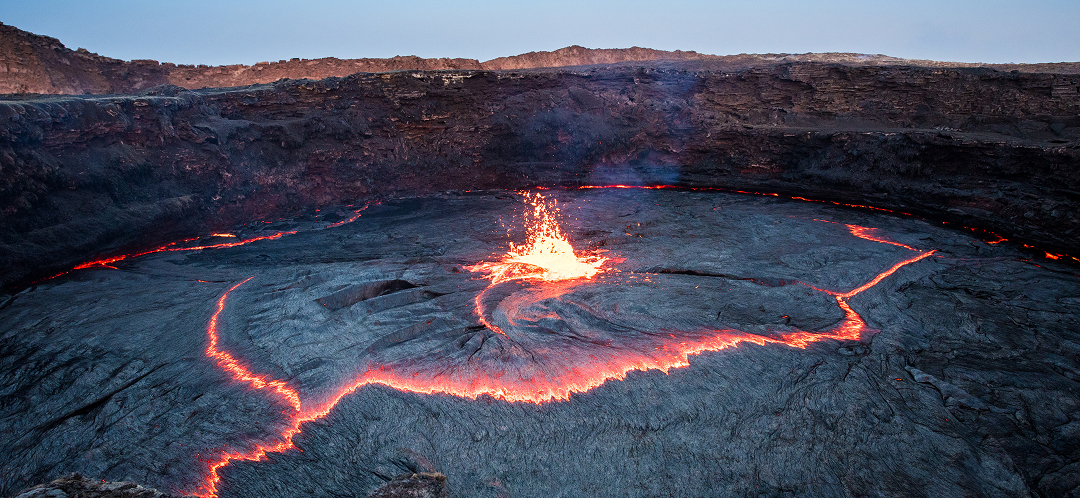
Erta Ale holds one of the world’s few accessible lava lakes. Most tours hike toward the crater in the evening to watch molten lava glow in the dark.
- Expect 2–4 hours of walking across rough volcanic terrain.
- The crater area stays hot even after sunset.
- Guides control movement around the crater rim for safety.
Lava levels change often, so each visit looks slightly different. Some nights reveal bright lava flows, while others show only small glowing vents.
Next in this series: Charyn Canyon Travel Guide: How to Visit in Kazakhstan
Lake Asale salt flats
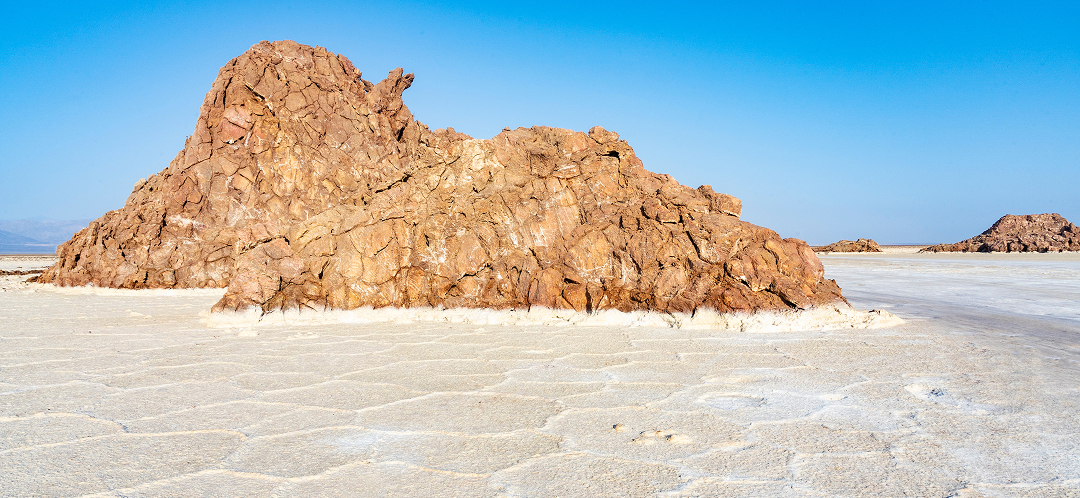
Lake Asale spreads across a wide field of bright white salt. During dry periods, the lake shrinks and exposes broad salt flats across the basin.
- Salt stretches for miles across the landscape.
- Strong sunlight reflects off the surface, so sunglasses and hats help.
- Guides often demonstrate how Afar workers cut and stack salt blocks.
The flats highlight how ancient water once filled parts of the Rift Valley basin.
Afar salt caravans
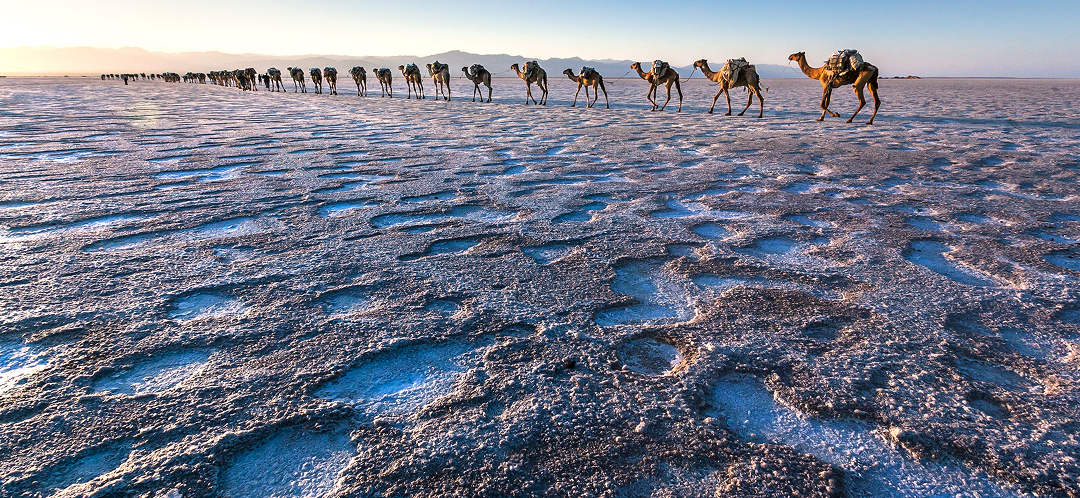
The Afar salt caravans demonstrate how local communities continue a centuries-old trade. Workers cut salt blocks from the flats and load them onto camels and donkeys.
- Caravans sometimes stretch many hundreds of feet across the desert.
- Workers balance and transport rectangular salt slabs toward regional markets.
- Visitors should keep a distance and follow the guides when taking photos.
This trade remains one of the few large-scale traditional salt industries still active today.
Tectonic rift formations
The Danakil Depression lies within an active tectonic rift zone where the Arabian, Somali, and Nubian plates slowly pull apart. This movement creates fractures, fissures, and escarpments across the landscape.
- Some rift cracks run deep and narrow across the ground.
- Others form long visible fractures across desert plains.
- Guides explain how heat and tectonic pressure shape these formations.
Standing beside these rifts gives a direct view of geological processes that continue to shape the region.
Throughout the tour, guides monitor safety and mark stable routes. Travelers face strong sun, reflective salt surfaces, and constant heat. Carry water, use sun protection, and follow the group’s pace to explore the environment safely.
Fun Fact: Salt mining in the Danakil Depression has continued for over 1,000 years. Workers cut rectangular salt blocks called amole, which once served as currency in parts of Ethiopia.
Next in this series: Why Lofoten Islands Should Be in Your US–to–Norway Bucket List
Danakil Depression tour prices and costs (2026)
A trip to the Danakil Depression requires significant logistics. Tour length, group size, and private options affect the final price. The estimates below reflect typical pricing for 2026 expeditions.
Group tour average
Most 3-day group tours from Semera cost $350–$600 per person. These tours cover core logistics inside the depression.
- Shared 3-day tour: $350–$500 per person
- Small group tours: $500–$600 per person
Group tours remain the most cost-effective option because travelers share vehicles, guides, and camp equipment.
Private tour
Private tours cost more but give you more control over pacing and stops.
- 3-day private tour: about $700–$1,200 or higher if travelers want to get additional services
- 4-day private tour: usually even higher, depending on customization
Operators typically include the same services as for group tours but assign a dedicated guide and vehicle.
Domestic flight
Domestic flights are often not included in the basic tour pricing. Flights from Addis Ababa (ADD) to Semera (SZE) usually cost $300-$350 for a round trip with Ethiopian Airlines. Prices vary by season and booking timing.
Mandatory guide and permits
Tour operators handle several required arrangements:
- Danakil Depression entry permits
- Licensed local guides who know the terrain and climate
- Armed escorts, which are required under Afar regional regulations
Local regulations make these requirements mandatory for all tours.
What is included
Most tour packages include:
- 4×4 transport inside the Danakil Depression
- Camping equipment (tents, sleeping mats, blankets)
- Meals and bottled water during the expedition
- Entrance fees and site logistics for Dallol, Lake Asale, and Erta Ale
What is not included
Travelers usually cover these costs separately:
- Tips for guides, drivers, and cooks
- Domestic flights between Addis Ababa and Semera
- Travel insurance and visa fees
- Sleeping gear upgrades, if offered
- Alcoholic drinks, which most tours do not provide
These additional costs can change your total budget, so confirm what is included with your tour operator before booking.
Quick snapshot (2026 realistic range)
- Group 3‑day tour: $350-$600 per person
- Private 3‑day tour: $700-$1,200+
- Domestic flight Round-trip: $300-$350 (approx.)
- Extras: Tips, gear upgrades, insurance, visa
Tour prices vary by operator, group size, and when you book. Booking early with reputable operators often secures better prices and ensures permits and safety support. We advise you to always confirm what exactly is included in the tour before paying a deposit.
Is the Danakil Depression worth visiting?
Whether the Danakil Depression feels worth visiting depends on your travel style. This destination offers raw landscapes, long travel days, and extreme heat. It does not offer comfort or easy logistics.
Who it’s for:
- Adventure travelers: You enjoy demanding trips and do not mind rough roads, early starts, and intense heat.
- Extreme environment seekers: You look for places shaped by unusual climates and powerful natural forces.
- Geological enthusiasts: You like challenging regions that reveal active rifts, salt flats, geothermal fields, and tectonic formations up close.
Travelers who value these experiences often find the trip deeply rewarding. The journey feels challenging, but it offers landscapes and geological activity that few places can match.
Who should skip it:
- Comfort-first travelers: You prefer smooth logistics, controlled climates, and minimal physical strain.
- Heat-sensitive visitors: You struggle with extreme heat, and temperatures above 100°F (38°C) can quickly drain your energy.
- Luxury-focused tourists: You expect high-end hotels, private facilities, and resort-style comfort rather than basic desert camps.
How the Danakil Depression compares to other extreme landscapes:
Looking at a few well-known extreme environments helps put its intensity into perspective:
- Iceland’s volcanic fields feel rugged and otherworldly, but paved roads and mild temperatures make travel there easier.
- The Atacama Desert (Chile) offers extreme dryness and salt flats, but also provides paved access and cooler nights.
- The Grand Canyon (USA) shows an enormous geological scale but includes marked trails, shade areas, and support services.
The Danakil Depression delivers a similar geological impact but with far less infrastructure. The experience focuses less on comfort and more on raw exposure to an extreme environment.
If you enjoy challenging environments, the Danakil Depression can feel remarkable. If you prefer comfort and controlled travel conditions, other destinations may suit you better.
Next in this series: Cat Island Travel Guide: Visiting Japan’s Feline-Filled Tashirojima on a Budget
Estimate your Danakil Depression trip budget
Planning a Danakil Depression trip means budgeting for several major expenses. The journey includes international flights, a domestic flight, guided tours, and basic accommodation in Addis Ababa.
International flights
Round-trip economy flights from the U.S. to Addis Ababa Bole International Airport (ADD) vary by departure city and airline.
- New York (JFK) to Addis Ababa (ADD) via Istanbul (IST)
Airline: Turkish Airlines
Price: $900–$1,400 round trip - Chicago (ORD) to Addis Ababa (ADD)
Airline: Ethiopian Airlines
Price: $1,200–$1,900 round trip
The prices change depending on the season and booking timing.
Domestic flights
Travelers usually fly from Addis Ababa to Semera (SZE), the closest airport to the Danakil Depression.
- Addis Ababa (ADD) to Semera (SZE)
Airline: Ethiopian Airlines
Price: $300–$350 round trip
Flight duration: 1 hour 30 minutes
Tour package
A 3-day guided expedition usually costs $350-$600 per person.
This price typically includes:
- 4×4 transport in the Danakil Depression
- Licensed guides and permits
- Armed escort required by Afar regulations
- Meals, bottled water, and camping gear
Private or 4-day tours may cost $700-$1,200+, depending on group size.
Addis Ababa hotel (1–2 nights)
Most travelers stay in Addis Ababa before or after the expedition.
- Mid-range hotels: about $40-$120 per night
Visa (US)
U.S. travelers must obtain an Ethiopian tourist visa before arrival or through the official e-visa system.
- 30-day tourist e-visa: $50-$80
Check the official Ethiopian e-visa portal before departure for the latest fees and requirements.
Travel insurance
We strongly recommend choosing travel insurance that covers evacuation and remote travel.
- Typical cost: $50-$150+
Estimated total trip budget
The total cost may vary significantly depending on your preferred travel style, tour choice, and flight prices.
| Expense | Budget | Mid-range |
|---|---|---|
| US-ADD flight | $900 | $1,400 |
| Domestic flight | $300 | $350 |
| Danakil tour | $350 | $600 |
| Hotel (2 nights) | $80 | $240 |
| Visa | $50 | $80 |
| Insurance | $50 | $150 |
| Total estimate | $1,730 | $2,820 |