

Applying for a travel visa can feel as tedious as sorting through bills. Necessary but far from exciting, right? It’s easy to let paperwork and confusing requirements take the fun out of planning your dream getaway. But don’t worry. We’re here to simplify the process so you can focus on what really matters: your next adventure!
While handling your visa needs, don’t overlook a key part of your trip—booking flights! Ovago offers great deals, 24/7 support, and flexible payment plans. Check our prices before you go!
In this article, we aim to demystify some essential aspects of visas, with a focus on tourist visas. By the end of the article, you’ll be familiar with common types of visas based on the purpose of travel and destination requirements. We’ll also explore which popular countries require US citizens to obtain a visa and which ones allow visa-free entry. Additionally, you’ll discover how to get a travel visa.
As an added benefit, we’re sharing details about our partnership with VisaHQ, knowing that many travelers find the visa process daunting. This platform provides up-to-date visa-related information and requirements for any destination in minutes and simplifies the visa application process. To help you make the most of this useful tool, we complete the post with a step-by-step guide on how to utilize it for smooth visa research and application.
Read also: When to Book International Flights in 2026
Read in this article:
What is a Travel Visa?
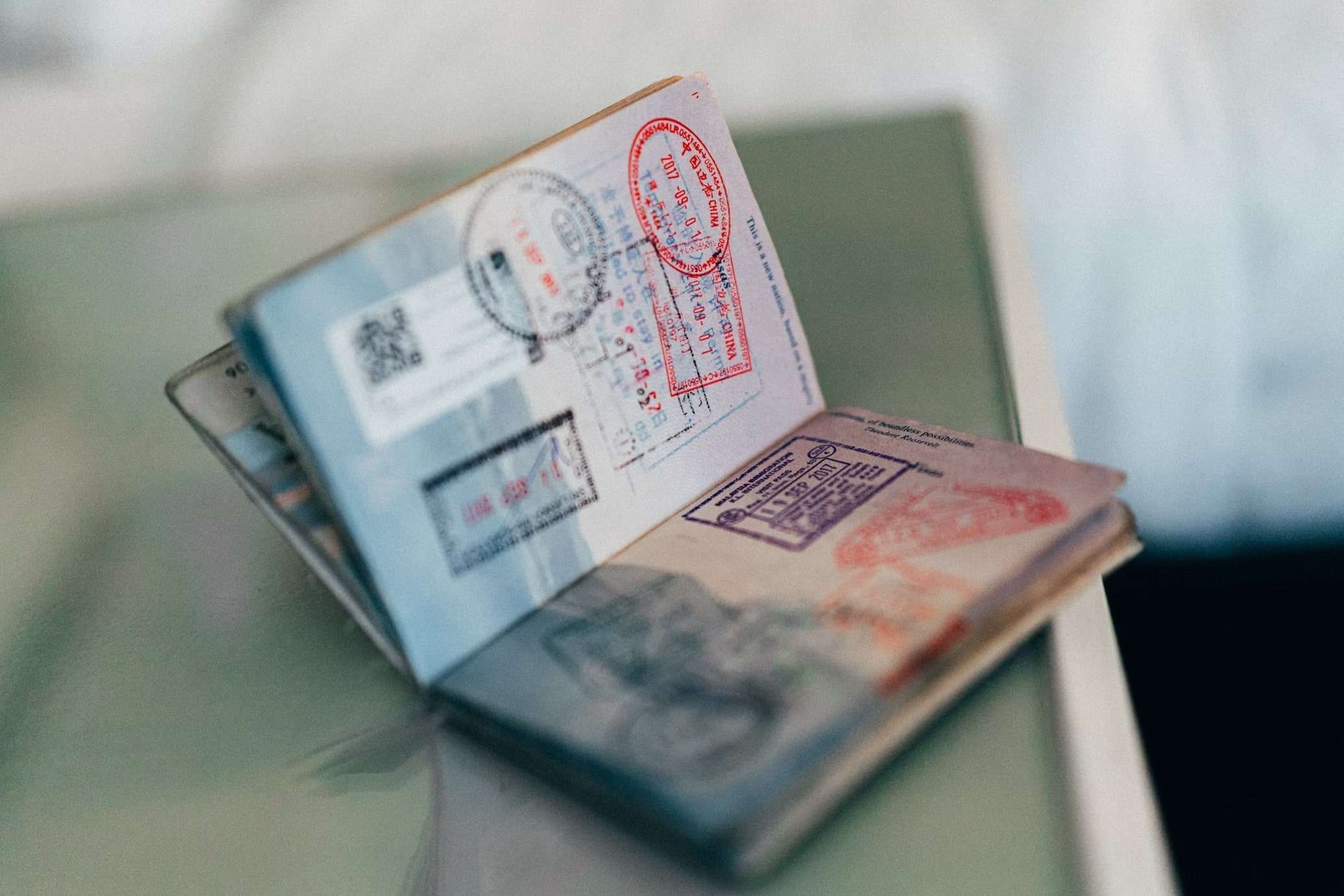
A visa is a vital travel permit that grants entry into a foreign country for a specified duration. These travel documents are typically stamped or affixed to passports, indicating the allowed length of stay. In some cases, visas may not be integrated into passports, such as with e-visas. Travel visa requirements are implemented by most countries as a security measure to monitor inbound travelers and mitigate the risks of illegal immigration.
Entry conditions and visa acquisition prerequisites vary from one country to another due to distinct bilateral agreements and unique circumstances governing each visa arrangement. When discussing travel visas, it’s crucial to consider the following factors that determine the specific requirements for your destination:
- your country of citizenship
- the country that issued your passport
- your intended destination.
What are Common Types of Travel Visas?
When do you need a travel visa? To answer this question, you need to understand types of visas and their purposes. Two primary categories encompass visas applicable to any nation:
- Non-immigrant visas (for temporary stays without citizenship acquisition).
- Immigrant visas (for permanent residence leading to citizenship acquisition).
Yet, these two overarching categories can be elucidated further into 4 primary subtypes differentiated by purpose of travel:
- Tourist visas (typically non-immigrant visas for leisure travel purposes).
- Student visas (typically non-immigrant visas for pursuing education abroad).
- Immigration and naturalization visas (immigrant visas like those got through marriage).
- Business or employment visas (encompassing both non-immigrant and immigrant classifications for work purposes).
These 4 subtypes are universally applicable across all countries, albeit with widely varying requirements, particularly contingent on your country of origin. Securing a tourist visa is typically the simplest, unless you plan an extended stay. Conversely, obtaining an immigration visa proves to be the most challenging, with many individuals unlikely to acquire one within their lifetime.
There are also rarer subtypes of visas based on the purpose of travel. These include transit, medical, spousal reunion, working holiday, family reunification, investment, official, refugee, freelancer, retirement, and pilgrimage visas. Each of these visa subtypes has its own unique characteristics, such as eligibility criteria, fees, application process specifics, required documents, processing time, duration, and more.
Read also: Your Guide to Budget-Friendly and Comfortable Air Travel with Airlines Operating in the US

Europe Travel Visa 2026: Do US Citizens Have to Obtain a Schengen Visa?
Given the substantial influx of American travelers to Europe, characterized by CNN Travel as “a flood of epic proportions,” it’s essential to clarify the visa requirements for the Schengen Area.
The Schengen Area incorporates 29 European countries: Denmark, Portugal, Croatia, Norway, Hungary, France, Spain, Greece, Lithuania, Liechtenstein, Slovakia, Czechia, Iceland, Poland, Austria, Estonia, Finland, Slovenia, Italy, Latvia, Malta, Luxembourg, Belgium, Sweden, Netherlands, Switzerland, Germany, Bulgaria, and Romania.
Many people ask: Do I need a travel visa for Europe? US citizens traveling to the Schengen Area do not currently need a visa for short stays (up to 90 days in any 180-day period) for tourism, family visits, business, or similar purposes. To enter visa-free, travelers must ensure their passport meets entry conditions (typically valid for at least 3 months beyond departure and issued within the last 10 years) and meet other standard requirements such as having a return ticket and sufficient funds at the border.
But what if, let’s say, you want to learn Spanish in Spain for more than 90 days? You’ll need to apply for a long-term student visa at a Spanish consulate in the US before you go (the general rule is the same for all Schengen countries).
Key Changes Planned for 2026: A new electronic travel authorization system called ETIAS is planned to start in the last quarter of 2026. Once implemented, US citizens (and other visa-exempt travelers) will need to apply for an ETIAS authorization online before their trip, but it is not required yet in early 2026.
Fly to Europe for less!
Book with Ovago for exclusive deals, flexible payment options, and expert support via chat, email, or phone.
When You Need to Apply for a Travel Visa and When You Don’t
As of January 2026, US passport holders can travel to 180 countries without the need for a travel visa or they can obtain a visa upon arrival (VOA). The others will require you to apply for a visa before arrival.
Visa-Free Travel Specifics
You do not require a tourist visa for international travel if there is a visa agreement between your country of residence and the destination. Simply book your trip and arrive at your destination’s Customs and Border Protection checkpoint. They may ask a few questions about your visit and return plans. You’ll need a valid passport, typically with at least 6 months of validity beyond your departure date. Additionally, you may be required to purchase travel health insurance, depending on the regulations of your destination country.
The most popular visa-free destinations among Americans include Puerto Rico (a US territory), Canada, Mexico, Italy, United Kingdom (England, UK), France, Bahamas, the Philippines, Jamaica, Dominican Republic, Aruba Island, El Salvador, South Korea, Greece, and Japan.
Keep in mind that the term of your stay may be restricted to a specific period of time, often from 30 to 180 days, depending on the destination. Check out the specific visa regulations of the destination country and plan your trip accordingly to avoid overstaying your visa-free period, which could result in fines, deportation, or other penalties. To avoid these troubles, you have to timely apply for a visa extension, leave the country, and/or re-enter, or apply for a visa.
Key Changes Happened in 2025 (United Kingdom, ETA): Starting January 8, 2025, travelers from visa-exempt countries, including the US, must obtain an Electronic Travel Authorization (ETA) before entering or transiting through the UK. This requirement strengthens border security by enabling pre-screening of visitors. Applications can be submitted online via the official UK government website or the UK ETA app. Travelers must provide personal and passport details, upload a digital photo, and pay a £10 fee. The ETA is valid for two years or until the passport expires, whichever comes first, and permits stays of up to six months per visit.
Visa on Arrival (VOA) Travel Specifics
In some countries, you can receive a VOA upon arrival. Typically, there’s a designated section at the airport where you can submit your application for the visa. Requirements for obtaining a VOA can vary, but the most common of them are an accommodation booking, passport photos, a valid passport, an onward plane ticket, and sufficient funds to cover your stay. Some countries, like Laos and Maldives enable US citizens to obtain a VOA on arrival.
Key Changes Happened in 2025 (Sri Lanka, ETA): Effective October 15, 2025, short-term travelers to Sri Lanka must secure an ETA prior to travel. The ETA is issued through an online application, typically processed quickly, and grants entry for up to 30 days at a cost of roughly $50. Early application is recommended to avoid potential travel complications.
Visa Application Prior to Arrival Specifics
Some countries require US citizens to obtain a visa before arrival. Popular destinations among Americans with this requirement include Australia, Brazil, Egypt, India, Vietnam, and Kenya. In many cases, you can apply for a visa online and present either a printed e-visa copy or an electronic version on your smartphone or tablet upon entry. However, some countries may require a more cumbersome visa application process, such as visiting an embassy or consulate in person. Each country has different visa application requirements, procedures, and fees.
Cuba transitioned to an e-Visa system in August 2024, replacing the traditional Tourist Card (“Tarjeta del Turista”). The e-Visa grants a 90-day stay, with an option to extend locally for another 90 days. It is valid for a single entry and remains active for up to one year.
Key Changes Happened in late 2024 (Visa-Free Travel to China): Effective December 17, 2024, China expanded its visa-free transit policy, permitting travelers from 54 countries, including the US, to stay for up to 10 days without a visa. This applies to transits through 60+ designated ports across 24 provinces. Read the full entry requirements here.
Tourist Visa in a Nutshell
A tourist visa serves as the typical entry permit for most countries. Upon obtaining one, you gain entry to a specific country and can freely explore and stay there for the duration of the visa’s validity.
Tourist visas come in various entry options:
- Single entry visa: This visa permits a single entry into a country. Once used, it becomes invalid, even if there’s time left before expiration.
- Multiple entry visa: With this visa, you can enter a country multiple times during its validity period. However, once it expires, you’ll need to apply for a new one.
Restrictions imposed to those traveling under a tourist visa:
- You are not permitted to engage in employment while on a tourist visa.
- Conducting business activities is not allowed under a tourist visa.
- Studying is prohibited while holding a tourist visa.
- Permanent residency cannot be obtained through a tourist visa.
General tourist-visa related FAQs:
- How long does it take to get a tourist visa? The processing time for a tourist visa varies depending on the country you are applying to, the volume of applications, and the efficiency of the embassy or consulate processing your application. It can range from a few days to several weeks, so apply well in advance of your travel dates to avoid any delays.
- How long is a tourist visa good for? Tourist visas are typically issued for specific durations, such as 30, 60, or 90 days. However, some countries offer longer visas, allowing stays of up to six months or more.
- How much is a tourist visa? The cost of a tourist visa varies depending on several factors, including the country you’re visiting, the duration of your stay, and your nationality. Some countries offer visas for free, while others charge a fee.
- How can I apply for a tourist visa? For countries requiring US citizens to apply for a visa through an embassy or consulate visit, start by consulting the embassy’s official website or reliable visa processing services like VisaHQ. These services not only provide convenient research on entry requirements but also offer a streamlined e-visa application process for countries offering e-visas.

How Does Ovago’s Partnership with VisaHQ Simplify Your Visa Process?
What is VisaHQ?
VisaHQ is an online platform that provides passport and visa provisioning services to travelers worldwide. It carefully considers three vital factors impacting the final requirements for visiting a specific country. They are: the country you’re coming from, your citizenship status, and the exact destination.
Why choose VisaHQ over an embassy’s official website?
Using a visa service like VisaHQ can often provide a more convenient and efficient visa application experience, especially for those unfamiliar with the process or seeking expedited services. Unlike embassys’ official websites, services like VisaHQ:
- offer assistance throughout the application process, including document verification, form filling, and submission
- may offer expedited processing options, reducing the overall processing time compared to embassy applications
- might offer additional services such as document translation, legalization, and more
What benefits can you access from our partnership with VisaHQ without needing to leave our website?
Follow this link to easily:
- Check if you need a visa to travel to a specific country
- See all the types of visas available for this destination
- Learn all the existing requirements for each type
- Explore the visa types in terms of the number of entries permitted (single entry visa, double entry visa, multiple entry visa)
- Discover the terms of validity and processing for each of these types
- Know the embassy fee for each of these types
- Share the results of your search with your friends on social media or via a direct link
- Chat or call the support team for any inquiries.
Want more all-around visa-related experience? Take the following steps.
10 simple steps on how to use the VisaHQ service:
- Visit the VisaHQ Website: Go to the VisaHQ website (www.visahq.com) and register there to begin the visa application process. Registering on VisaHQ ensures an easier and faster application process and tracking, document storage within your account, communication with the support team, viewing your booking history, and more.
- Select Your Destination: Choose the country you plan to visit from the list of available destinations on the website.
- Choose Your Visa Type: Select the type of visa you need based on your purpose of travel. Common visa types include tourist visas, business visas, work visas, student visas, and transit visas.
- Review Requirements: Review the visa requirements for your chosen destination and visa type. VisaHQ provides detailed information about the documents and information you need to provide for your visa application.
- Complete Application Form: Fill out the online visa application form with accurate and up-to-date information. You may need to provide personal details, travel itinerary, passport information, and other relevant information as required by the destination country.
- Upload Documents: Upload the required supporting documents for your visa application. These may include a passport copy, passport-sized photos, flight itinerary, hotel reservations, invitation letters, and any other documents specified by the destination country.
- Pay Fees: Pay the visa processing fees using the available payment options on the VisaHQ website. Fees vary depending on the destination country, visa type, and processing time selected.
- Submit Application: Once you have completed the application form and uploaded all required documents, submit your visa application through the VisaHQ platform.
- Track Application Status: Monitor the status of your visa application through the VisaHQ website. You may receive updates on the progress of your application, including any requests for additional information or documents from the consulate.
- Obtain Your Visa and Travel: Once your visa application is approved, VisaHQ will either mail the visa to your designated address or provide instructions for collection, depending on the visa issuance process of the destination country. With your visa in hand, you are now ready to travel to your destination country within the validity period of the visa.
Now that you’re fully equipped to apply for your visa with ease, enjoy our exceptional services and exclusive flight booking discounts. Book your next flight with Ovago!