
That basic economy fare may not always be the deal it looks like at first. Yes, it might be the cheapest fare, but are we taking everything into account when we decide what is cheap?
As of May 18, 2026, American Airlines made basic economy a little less forgiving, with higher checked bag fees, paid seat selection, and no upgrade eligibility. United Airlines and Delta Air Lines have their own catches, too, from carry-on limits to no mileage earning.
The result is simple: the cheapest fare on the search screen is no longer the real trip price. The math changes after you add the bag, the seat, and everything else you assumed was included.
Read in this article:
What basic economy really looks like in 2026
Basic economy used to be simple enough: give up a few perks, pay less, and move on.
In 2026, the fare asks more questions. Bringing a bag? Choosing a seat? Hoping for an upgrade? Each answer can change the price.
American Airlines still includes a personal item, a carry-on, snacks, soft drinks, and in-flight entertainment in the basic economy fare. The issue is everything outside that list. For tickets purchased on or after May 18, 2026, checked bags cost more, seat selection comes with a fee for all basic economy passengers, and complimentary upgrades are gone.
United Airlines plays a different game. On many domestic basic economy routes, a personal item is all you get, so showing up with a full-size carry-on can turn into an expensive gate surprise.
Delta’s restriction is quieter but still important. Many basic economy fares do not earn miles, which matters if SkyMiles are part of how you make future trips cheaper.
None of these restrictions looks dramatic alone. Together, they can turn a low fare into a very average deal.
When the math stops favoring the cheap fare
The easiest way to understand basic economy in 2026 is to stop looking at the headline fare and calculate the real trip cost instead.
Here is what that looks like in practice.
Domestic flight: Chicago to Miami
If American Airlines shows a Chicago (ORD) to Miami (MIA) round-trip basic economy fare at $470, and the main cabin fare on the same flight is $560, then the visible difference is $90.
At first glance, basic economy still looks cheaper. But that gap gets small quickly once you add the things many travelers actually need.
| Item | Basic Economy |
| Base fare | $470 |
| First checked bag | $50 if prepaid, $55 at the airport |
| Seat selection | $15–$50, depending on the seat |
| Changes | not allowed |
| Miles earned | none |
If you check one bag, the basic economy total becomes $520 to $525 before seat selection. That leaves only $35 to $40 between basic economy and main cabin. Once you pay roughly $15 to $50 to choose a seat, basic economy can cost $535 to $575, which means the savings shrink significantly.
On the other hand, the main mabin costs $560, but it includes standard mileage earning, allows changes, and gives you access to complimentary seat selection within the main cabin fare family. Basic economy still starts lower, but once you add a checked bag and seat selection, the difference amounts to almost nothing. If the seat you choose costs closer to $50, basic economy can even cost more than main cabin.
Transatlantic flight: Atlanta to London
Long-haul transatlantic routes are where basic economy restrictions tend to hurt the most. A long flight means bag fees, seat selection, and lost miles all pile up on top of an already higher base fare, and the dollar gaps between fare classes are larger, which can make the savings look more convincing than they actually are.
Let’s take a United Airlines flight from Atlanta (ATL) to London (LHR). Suppose the round-trip basic economy fare is $1,200, while standard economy on the same route starts at $1,420. The visible difference is $220.
On a long-haul flight, that gap matters, but so do the restrictions.
| Item | Basic Economy |
| Base fare | $1,200 |
| First checked bag | $90 |
| Seat selection | roughly $30 to $80 |
| Changes | not allowed |
| Upgrade eligibility | not included |
| Mileage earning | 0 MileagePlus miles |
With one checked bag and a standard seat assignment, basic economy costs $1,320 to $1,370. That leaves only $50 to $100 between basic economy and standard economy.
Standard Economy costs $1,420, but it includes one checked bag, seat selection, change flexibility, upgrade eligibility, and MileagePlus earning. The gap that looked like $220 at the start is now $50 to $100 at best, and that’s before you factor in what you’re actually giving up for it.
On a transatlantic flight, a randomly assigned middle seat isn’t a minor inconvenience. It’s multiple hours with no ability to sit next to the person you’re traveling with, no path to an upgrade, and nothing added to your miles balance when you land. The savings, if there are any left, come at a real cost that doesn’t show up in any fee table.
The smallest decisions now change the entire price
Basic economy is harder to judge now because the math depends on how you actually travel and which airline you choose.
- Are you checking a bag?
If yes, the savings disappear fast, especially on American Airlines after the fee increase. On domestic trips, a single checked bag can erase half or more of the fare difference. - Do you care where you sit?
Random seat assignment may not matter on a short solo trip. On a cross-country or a long-haul flight with a partner, it absolutely does. Row 11 and Row 34 are not exactly the shared travel experience most couples have in mind. - Are you bringing more than a backpack?
United’s domestic basic economy rules matter here because many travelers assume a normal carry-on is included. It often is not. The gate is a bad place to discover that. - Do you use airline miles?
Delta’s no-mileage rule changes the value for frequent travelers. If you redeem miles or work toward status, the cheaper fare can quietly cost you later. - Could your plans change?
Basic economy gives you very little room to adjust. Even small itinerary changes can become expensive or impossible with the new basic economy rules.
Looking for affordable flights and destinations?
Check our guide on affordable destinations to visit from the US.
When basic economy still makes sense
Basic economy is not useless. It just works best for a much narrower category of travelers now.
It still makes sense if:
- You are traveling solo.
- You don’t mind traveling with just a backpack or small personal item.
- You do not care where you sit.
- Your plans are fixed.
- You are not chasing miles or upgrades.
- The price difference is genuinely significant.
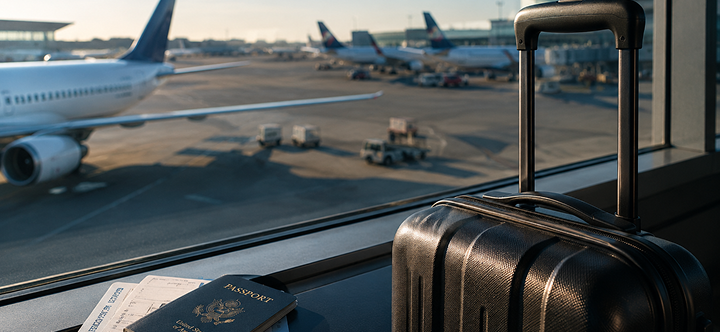
For a quick weekend trip with minimal luggage, basic economy can still save real money. But once checked bags, seat selection, loyalty benefits, or flexibility enter the picture, standard economy often becomes the better value.
The important shift is this: you can no longer judge the deal by the first amount you see.
Final thoughts
Basic economy used to be a simple compromise. Now, the calculation is more complicated. For some travelers, these fares still work perfectly well. For many others, the cheaper ticket only stays cheap until checkout starts adding everything back in.
The smartest way to compare flights in 2026 is not to ask which fare is cheapest. It is to ask which trip actually costs less if you plan to travel like you’re used to.
If you want help comparing the real cost of different fares, Ovago can help you look beyond the first price on the screen and find options that make sense for your route, luggage, and travel plans.