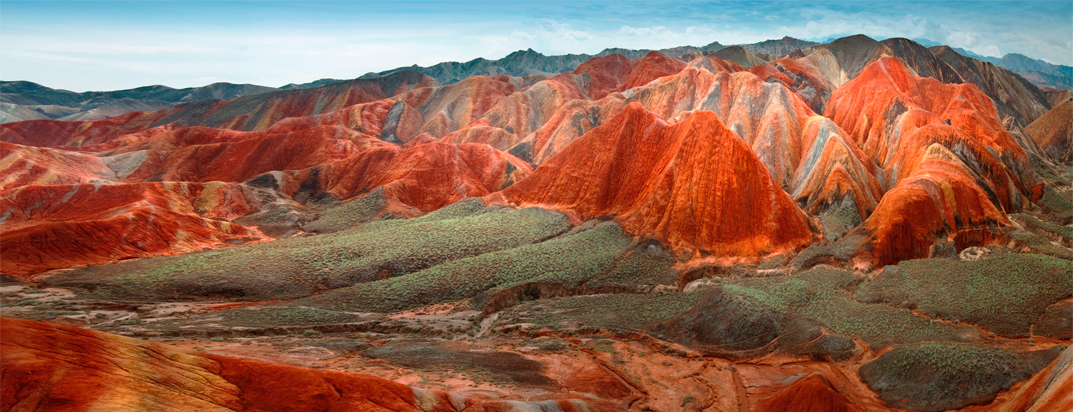

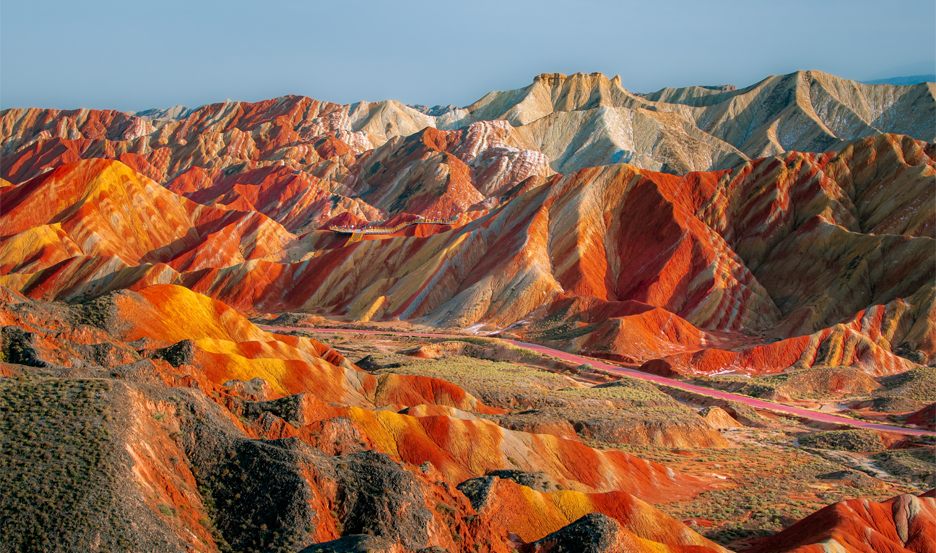
Imagine walking through a landscape painted in fiery reds, golden yellows, and emerald greens—a natural masterpiece 540 million years in the making. This isn’t a scene from a fantasy novel or an AI-generated art experiment. Nope, this is the Rainbow Mountains of Zhangye Danxia, China’s very own geological rockstar.
Officially dubbed a UNESCO Global Geopark and crowned one of China’s “Top 10 Geographical Wonders”, this place is like Earth’s answer to a Jackson Pollock painting. But instead of paint, it’s all thanks to ancient oceans, tectonic drama, and a whole lot of patience (we’re talking millions of years of erosion here).
You’ve probably seen these candy-colored ridges blowing up your Instagram feed—they’re the ultimate “wait, that’s real?!” destination. Locals call them the “Rainbow Mountains”. And here’s the kicker: this psychedelic wonderland was once a pit stop on the Silk Road, where camel caravans hauled silk and spices past these very cliffs.
Oh, and if you’re wondering how to get there, choose Ovago to book cheap flights worldwide! Explore more unique places to enhance your bucket list.
Ready to dive into how this geological wonder came to be—and why you need to see it with your own eyes? Let’s get started.
Read in this post:
The Science Behind the Colors: Geological Formation
How Did the Rainbow Mountains Form?
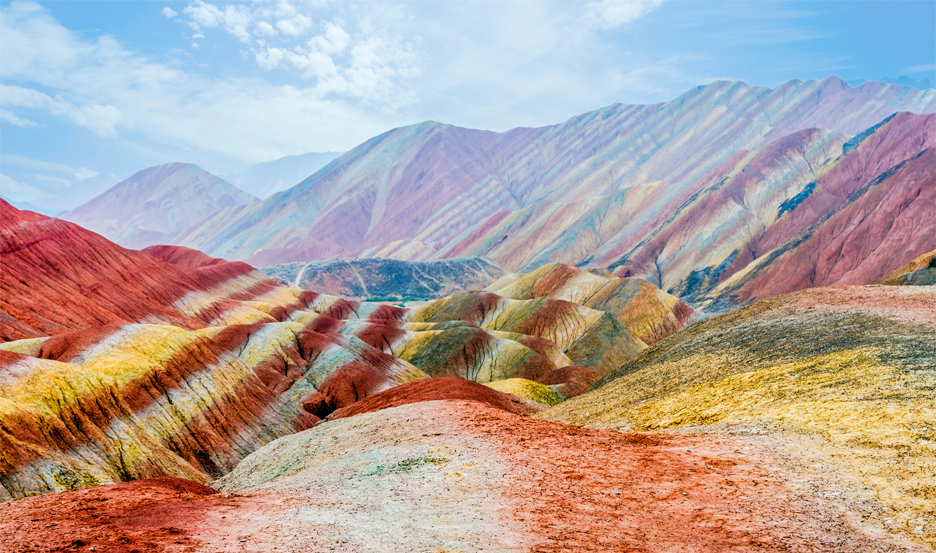
Over the course of 540 million years, these mountains have undergone a remarkable transformation. They began as ancient oceanic sediments, laid down in horizontal layers. Over time, tectonic shifts pushed and folded these deposits upward, exposing them to erosion. Rain, wind, and temperature changes slowly chipped away at the rock, revealing the spectacular bands of color beneath.
Different minerals are key to the stripes you see:
- Iron oxide produces red and yellow hues.
- Chlorite is responsible for green shades.
- Other trace minerals add blues, purples, and browns.
Similar processes have shaped other “rainbow” landscapes around the world, such as Vinicunca in Peru. While the locations differ, the same geological forces create similarly striking, kaleidoscopic ranges.
Why Are the Colors So Vibrant?
The mountains’ shades look most vivid after rainfall, when the moisture intensifies the hues. Sunlight angles also play a big role, especially during the golden hour (just after sunrise or before sunset), when the sun’s lower position enhances color contrast. In summer, bright skies offer clear views, while winter can bring snow that contrasts sharply against the colored bands, creating a different—yet still breathtaking—spectacle.
Planning Your Visit: Travel Essentials
1. Best Times to Visit
- Season: June–September offers mild weather and vivid colors, especially after rain.
- Time of Day: Early morning or late afternoon for golden-hour lighting and fewer crowds.
2. Transportation and Access
- Getting There: Fly to Zhangye Ganzhou Airport (limited flights) or take a high-speed train from Xi’an (7 hours) or Lanzhou (3 hours).
Note: If you’re traveling from the US to Xi’an or Lanzhou and looking for budget airlines, here are a few options with examples of itineraries and approximate prices.


- Tickets: The entrance fee is CNY 75 ($10), which includes bus fare between observation decks. Discounts are available for children and senior citizens.
- Within the Park: Sightseeing buses cost CNY 20–300 ($3-41) and are mandatory, as private vehicles are prohibited. Routes vary by entrance (north, east, or west).
3. Physical Preparedness
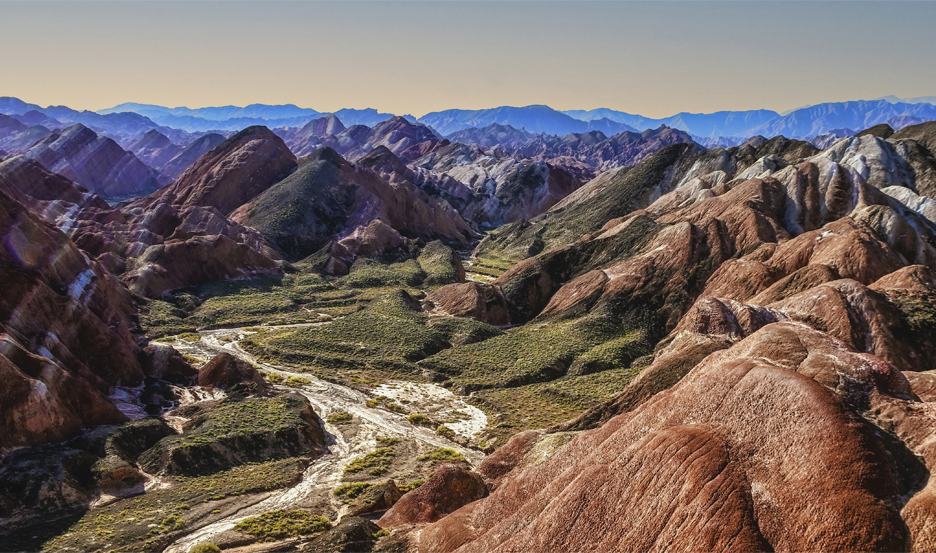
- Altitude: The park ranges from 1,100–3,100 meters; those with health conditions should carry emergency medication.
- Terrain: Wear sturdy shoes for uneven paths and steep steps (e.g., Platform 2’s 666-step climb).
4. Weather and Safety
- Sun Exposure: No shade; bring sunscreen, hats, and ample water. Summer temperatures can exceed 25°C (77°F).
- Winter Visits: Not recommended due to freezing temperatures and strong winds.
5. Logistical Tips
- Facilities: Limited shops in remote areas; carry snacks and water.
- Photography: For the best shots, use a wide-angle lens and aim to shoot at sunset. After rainfall, the mountain colors become even more vivid.

Exploring the Park: Viewing Platforms & Photography Tips
Top 4 Viewing Platforms
The park features four main viewing platforms, each offering unique perspectives:
- Platform 1 (Colorful Meeting Fairy Platform): Closest to the entrance, ideal for first-time views of formations like “Monkeys Rush into the Sea of Fire.”
- Platform 2 (Colorful Sea of Clouds): Requires climbing 666 steps to reach the highest vantage point, perfect for sunset photography.
- Platform 3 (Seven-Color Fan): Showcases pastel-colored hills resembling a painter’s palette.
- Platform 4 (Colorful Clouds): Best for sunrise/sunset views of the “Seven-Color Mountain,” a photographer’s paradise.
Photography Guide
Now that you know where to go, let’s talk about how to make your photos stand out. After all, you’ll want to capture every vibrant detail of this natural masterpiece.
- Gear Recommendations: A polarizing filter is your best friend here—it reduces glare and enhances the colors, making the stripes pop even more. Pair it with a wide-angle lens to capture the sweeping vistas and dramatic formations. If you’re serious about photography, consider bringing a tripod for stable shots during low-light conditions.
- Avoid Crowds: Timing is everything. Weekday visits are less crowded than weekends, and post-rain clarity is unbeatable—the moisture deepens the colors and clears the air of dust. Just imagine snapping that perfect shot without a sea of selfie sticks in the way.
- Common Mistakes to Avoid: Don’t fall into the trap of midday photography; harsh shadows can wash out the colors and flatten the landscape. Instead, aim for golden hour (early morning or late afternoon) when the light is soft and warm. And whatever you do, don’t skip sunrise or sunset—they’re the secret ingredients to capturing Zhangye Danxia in all its glory.
Fly Now, Pay Later with Ovago!
No need to wait—lock in your flight now and pay later with flexible payment options designed for stress-free booking.
Beyond the Rainbow: Nearby Attractions
The Rainbow Mountains might steal the spotlight, but the surrounding area is like a bonus track on your favorite album—unexpectedly awesome. Here’s where to venture next:
- Binggou Danxia (Ice Valley): Swap rainbows for drama. Binggou’s jagged stone pillars look like a Game of Thrones set designed by Mother Nature. Think towering rock spires, deep ravines, and cliffs that mimic ancient temples and pagodas—no CGI needed.
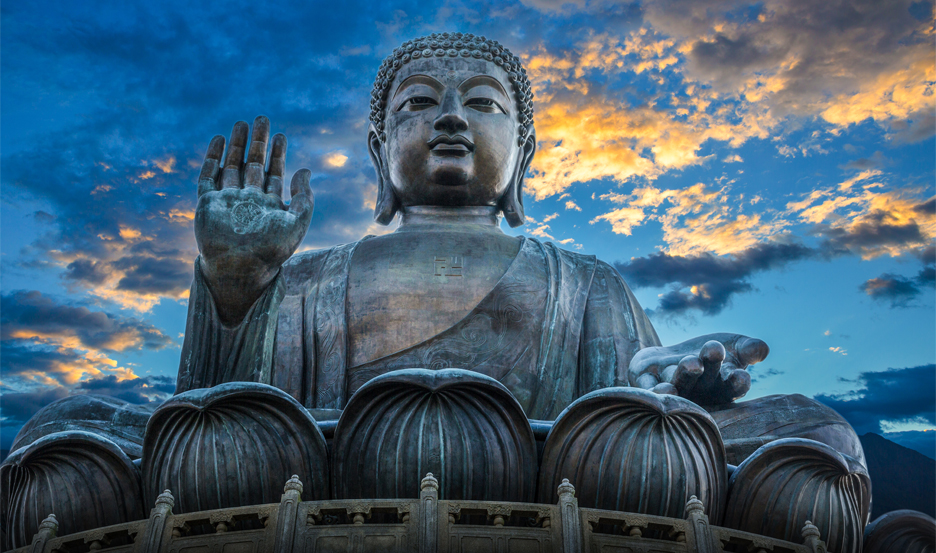
Pro tip:Wear sturdy shoes. This place is less “stroll in the park” and more “epic quest for the perfect photo.” - Giant Buddha Temple: This isn’t your average roadside statue. Housing China’s largest reclining Buddha, the temple is a 1,000-year-old flex of craftsmanship. The Buddha stretches 35 meters (that’s two blue whales long) and wears a serene “I’ve seen it all” expression, having silently witnessed Silk Road traders, dynasties, and now… you. Pair it with incense and a side of awe.
- Matisi Temple: Carved into a cliff face like a spiritual LEGO project, Matisi Temple blends Buddhism with Indiana Jones vibes. Clamber through caves adorned with ancient statues and faded murals, some dating back to the Northern Liang Dynasty (1,600 years ago!). The kicker? The temple’s name means “Horse Hoof Temple”—legend says a heavenly horse left its print here.
Read also: Top Global Dark Tourism Destinations
Silk Road Legacy & Local Traditions
Long before influencers flocked here, Zhangye Danxia was the OG hotspot for Silk Road traders. Imagine camel caravans loaded with silk, spices, and gossip rolling past these very cliffs—Zhangye was the ancient equivalent of a bustling international airport. Today, you can still feel that history in nearby ruins and museums, where whispers of merchants and monks linger.
But the area isn’t just about rocks and relics. The Yugur people, one of China’s smallest ethnic groups, add vibrant cultural threads to the region. Known for their colorful robes and throat-singing traditions, they’ve herded yaks and preserved their customs here for centuries. Try their yak milk tea if you’re feeling adventurous.
So, are you ready to trade your screen for a scene straight out of a fantasy novel? Pack your camera, lace up your shoes, and let those neon hills rewrite your definition of “jaw-dropping.” And hey, when you’re ready to turn this daydream into a boarding pass, Ovago’s got your back!