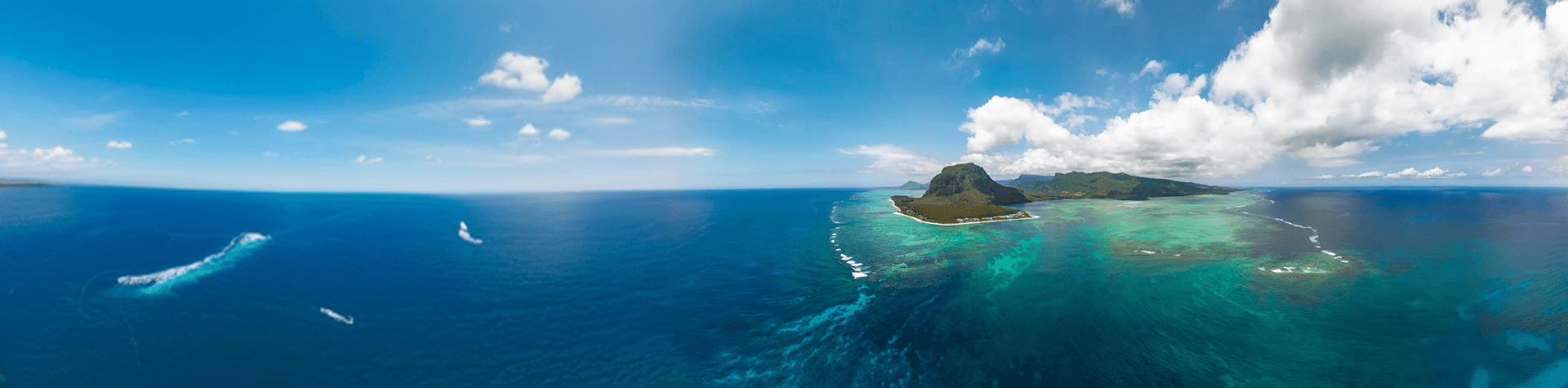

You’ve probably seen it before. A massive “underwater waterfall” is pouring off the coast of Mauritius, as if the ocean itself is collapsing into the deep. It looks unreal. That’s because it is not what it seems.
The underwater waterfall in Mauritius is closer to an optical illusion than a real waterfall, which is exactly why it stands out. That also changes how you experience it. It is not just about where it is, but how you choose to see it.
Most people only see it in photos, but the way you view it in real life is what determines whether it lives up to expectations. In this guide, you will see what it actually is, where to find it, and how to plan the right way to experience it.
Read in this article:
What is the underwater waterfall?
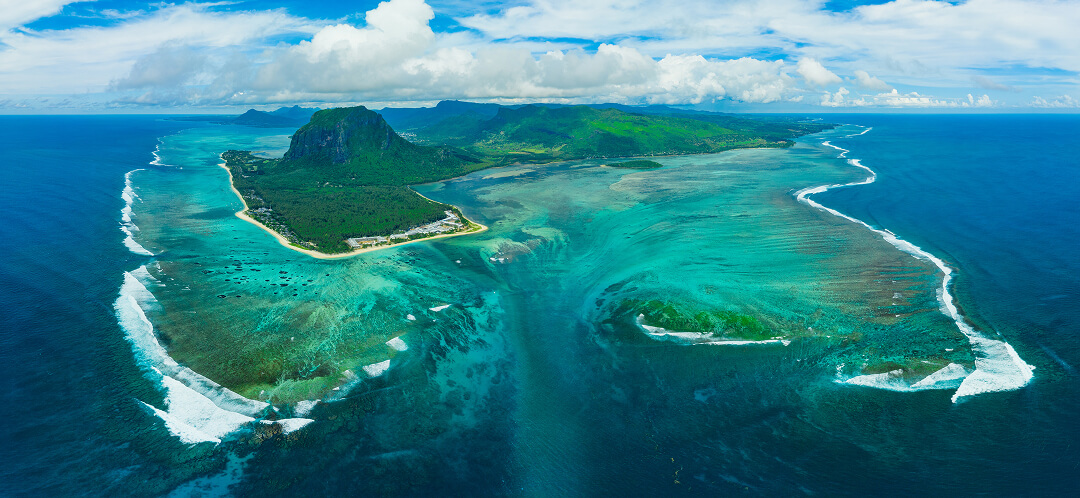
The underwater waterfall in Mauritius is an optical illusion where sand and sediment move along the ocean floor, creating the appearance of a waterfall beneath the surface.
It is not a real waterfall. There is no drop where water falls into the ocean. What you see is sand shifting along a steep underwater slope near Le Morne Brabant.
The visual effect comes from contrast. Shallow water appears bright turquoise, while deeper water looks dark blue. As sand moves across this boundary, it forms streaks that resemble flowing water. From above, those patterns align into a waterfall-like shape.
This is why photos of the underwater waterfall often look more dramatic than what you might see in real life.
Next in this series: Catatumbo Lightning Explained: Is It Dangerous and Why It Happens
How does the underwater waterfall work
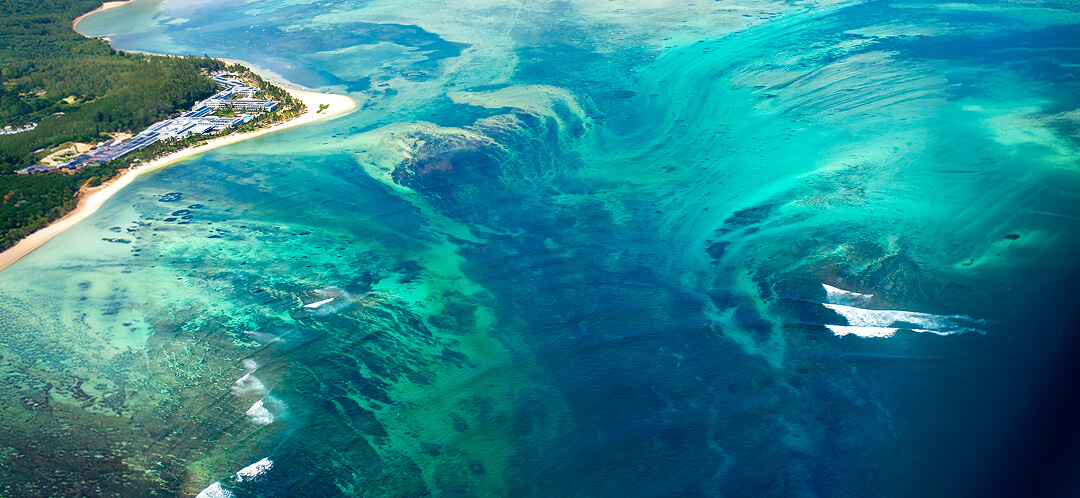
The effect depends on three elements:
- A steep underwater drop-off
- Light-colored sand moving with ocean currents
- Strong contrast between shallow and deep water
Near the southwest coast of Mauritius, the seabed drops sharply beyond the lagoon. Sand shifts toward that drop and forms long lines.
From sea level, the water looks normal. From above, those lines come together to create the illusion of a waterfall. The deeper the drop-off and the stronger the contrast, the more visible the effect becomes.
This is why the underwater waterfall looks different depending on the weather, time of day, and water clarity.
Next in this series: 10 Places and Natural Events Around the World That Seem Unreal
Where is the underwater waterfall
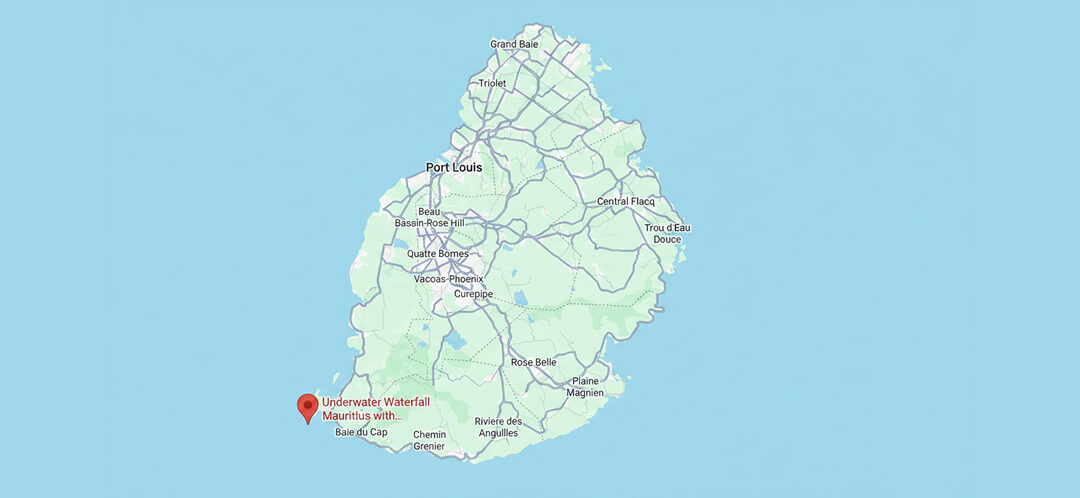
The underwater waterfall is located off the southwest coast of Mauritius, near Le Morne Brabant, about 35 miles (55 km) from Port Louis.
Le Morne Brabant is a UNESCO-listed peninsula surrounded by shallow lagoons and coral reefs. The lagoon itself is relatively shallow, while the ocean floor drops sharply just beyond it, leading toward much deeper waters in the Indian Ocean. This area is one of the most visually distinct coastal landscapes, with a clear transition between lagoon and open ocean.
Next in this series: Nazaré Giant Waves: Watching the Atlantic Breathe
How to see the underwater waterfall in Mauritius
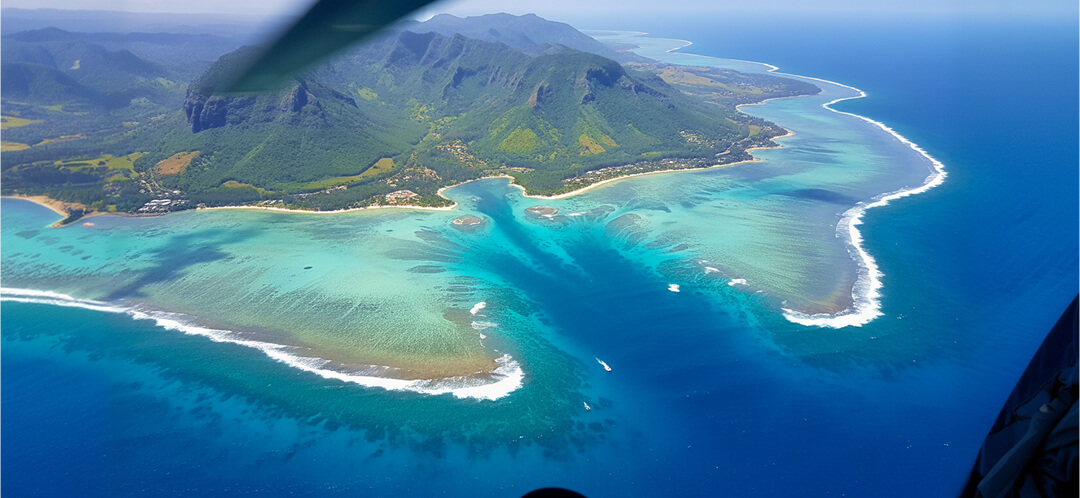
The only reliable way to see the underwater waterfall is from above, typically by helicopter.
Flights pass over the Le Morne Brabant lagoon, where the contrast between shallow sandbanks and deep ocean creates the illusion. From this angle, the patterns in the seabed become clear, and the “waterfall” effect is fully visible.
You will only see the waterfall for a few minutes. The flight follows a wider route along the southwest coast, so the formation appears as part of a broader aerial view rather than a single fixed stop.
Underwater waterfall helicopter tour details
- Duration: 15 to 25 minutes for shorter routes, with longer scenic flights up to 30–45 minutes depending on departure point
- Price: roughly $180 to $300 per person for shared flights, or from €720 per helicopter if you book a private experience
- Departure points: Le Morne, Chamarel, Bel Ombre, or other helipads across the island
Most flights include views of nearby landmarks such as Chamarel, the Black River Gorges, and the southwest coastline, not just the waterfall itself. The helicopter flight is the main expense and the only way to see the formation from the angle that creates the effect.
Next in this series: Socotra Travel: Your Gateway to the World’s Most Alien Island
Is the underwater waterfall worth it?
Yes, if you know what to expect.
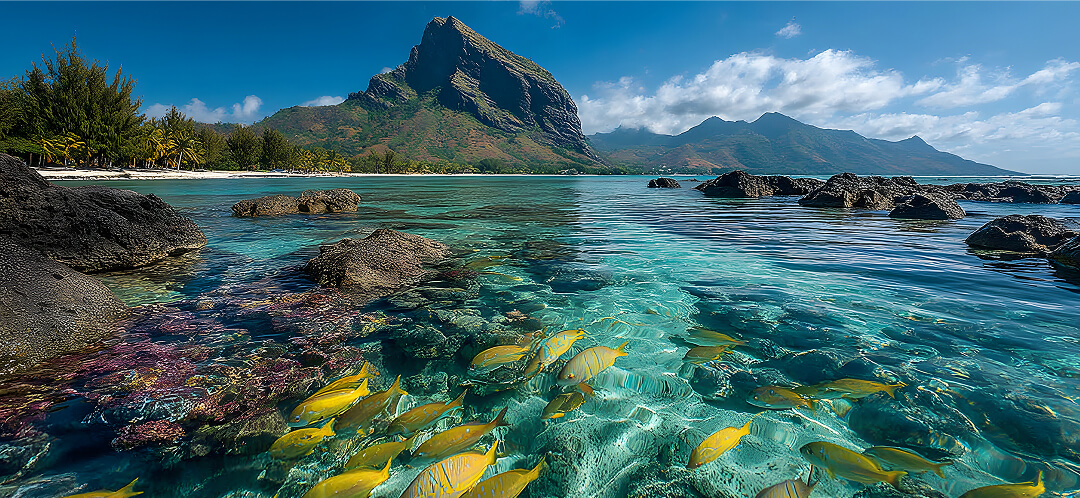
You will not find a dramatic landmark you can walk up to. The underwater waterfall does not stand out at ground level, which makes the experience very different from what the photos suggest.
What makes it worthwhile is the perspective it creates. From the right vantage point, the contrast between shallow sandbanks and deep ocean becomes clear, and the scale of the formation starts to make sense.
For most travelers, that shift in perspective is what justifies the cost.
Tip: Book your helicopter flight for mid-morning. Early flights can have low light, and afternoon flights often deal with haze or clouds. Clear visibility makes a noticeable difference in how strong the waterfall effect looks.
Next in this series: Swim with Whale Sharks in Isla Holbox
How to fly to Mauritius to see the underwater waterfall
Flights from the US to Mauritius require at least one connection, with most routes passing through Paris, Istanbul, Dubai, or Doha. Airlines such as Air France, Emirates, Turkish Airlines, and Qatar Airways operate these routes, and your choice of connection will influence both total travel time and pricing.
Total journey time typically ranges from 23 to 40 hours. Shorter layovers reduce overall travel time but often come at a higher price, while longer connections can lower fares if you are flexible.
Round-trip prices vary by departure city. From New York (JFK), fares usually range from $1,400 to $1,900, while flights from Los Angeles (LAX) typically fall between $1,500 and $2,200. Booking 3 to 6 months in advance and choosing midweek departures can help you access the lower end of these ranges.
Fly to Mauritius to see the underwater waterfall.
Compare routes and find better prices.
Next in this series: Red Crab Migration on a Budget: How to Experience “It’s Raining Crabs”
Things to do in Mauritius
If you are already visiting Le Morne for the underwater waterfall, it makes sense to plan a full day in this part of the island. Most travelers combine several stops instead of visiting just for the helicopter flight.
You can cover the main highlights in one trip without rushing, since the key locations sit relatively close to each other.
Le Morne Brabant
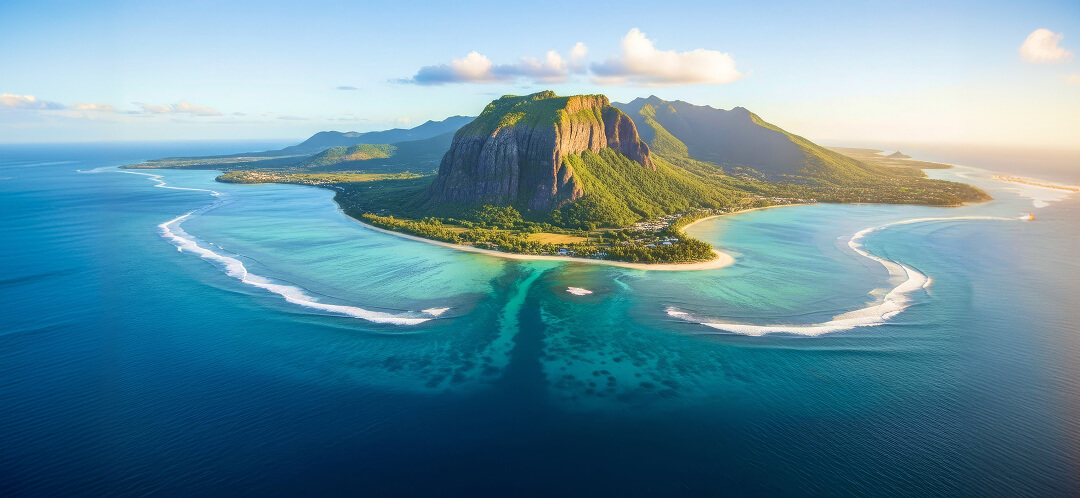
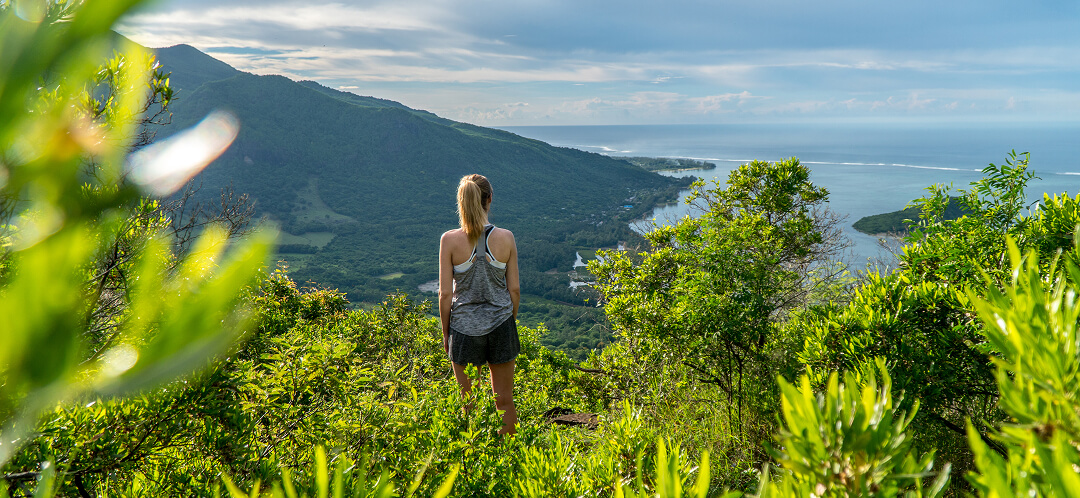
Le Morne Brabant offers one of the best viewpoints on the island. The hike is about 4.2 miles (6.8 km) round trip and usually takes 3.5 to 4 hours, depending on pace. The final section is steeper and may require some light climbing over rocks, but most of the route is manageable. From the top, you can see the lagoon, reef line, and the southwest coastline, which helps put the entire landscape into perspective.
Chamarel
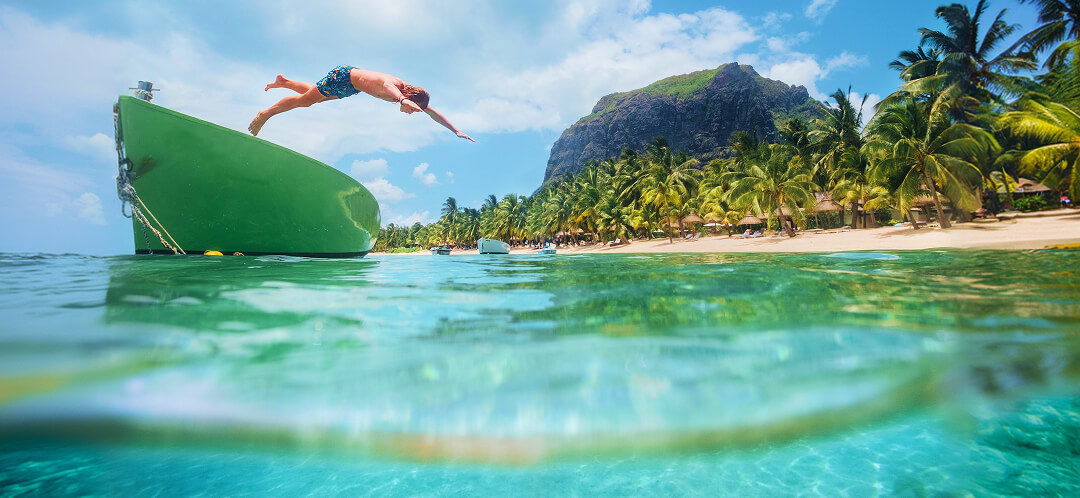
Chamarel sits approximately 18 miles (30 km) from Le Morne, and the drive there takes 30 to 40 minutes through winding mountain roads. The area includes the Chamarel waterfall, which drops about 300 feet (100 meters), and the Seven Colored Earths, a small geological formation with layered sand dunes in different shades. Both stops are easy to combine into the same route without adding much extra travel time.
West coast beaches
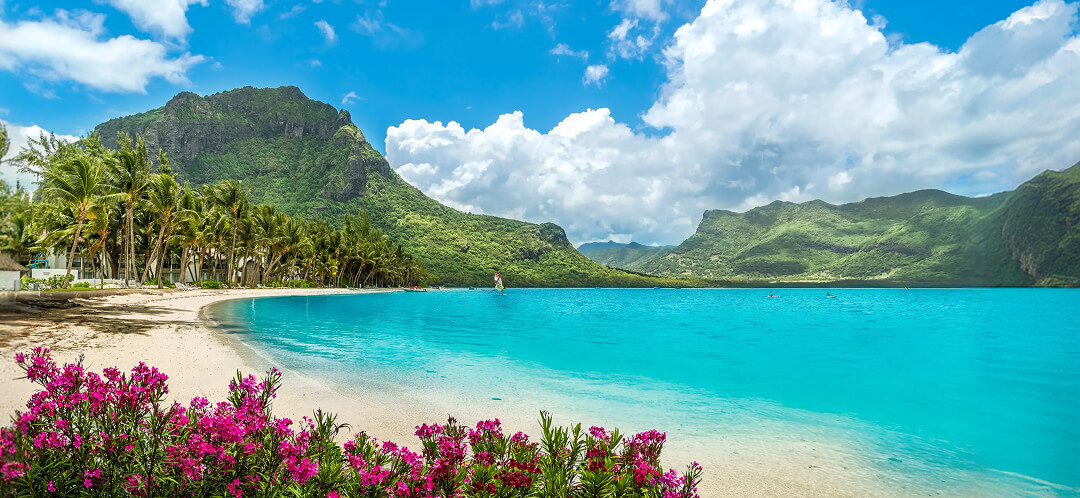
The west coast runs along the same stretch of shoreline and is known for calm water and consistent weather throughout most of the year. Beaches near Le Morne and Flic en Flac sit about 25 to 40 miles (40 to 65 km) from Port Louis and offer shallow water and long stretches of sand. This part of the island is one of the best places to slow down and spend a relaxed afternoon by the water.
Next in this series: Budget Guide to the Best African Islands with Ovago
Travel tips for visiting the underwater waterfall
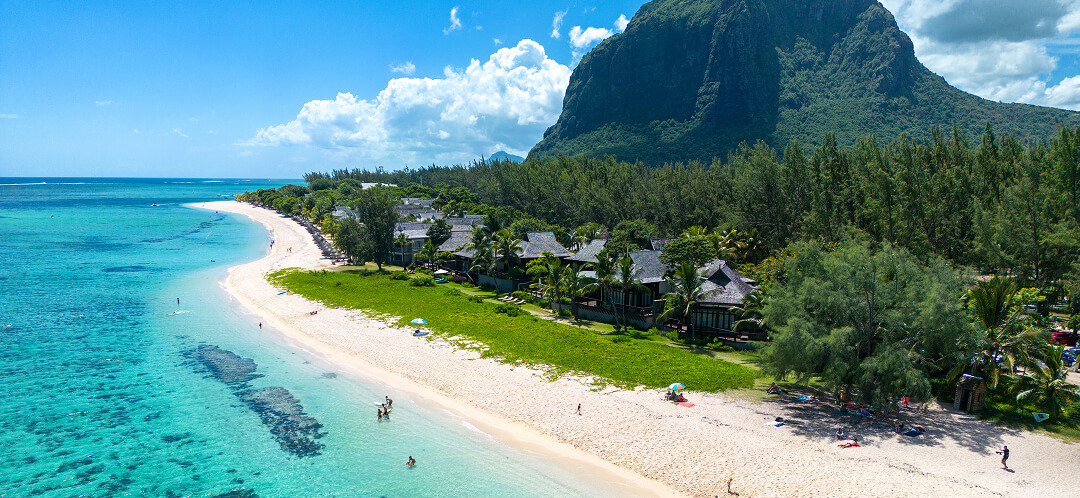
If you want to see the underwater waterfall clearly, planning matters. Most of the experience depends on timing, visibility, and expectations.
What to keep in mind:
- Check the weather before booking your flight
Clear skies make a big difference. If the air is hazy or overcast, the underwater waterfall effect becomes much harder to see from above. - Plan your trip between May and November
These months usually offer drier weather and better visibility, which improves your chances of getting a clear aerial view of the formation. - Do not compromise on the helicopter flight if you want to see the waterfall properly
The aerial view is the only way to experience the effect. If you need to adjust your budget, it makes more sense to choose simpler accommodation or dining options than to skip the flight. - Do not expect to see the underwater waterfall from the ground
The illusion only works from above, and the flight itself is short. What you are paying for is the perspective.
Tip: If you are deciding between a shared and private helicopter flight, consider the timing. Private flights give you more flexibility with departure time, which can help you avoid poor visibility conditions.