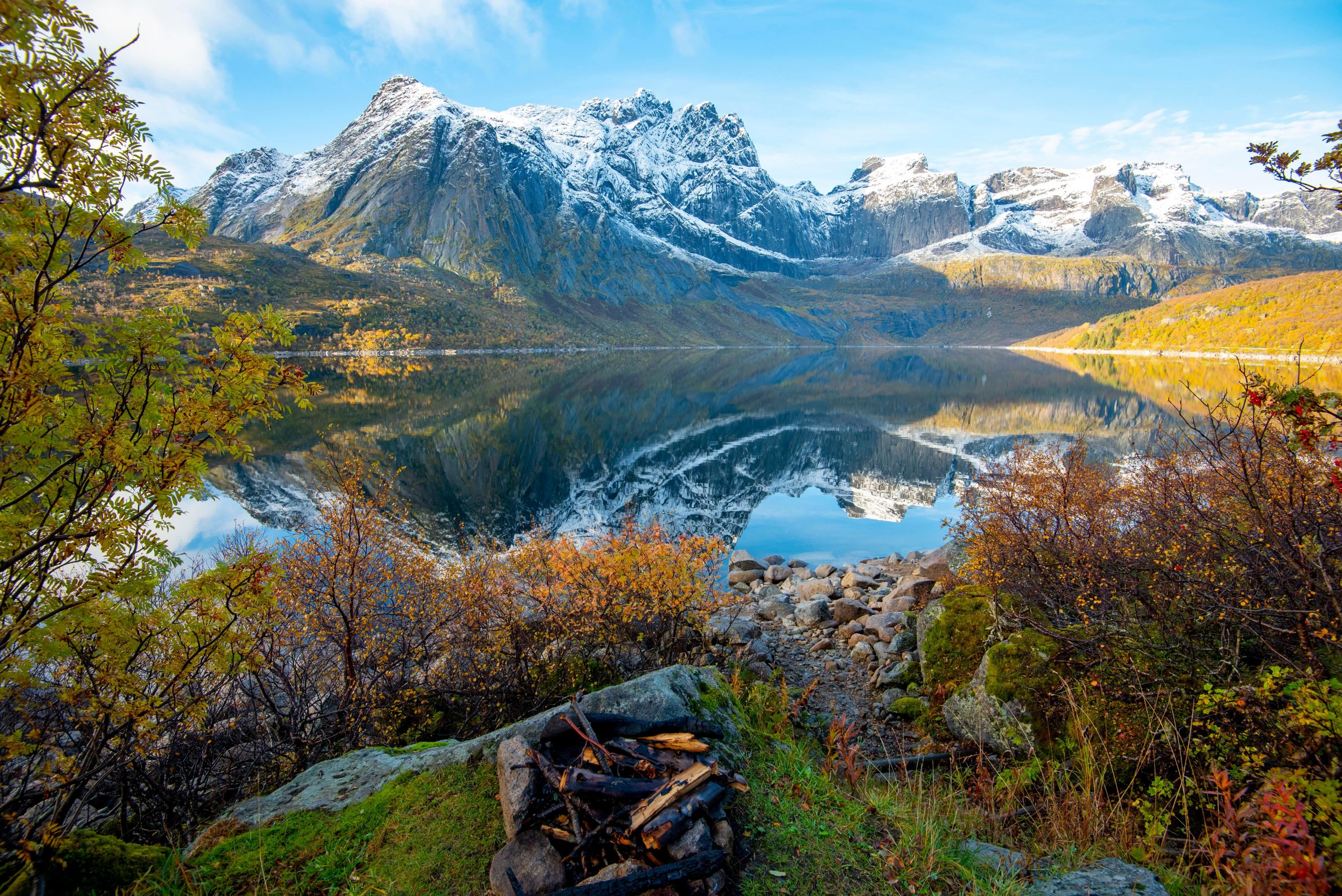

The Lofoten Islands in Norway feel like a dream. They offer jagged peaks, dancing Northern Lights, midnight sun, and Viking history all in one place. But here’s the surprise: this dream isn’t as distant as it seems.
Here’s how to get to the Lofoten Islands: with more transatlantic flights into Oslo and Evenes (Harstad/Narvik Airport), plus Hurtigruten cruises now stopping in Lofoten, the islands are more accessible than ever for American travelers.
Add in the charm of traditional fisherman’s cabins (rorbuer) — cozy, affordable places to stay — and budget-friendly public transport, and Lofoten becomes not just a fantasy, but a trip within reach. Seek out other unique destinations to add to your travel list.
In this article, we’ll show you how to plan your own journey to the land of auroras and midnight sun — with Ovago as your partner in finding cheap flights to get you there.
Read in this article:

Lofoten Islands Winter: Northern Lights, “Blue Hour” Light, & Snow-Capped Peaks
Late November to March
Winter in the Lofoten Islands feels like stepping into another world. Few places on Earth bring together the Northern Lights, Viking heritage, and dramatic coastal scenery in such a small, breathtaking setting. Unlike the crowded summer season, winter travel here is still calm and authentic, letting you experience Norway’s Arctic at its most peaceful.
Picture this:
- Reinebringen’s snowy ridge towering over fishing villages
- White-sand beaches like Uttakleiv and Haukland glowing in soft Arctic pastels
- Long hours of magical twilight — the “Blue Hour” of midwinter — perfect for unforgettable photos
Spend your days skiing or snowshoeing along backcountry trails with sweeping ocean views, and watch sea eagles, whales, and seabirds thrive in the icy waters. When the cold sets in, warm up in cozy cafés with Arctic char, hearty fish stews, and fresh cinnamon buns before retreating to a traditional fisherman’s cabin.

Lofoten Islands Summer: Midnight Sun, Scenic Trails, & a Riot of Color
Late May to early September
Summer in the Lofoten Islands is pure Arctic magic. Instead of winter’s twilight, the sun never sets — bathing the dramatic peaks and fjords in endless golden light. For US travelers, it’s one of the rare places on Earth where you can hike, kayak, or fish under the Midnight Sun, experiencing full daylight around the clock. This season reveals Lofoten at its most inviting:
- Trails to Reinebringen and Ryten open up, offering sweeping views of fjords and turquoise waters.
- White-sand beaches like Haukland and Uttakleiv look almost tropical, with green mountains dropping into crystal-clear Arctic seas.
- Villages such as Henningsvær and Nusfjord buzz with galleries, cafés, and summer festivals
- The town of Svolvær is a bustling base for boat tours, kayaking, and wildlife safaris.
Read also: Global and North American Destinations with Moderate Climates and Great Summer Travel Opportunities

Year-Round Lofoten: From Vikings to Wildlife & Arctic Flavors
The Lofoten Islands are more than a seasonal destination — they’re a year-round gateway to Arctic culture, cuisine, and unforgettable encounters. Some of the most captivating experiences are equally accessible no matter the season:
- Discover history at the Lofotr Viking Museum in Borg. Step inside a reconstructed chieftain’s hall, feast Viking-style, and learn how Norse traditions shaped these islands. Just a short drive — about an hour from Svolvær — it’s an easy addition to any trip.
- Explore the rich wildlife. Sea eagles soar overhead, puffins nest along the cliffs in summer, while whales and orcas cruise through the fjords in winter. Boat tours and safaris operate year-round from hubs like Svolvær, offering close-up encounters with the region’s wild beauty.
- Taste the local cuisine. Sample bacalao (stockfish stew) — a dish tied to the islands’ thousand-year-old cod tradition. Savor Arctic char, freshly baked cinnamon buns, and hearty fish soups in small harborside cafés. Many restaurants transform seasonal ingredients into Nordic-inspired menus, but the flavors remain authentic and warming in every season.
- Journey further north to explore Sami traditions. From Lofoten, reaching Tromsø takes about 6–7 hours by road or a 1-hour flight. Here, travelers can meet the Indigenous Sami people, learn about reindeer herding, and experience joik (traditional song) and storytelling that connect deeply to Arctic nature.
Read also: Simplify Your Travel Visa Application: A Guide for Tourists, with Special Focus on US Citizens

Top Places to Base Yourself in Lofoten
Reine & Moskenes: Iconic Scenery & Classic Lofoten Vibe
Reine and Moskenes sit side by side in the southern Lofoten Islands, making them a natural pair for travelers.
- Reine is a postcard-perfect fishing village, often called “the most beautiful in Norway.” Its red rorbuer line the waterfront, backed by the dramatic peak of Reinebringen, making it one of the most photographed spots in Lofoten.
- Moskenes is the surrounding municipality, with Reine as its administrative center. It’s also the main ferry gateway from Bodø, which makes it ideal for visitors arriving by sea and looking for a scenic base without extra flights.

Svolvær (Capital of Lofoten): Convenience & Gateway City
Svolvær is the capital of the Lofoten Islands and the gateway for most visitors. As the region’s main hub, it has an airport, ferry connections, and plenty of tour options, making it the most convenient entry point to Lofoten.
The town offers a wide range of hotels, restaurants, and excursion companies, so it’s especially good for first-time visitors, shorter trips, or those exploring without a car.
Don’t miss the chance to see Svolværgeita (“The Goat”), the town’s famous twin-peaked rock formation, or enjoy a meal along the lively harborfront while watching boats come and go.
Plan your Lofoten trip with Ovago.
Enjoy affordable flights, 24/7 support, and seamless routes.
Henningsvær: Charming Fishing Village
Henningsvær is one of Lofoten’s most charming fishing villages. It’s often called “the Venice of Lofoten” for its canals and vibrant atmosphere. It blends traditional fishing life with modern flair, offering cozy cafés, art galleries, and boutique shops.
It’s a great base for travelers who want authentic village life without giving up comfort. Don’t miss the iconic Henningsvær football field, perched dramatically on the edge of the sea — one of the most photographed pitches in the world.

Å: Historic & Remote Feel
At the very end of the E10 highway lies Å, a village so small its name is just one letter. This historic spot offers a glimpse into Lofoten’s past, with a museum dedicated to fishing and the centuries-old stockfish trade.
It’s perfect for travelers chasing that “end of the world” feeling. Wander along the rugged coastline, taste traditional dried stockfish, and soak in the raw beauty of Lofoten’s southernmost village.
Nusfjord: A Living Museum by the Sea
Nusfjord is one of Norway’s oldest and best-preserved fishing villages, recognized by UNESCO for its cultural heritage. With its restored rorbuer, it feels like stepping back in time while still enjoying modern comforts.
It’s an ideal base for those who love history and tranquility. The quiet harbor, dramatic surroundings, and authentic atmosphere make Nusfjord a place to slow down and truly connect with Lofoten’s roots.
Travel Tip: If you have a week, split your stay between 2–3 locations. Start in Svolvær for convenience, then move on to Reine or Henningsvær for scenery and adventure. Short on time? For a 3–4 day trip, Reine/Moskenes delivers the biggest “wow factor.”

How to Fly to Lofoten Islands (Economy Class)
- US → Oslo (OSL) → Bodø (BOO) → Lofoten (Svolvær or Leknes)
Combine common transatlantic flights with efficient local connections. Norwegian Air Shuttle operates frequent year‑round flights from Oslo to Bodø and Evenes, with onward short domestic hops to Svolvær (SVJ) or Leknes (LKN) via Widerøe.
- US → Oslo → Harstad/Narvik (Evenes, EVE) → Lofoten
Evenes is an international airport with wide airline coverage. Norwegian and Scandinavian Airlines (SAS) provide daily flights to Evenes from Oslo, followed by regional services to Lofoten via Widerøe. From Evenes to Lofoten, travelers can either drive (~3 hours scenic route) or take regional transport, and possibly ferries depending on route.
- Seasonal Non-Stop Flights to Evenes (EVE)
This option cuts out intra‑Europe connections for some routes. Lufthansa offers year-round non‑stop flights from Frankfurt to Evenes. EasyJet (Amsterdam, summer), SAS (Copenhagen, summer), Edelweiss (Zurich, summer and winter), Austrian (Vienna), Norwegian (Bergamo, Palma, summer) — all serve Evenes seasonally.
- US → Copenhagen (via SAS) / Frankfurt (via Lufthansa)/ Amsterdam (via EasyJet, summer months) → Evenes (EVE)
This option combines major European hubs with direct access to Northern Norway.
Travel Tip: Book transatlantic flights separately from domestic Norwegian hops (e.g., US → Oslo with SAS or Delta, then Oslo → Bodø/Svolvær with Widerøe). This can cut costs.

Budget-Friendly Ways to Experience Lofoten
Traveling in Lofoten doesn’t have to break the bank. With a little planning, you can enjoy its spectacular scenery and culture on a reasonable budget.
- Stay Smart: Instead of high-end lodges, book a rorbuer through our hotel service — many offer kitchen facilities, so you can save by cooking your own meals. For food, look for small affordable cafes and bakeries, which serve hearty local dishes without fine-dining prices.
- Getting Around: Car rentals can be expensive, so consider public transport. The Reis Nordland app and 177nordland.no website make it easy to plan and buy bus tickets, while regional ferries link villages at a fraction of the cost of private tours.
Top Activities That Don’t Cost a Fortune
- Hiking: Trails like Reinebringen and Ryten deliver million-dollar views for free.
- Free Sights: Stroll Arctic beaches such as Uttakleiv, wander fishing villages, or take in harbor sunsets.
- Affordable Tours: Join small-group operators for kayaking trips or Northern Lights safaris — a more personal and budget-friendly option.
Best Time to Visit on a Budget
- September–October: See the aurora before peak winter prices kick in.
- May–June: Enjoy the Midnight Sun with fewer crowds and lower rates than high summer.