
When you book a flight, economy seats can look almost identical. You choose a row, pick a window or an aisle seat, avoid the middle one if you can, and move on. But on the same 10-hour overnight flight, two seats can have the same fare, cabin, and price, while one offers more space and the other comes with limited recline, less shoulder room, or more disruption.
Many travelers only notice these details after boarding, when it is too late to switch. This article explains which economy seats are worth considering, which ones need a closer look, and which tools can help you choose more confidently before your flight.
Read in this article:
Seat positions and how they affect your flight experience
Each seat position changes the flight differently. Some give you more legroom, easier movement, or a better chance to sleep. Others limit storage, add noise, or place you where people often pass by. Before choosing a seat, it helps to know what each position can improve and what it may make harder once you are on the plane.
Bulkhead rows
Seats in the bulkhead row are directly behind a cabin wall or divider, so no one reclines into your space. On most narrowbody aircraft, bulkhead pitch is about 35–38 inches (89–96.5 cm), compared to 30–31 inches (76–78.5 cm) in standard economy seats. That can make the row feel more spacious, especially during meals or when you need to stand up.
The trade-off is less storage and flexibility. Because there is no seat in front of you, you usually have to place smaller items in the overhead bin during takeoff and landing instead. The tray table often folds out of the armrest, which can limit movement. Airlines also place bassinets in bulkhead rows, so you are likely to sit near families with infants. On an overnight flight, the extra noise can make it harder to sleep.
Exit rows
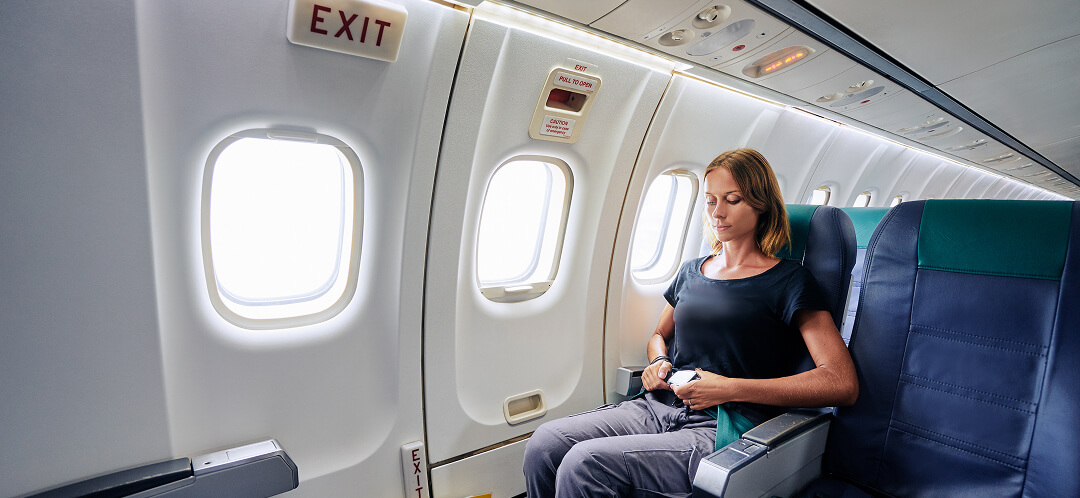
Exit rows usually offer the most legroom in economy. Over-wing exit rows tend to have the most space, but they can be noisier because they sit near the engines. Rear exit rows may be quieter, although they sometimes add less room.
The extra space comes with conditions, though. Bags cannot block the exit area, so under-seat storage is not available during takeoff and landing. Some exit row seats have fixed armrests or limited recline, which can make them less comfortable for sleep. You also need to meet the airline’s safety requirements and be able to help operate the emergency exit if needed. Exit-row seats often cost extra, so they make the most sense when legroom matters more than storage or recline.
The row directly in front of an exit row
This row is often less comfortable than it looks. On many aircraft, these seats recline very little or not at all because they cannot block the exit row behind them. You may spend the whole flight sitting upright, while the passenger in front of you can recline into your space. Before choosing one of these seats, check the seat map for notes such as “limited recline” or “no recline.” On a longer flight, that restriction can make a noticeable difference in comfort.
Seats behind a fixed row
Seats behind a fixed row are worth considering if steady personal space matters more than a quieter cabin. These seats are positioned behind a bulkhead wall, galley wall, cabin divider, or an exit row. Either there is no seat in front of you, or the seat cannot recline, which gives you more space for your laptop, tray table, or legs. On a 10-hour flight, that matters.
The trade-off is that these seats often sit near busy cabin areas. A bulkhead means no floor storage. A galley wall can bring noise and light. A cabin divider can place you near passengers crossing between sections or standing nearby. Choose this seat position when space is your priority, but avoid it if you are sensitive to noise or movement during the flight.
Seats near the galley
Seats near the galley have one clear upside: the crew often serves meals from the galley, so nearby passengers receive meals earlier. The galley itself also gives you a place to stand and stretch on a long flight.
The downside is noise from carts, storage doors, and crew conversation. On a short flight, that trade-off is manageable. On an overnight flight, sitting next to the galley can disrupt your sleep.
Window seats
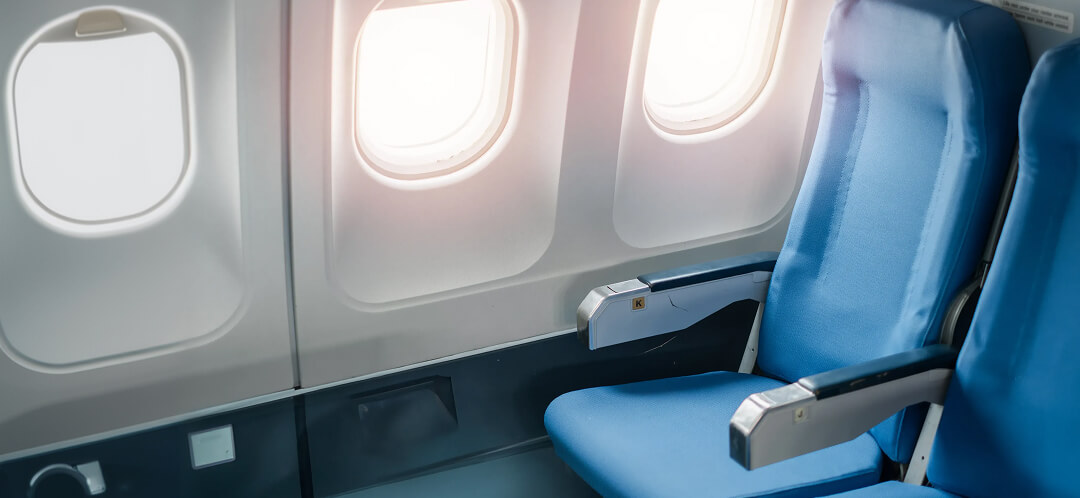
Window seats offer a view, but their real value is that you get a wall to lean against, control over the shade, and no one climbing past you in the dark. Yet, if you need to stand, stretch, or use the lavatory, you may have to climb past one or two passengers. A window seat is usually better for travelers who want to settle in and rest, not for those who get up often.
Aisle seats
Aisle seats offer easy access to the overhead bin and the freedom to stand without disturbing your row, at the cost of passing carts right next to you and neighbors who need to get out. On short flights or if you need to move around frequently, the aisle is usually more practical than on long flights when you would like not to be disturbed by constant movement around you.
Why the aircraft matters as much as the seat
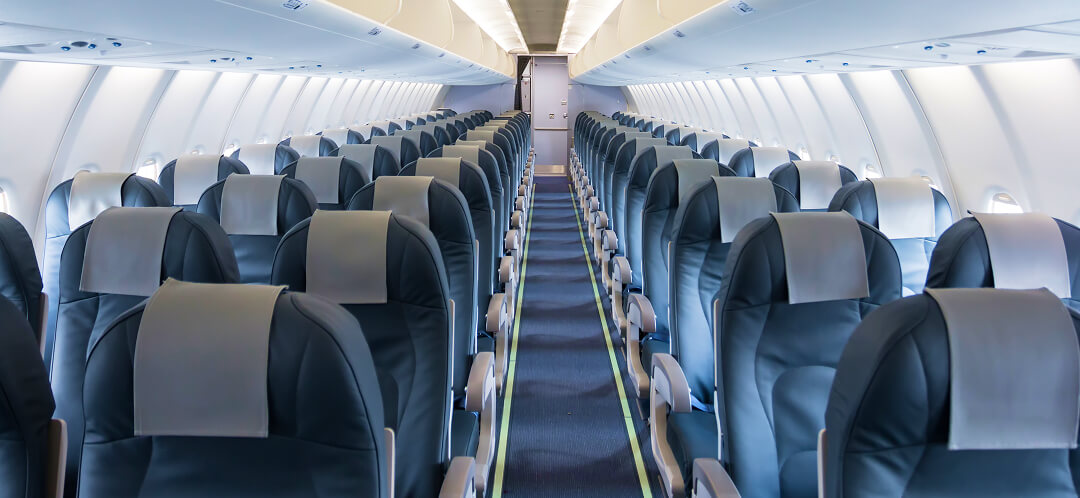
A good economy seat depends on more than the seat number. The aircraft configuration determines how many people share each row, how far you sit from the aisle, and how much shoulder room you have. The same seat type can feel very different depending on the aircraft, with some cabins offering more personal space and easier access than others.
Narrowbody aircraft
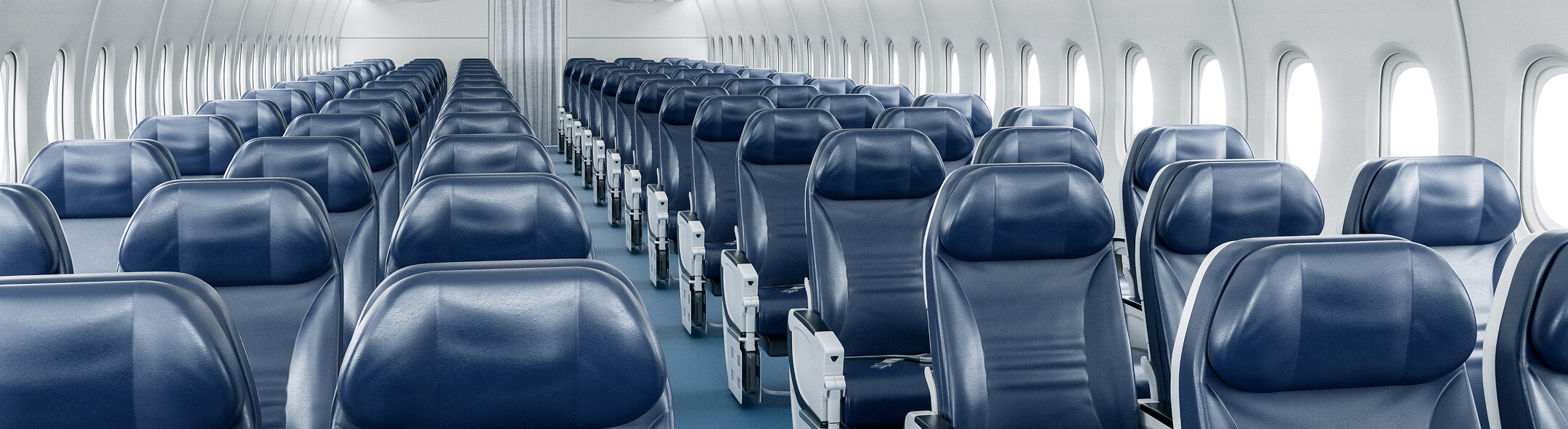
Narrowbody planes like the Boeing 737 and Airbus A320 family usually operate domestic and short-haul international routes. Airlines such as American Airlines, Delta Air Lines, United Airlines, and Lufthansa use these aircraft on many short routes. They have one aisle and a simple3-3 layout. Your choice is usually limited to a window, middle, or aisle seat. It also means there are fewer passengers on board than on most widebody aircraft and no center row of seats, so everyone is either next to a window or relatively close to it and the aisle.
Widebody aircraft
Widebody planes, such as the Boeing 777, Boeing 787 Dreamliner, Airbus A330, and Airbus A350, usually operate long international routes and have two aisles. Their layouts vary more, so the aircraft matters more on long-haul flights.
- The Boeing 777, flown by airlines such as United Airlines, Emirates, Air France, and British Airways, shows this clearly. Some airlines use a 3-3-3 layout, while others use a denser 3-4-3 layout. If you sit in one of the two middle seats in a 3-4-3 center block, you have no window nearby and must disturb at least one person to reach either aisle. On a 10–12-hour flight, that can feel constraining.
- The Airbus A330 planes, operated by Delta Air Lines, Lufthansa, Air France, and Cathay Pacific, have a good seat configuration for travel companions because many cabins use a 2-4-2 layout. The two-seat sections by the windows let two travelers sit together without sharing the row with a third passenger. It is also convenient for travelers who choose a window-side aisle seat, since only one person may need to pass them to get to the aisle. Some airlines have a denser 3-3-3 layout on these planes, so it is always a good idea to check the seat map before booking.
- The Boeing 787 Dreamliner has two specific window-seat advantages. Its fuselage curves more gradually than some older aircraft, which can give window passengers a little more shoulder space. Its windows are also significantly larger than on many commercial aircraft and electronically dimmable, with a button instead of a physical shade. Airlines including United Airlines, All Nippon Airways, Japan Airlines, and British Airways operate Boeing 787 Dreamliner aircraft and use a 3-3-3 configuration, while Japan Airlines uses a roomier 2-4-2 economy layout.
- The Airbus A350, flown by airlines such as Qatar Airways, Singapore Airlines, and Cathay Pacific, usually uses a 3-3-3 layout. It has a wide fuselage, which means the cabin itself is broad, so the 9-across layout can feel less tight than older or denser widebody cabins. It gives you more shoulder room, easier movement through the aisles, and the cabin feels less cramped during boarding, meal service, and long periods in the seat.
| Aircraft Type | Common Layout | Typical Seat Pitch | Typical Seat Width |
|---|---|---|---|
| Boeing 737 | 3-3 | 30–31 inches(76–78.5 cm) | 17–18 inches(43–45.5 cm) |
| Airbus A320 Family | 3-3 | 28–32 inches(71–81.5 cm) | 17–18 inches(43–45.5 cm) |
| Boeing 777 | 3-4-3 or 3-3-3 | 30–35 inches(76–89 cm) | 17–18 inches(43–45.5 cm) |
| Airbus A330 | 2-4-2 or 3-3-3 | 31–33 inches(78.5–84 cm) | 16.5–18 inches(42–45.5 cm) |
| Boeing 787 Dreamliner | 3-3-3 or 2-4-2 | 31–32 inches(78.5–81.5 cm) | 16–18 inches(40.5–45.5 cm) |
| Airbus A350 | 3-3-3 | 31–33 inches(78.5–84 cm) | 17–18 inches(43–45.5 cm) |
Compare the best economy seats
Explore 10 airlines with the strongest economy comfort
If you want to check the aircraft layout before selecting the seat, you can do it in a few ways:
The airline’s own booking flow is usually the most reliable seat map because it reflects your specific flight. It shows available and restricted seats, and sometimes flags limited recline or nearby lavatories.
For more details, check tools such as AeroLOPA and SeatMaps. They show cabin zones, lavatories, galleys, exits, bassinets, and window alignment. Sometimes, they even help you spot limited recline or other seat trade-offs. On a seat map, exit rows are usually marked with a door icon or highlighted in a different color, and bulkhead rows often appear as a wall or gap before the first row of a section.
Tip: Airlines often release more seats in the final days before departure, so it is worth checking the seat map again about 48 hours before your flight. A better seat may become available at no extra cost.
Flight length and when paying extra for a seat makes sense
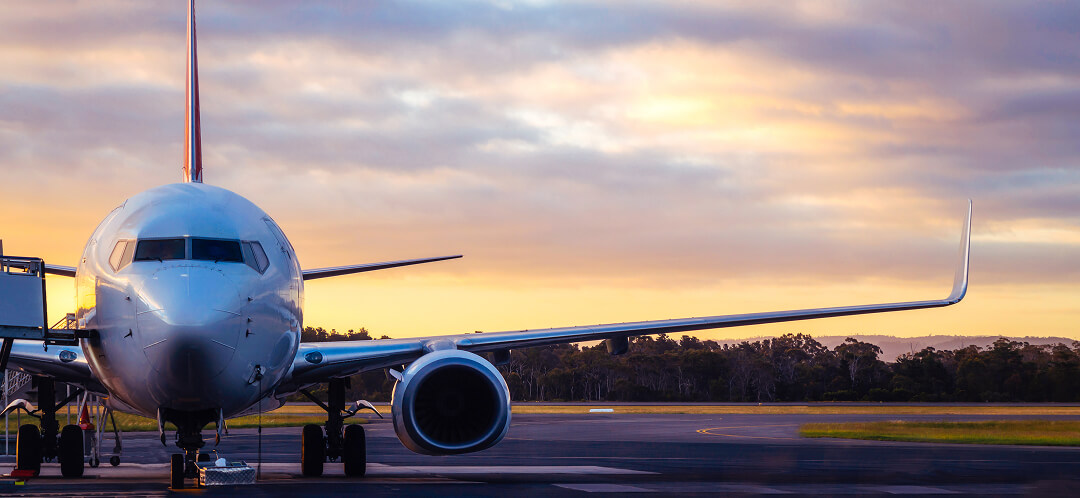
Seat choice matters more as the flight gets longer. On a short flight, a middle seat or busy aisle may only bother you for an hour or two. On a long-haul or overnight flight, limited recline, noise, and poor sleep position make it harder to rest, leaving you tired and sore after landing.
- Under 3 hours: Seat choice is a low priority unless you need to sit with a child, want extra legroom, or have a tight connection. A front-of-cabin seat can help you get off the plane faster and make it in time for your next flight. Otherwise, a paid seat rarely changes enough to justify the fee on a short daytime flight.
- 3–6 hours: It is worth checking the seat map more carefully. An aisle or window seat can feel much better than a middle seat on longer domestic or regional routes, such as New York to Los Angeles or Boston to San Francisco.
- 7+ hours, especially overnight: Seat choice can directly affect rest. A window seat away from lavatories, an exit row, or an extra-legroom seat can make a real difference on long-haul flights such as New York to London or Los Angeles to Tokyo.
Selecting a specific seat is worth it when the comfort benefit justifies the extra cost, especially if it helps you avoid a middle seat, sit with your travel companion, get extra legroom, or choose a better position for sleep. With so many variables, from aircraft layout to flight length and seat location, it can be hard to know which option fits your trip best. At Ovago, our experts can help you review available seat options when you book, so you can choose a seat that supports both comfort and value.
Quick decision guide by traveler type
- Tall traveler: Choose an exit row or bulkhead seat, but compare the pitch before booking. If the difference is only 1–2 inches, the fee may not be worth it. Avoid center-block seats on widebody aircraft when possible.
- Light sleeper: Choose a mid-cabin seat away from galleys and lavatories to avoid noise, light, and foot traffic on overnight flights.
- Solo traveler: Choose a window seat if sleep matters most to you, especially on overnight flights. Choose an aisle seat if you prefer easier movement, want quicker access to the overhead bin, or dislike asking others to move. Avoid middle seats on longer flights.
- Travel companions: Look for a two-seat side section on aircraft that have it, such as many Airbus A330 layouts, to avoid sitting with a third person in the row. On a 3-3 layout, choose window-middle for more privacy or aisle-middle for easier movement.
- Family with children: If you need a bassinet on a long-haul flight, ask about bulkhead seats because airlines usually place bassinets there. Do it as soon as you buy the ticket because there is a limited number of bassinets available per flight. If you do not need a bassinet, but still need extra leg space, do not choose exit rows, because children and passengers traveling with them are not allowed to sit in exit rows.