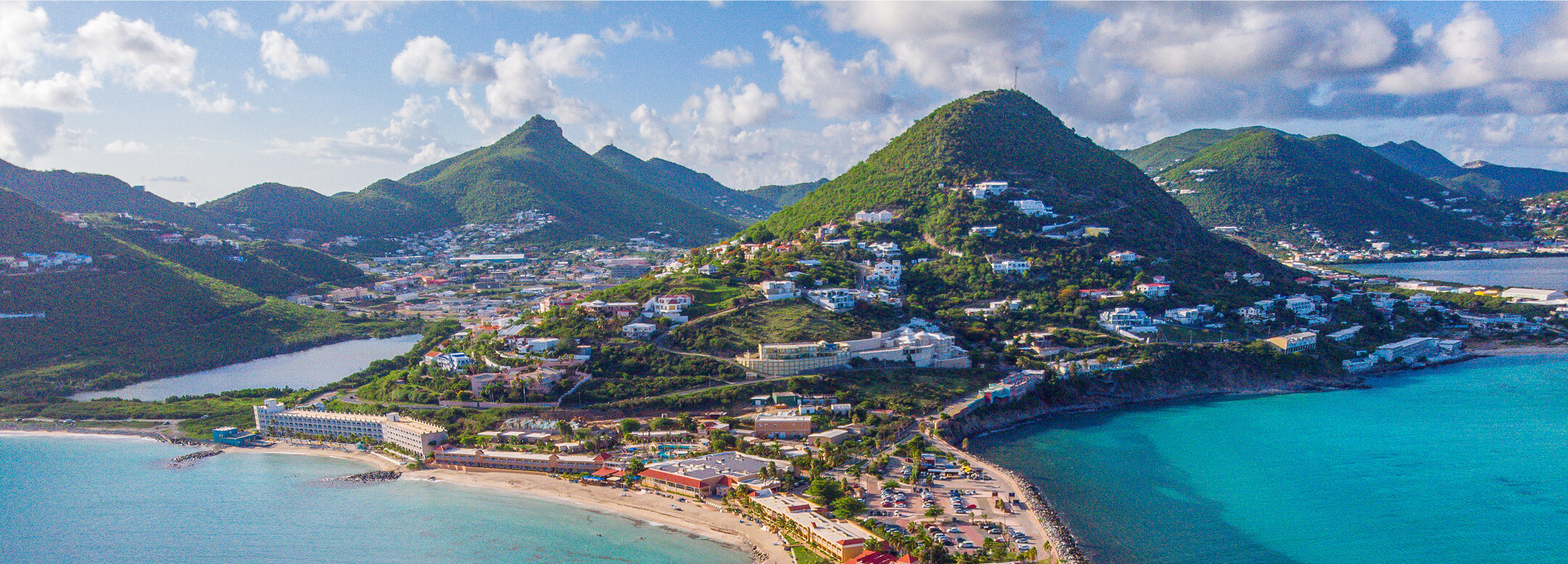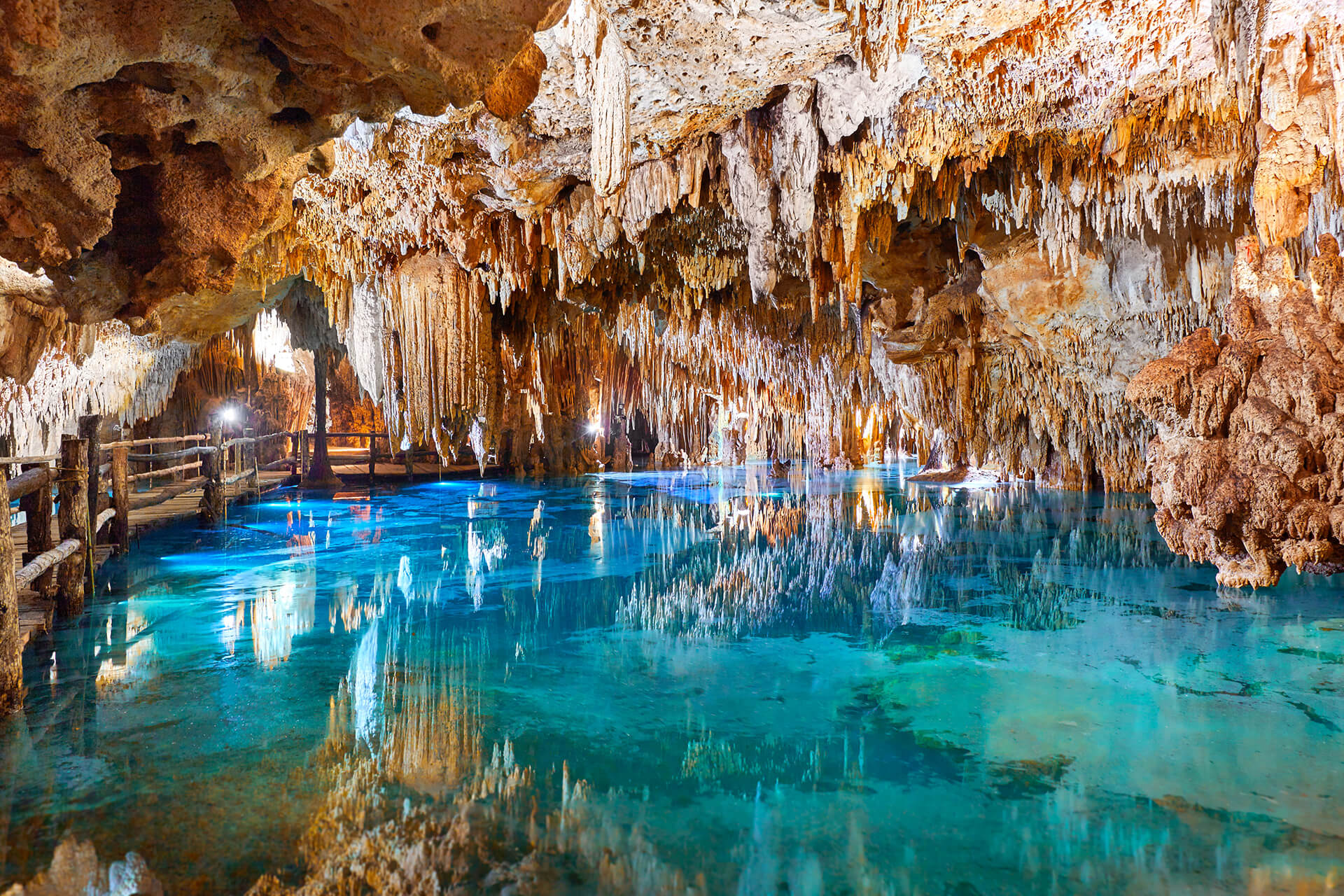

Clear blue water, light coming through a cave, vines hanging down into what looks like a hidden pool.
That is a cenote.
It might look absolutely serene in photos, but in real life, it may feel very different. Some are shallow and open. Others are deep, dark, and completely underground.
Before you go, it helps to know what you are actually getting into.
Read in this article:
What a cenote actually is
Cenotes are natural sinkholes formed when limestone collapses and exposes groundwater underneath. They are mostly found in the Yucatán Peninsula, where the ground sits over a large underground river system.
That’s why the water is so clear. It filters naturally through rock.
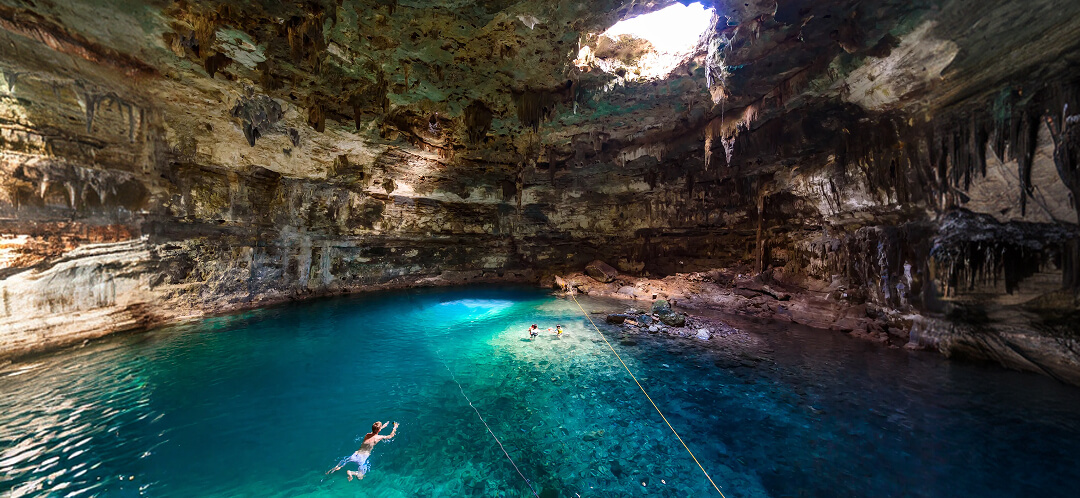
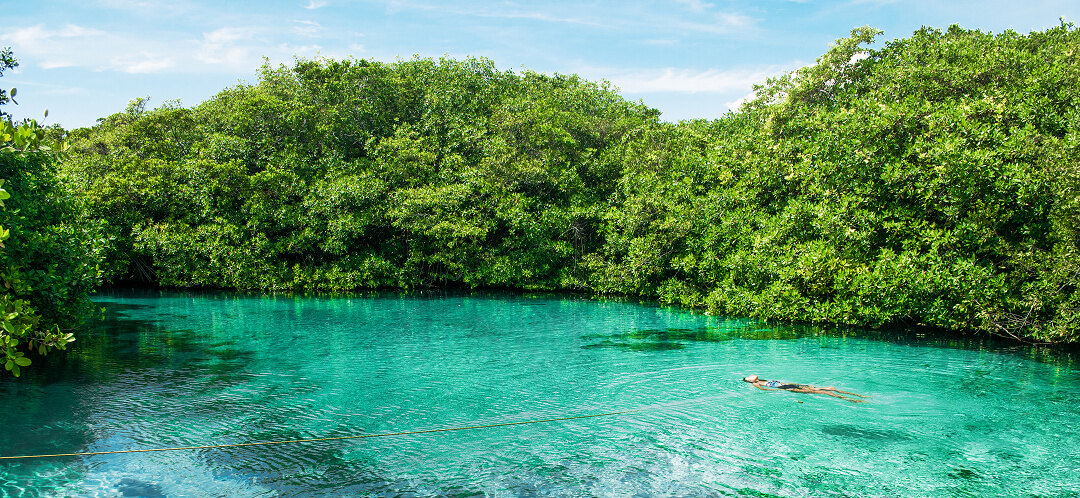
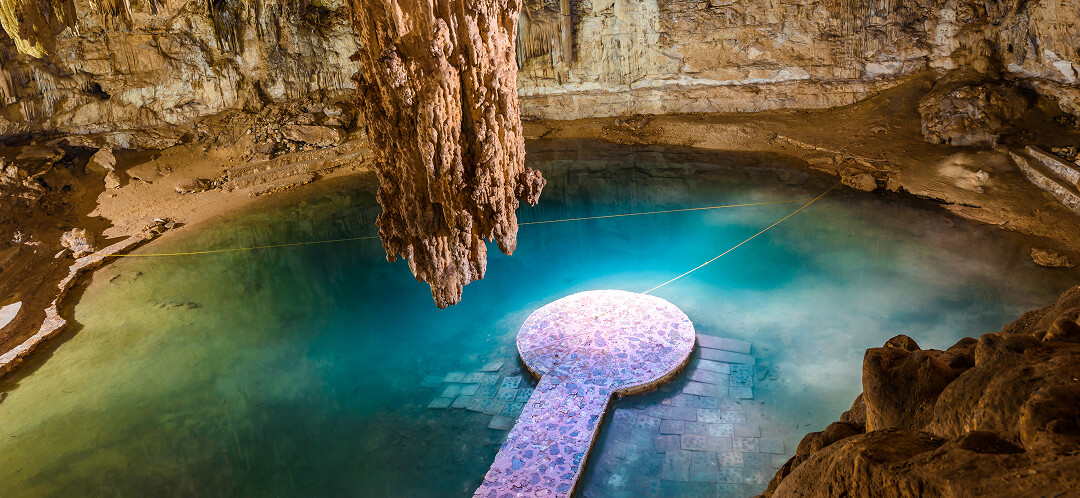
Some cenotes are open and look like small lakes. Others are partially covered, with a mix of sunlight and cave, while fully enclosed ones rely on small openings above for light.
You are not just swimming in a pool. You are swimming in a cave system.
Flying to Mexico from the US
Flights to the Yucatán Peninsula are generally straightforward, with Cancún (CUN) serving as the main gateway for most cenote destinations. From there, Tulum, Playa del Carmen, and Valladolid are all within a few hours by road.
Round-trip prices vary depending on where you are flying from. For example, from the East Coast, flights from New York (JFK) to Cancún usually start at about $350 and can rise to $500, especially closer to departure.
From the West Coast, Los Angeles (LAX) often offers similar pricing, with fares starting at $300 and going up to $400 depending on timing and demand.
Many airlines operate these routes, including American Airlines, United Airlines, Delta Air Lines, and lower-cost carriers like Frontier, which helps keep pricing competitive throughout the year.
Flight times are relatively short. From most major US cities, you can expect to spend 3–5 hours in the air, often with nonstop options available. This makes it one of the easier international trips to plan without dealing with long travel days or complex connections.
If you are planning around cenote visits, it helps to choose flights that arrive early in the day. That way, you can reach your base and still have time to explore without losing a full day to travel.
Where to find cenotes in Mexico
Most cenotes are located in the Yucatán Peninsula, especially around:
- Tulum
- Playa del Carmen
- Cancún
- Valladolid
You don’t need to go far to find one. Many are right off the road, while others sit deeper in the jungle, but most are still within easy reach of the main tourist areas.
If you are staying in Cancún or Playa del Carmen, you will have dozens within a one to two-hour drive. Well-known spots like Cenote Dos Ojos and Gran Cenote near Tulum are among the easiest to reach and are often included in first-time visits.
Tulum has some of the closest cenotes overall, while Valladolid gives you access to places like Cenote Suytun and Cenote Zaci, which are quieter and easier to explore at a slower pace.
What to expect when swimming in a cenote
Swimming in a cenote feels different from what you might expect.
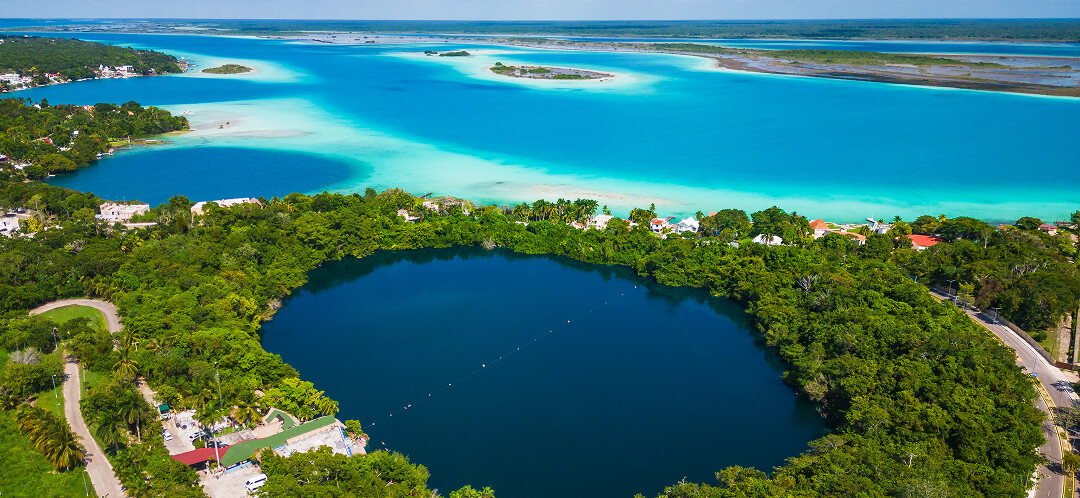
One of the first things you notice is the temperature. The water is colder than you might think; not freezing, but enough to catch you off guard when you step in. Fish are common as well, and they often swim right past you, which can feel unusual at first if you are not used to it.
It is not just the temperature or the setting. How comfortable you are matters just as much. You do not need to be an expert swimmer, but you should feel confident in the water. Most cenotes have life jackets on site, and many people use them. Even with one, staying calm is important, especially in deeper sections where you cannot see the bottom.
The experience also shifts depending on the type of cenote you choose.
- Open cenotes are the easiest to navigate. You can see everything, and the water feels closer to a natural pool.
- If you want something more atmospheric, semi-open cenotes let in light from above while keeping parts of the cave in shadow, which can make the space seem deeper than it actually is.
- Closed cenotes are the most intense. Limited light, deeper water, and a heightened sense of enclosure can make them feel very different from anything you are used to.
For a first visit, it is better to start with an open cenote where everything feels more familiar. More enclosed cenotes tend to feel more intense, so it helps to build up to them once you are comfortable.

How much it costs to swim in cenotes
Cenotes are one of the more affordable activities in this part of Mexico, but prices vary depending on how developed the site is.
Entrance fees are usually low. For example, Cenote Ik Kil costs around MXN 220 per person (about $12–$13), with reduced pricing for children.
Guided cenote tours usually range from around MXN 600 to MXN 1,800 per person ($35 to $100). This price range is for standard shared options, depending on transport, number of stops, and whether the tour includes extras like lunch, snorkeling gear, or nearby attractions. Higher-end or full-day tours cost more.
If you visit a few in one day, it adds up, but it is still a relatively low-cost experience compared to most tours.
Looking for affordable destinations?
Discover places that you can visit without stretching your budget
How to get to cenotes
Getting to cenotes is usually easy, but your choice affects how much you can see in a day.
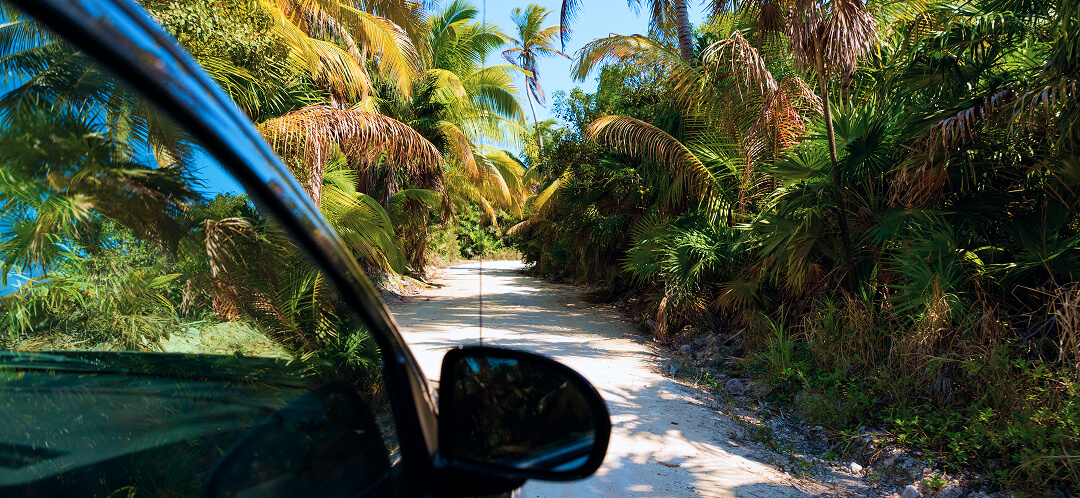
- Renting a car is the simplest option if you want flexibility. Roads are easy to follow, and the most popular cenotes are clearly marked. It also makes it easier to visit more than one without rushing. Car rentals usually cost around MXN 680 to MXN 1,250 per day ($40 to $70), depending on the season and insurance.
- Booking a tour is the easiest option if you do not want to plan anything. Tours include transport and usually stop at two or three cenotes, but you will be on a fixed schedule. Most guided tours fall in the range of about MXN 600 to MXN 1,800 per person ($35 to $100).
- Taking a taxi or colectivo can work, but it requires more coordination. Short taxi rides typically cost MXN 170–MXN 450 ($10–$25), while longer trips from places like Cancún or Playa del Carmen to cenote areas can range from MXN 500 to MXN 1,400 ($30 to $80) one way. Colectivos are cheaper, usually just a few dollars per ride, but they run on fixed routes and don’t usually take you directly to cenotes.
Which cenote should you choose?
If you want something easy, go for an open cenote like Cenote Azul, where you can move around freely. For a more scenic experience, semi-open cenotes such as Gran Cenote or Cenote Ik Kil offer a mix of light and shade. Cave cenotes like Cenote Dos Ojos feel more enclosed and different from the rest.
It also depends on how much comfort you want. Popular cenotes like Gran Cenote have better facilities but more people visiting them. Less visited ones around Valladolid, such as Cenote Suytun or Cenote Zaci, are quieter but usually have fewer facilities.
Going early makes a noticeable difference. Mornings are quieter, temperatures are lower, and the natural light is softer and more direct, especially in cave cenotes where light beams are more visible. By midday, most popular cenotes fill up quickly, which makes them busier and less relaxing.
What to bring
You do not need much to swim in a cenote, but a few things will make the visit easier:
- A swimsuit and a towel, since most cenotes have basic changing areas at best
- Cash, as many places do not accept cards or have unreliable payment systems
- Water shoes, which can help on rocky or uneven surfaces
- Biodegradable sunscreen. Keep in mind that some cenotes do not allow any at all to protect the water, which is part of a natural underground system
Final Thoughts
Cenotes look impressive in photos, but they can feel very different once you are there.
Go too late, pick the wrong type, or rush through it, and it turns into a quick swim with a crowd.
Get there early, choose the right one, and stay long enough, and it becomes one of the best parts of the trip.
Once you know what to expect, planning a visit becomes much easier. If you are already looking at flights to Mexico, using a platform like Ovago can help you track price changes, find better deals through partner offers, and plan everything in one place with 24/7 support if anything changes along the way.