Black History Month is the perfect time to delve into and be inspired by the rich history of African Americans in the US. Traces of their legacy are spread throughout the country. But today, we spotlight the top 3 destinations for learning about civil rights history.
What makes them exceptional? They played pivotal roles in the Civil Rights Movement and are home to essential historical landmarks associated with it. Legendary civil rights leaders like Martin Luther King, Fred L. Shuttlesworth, and Rosa Parks were central figures in these cities. Visiting them will enable you to understand and appreciate these figures’ contributions to creating a more just society.
Short on time but eager to honor the legacy of US civil rights? Choose your destination, get inspired by empowering Black History Month quotes, and embark on a journey of insight with Ovago, your reliable cheap flight provider! But first, take a quick look at some basic Black History Month facts:
- When is Black History Month? It’s celebrated annually in February. People of all backgrounds observe it to admire the achievements, contributions, and struggles of African Americans.
- Why is Black History Month in February? Because it coincides with the birthdays of two significant figures in African American history. The one is Abraham Lincoln, who signed the Emancipation Proclamation. The other is Frederick Douglass, a prominent abolitionist and civil rights activist.
- What is Black History Month Theme 2026? The 2026 theme is “A Century of Black History Commemorations”. It highlights 100 years of documenting, preserving, and celebrating Black history. It also reflects on how generations of storytellers, educators, and cultural leaders have shaped our understanding of Black heritage and identity.
- How is the Black History Month theme chosen? Groups overseeing Black History Month often choose themes that highlight key aspects of black history, achievements, challenges, and ongoing struggles. The chosen theme aims to inspire learning, reflection, and action on both historical and contemporary issues.
- What are Black History Month colors? Black History Month employs 4 distinct colors: black (symbolizes resilience), red (signifies bloodshed), yellow (embodies optimism and justice), and green (represents lush vegetation).
“The best way to predict your future is to create it!”
Abraham Lincoln

Read in this article:
1. Montgomery and Birmingham, Alabama: “Birthplace of the Civil Rights Movement” and “Bombingham”
Visiting Montgomery and Birmingham during Black History Month helps to delve into pivotal locations of the civil rights movement. Birmingham is often called “Bombingham” due to the numerous bombings that occurred during the height of the civil rights struggle in the 1960s. Montgomery was the birthplace of several iconic events, including the Montgomery Bus Boycott led by Rosa Parks. So, this city is often called the “Birthplace of the Civil Rights Movement” because of the fundamental Civil Rights Movement events.
Both cities boast rich historical landmarks and museums that offer insight into the African American struggle for equality. The distance between the two cities is about 2 hours, making it convenient to plan a two-city tour when traveling in the area. This allows you to maximize your experience and fully immerse yourself in the history of Black History Month.
Must-Visit Places in Montgomery:
- The Rosa Parks Museum at Troy University commemorates the legacy of civil rights pioneer Rosa Parks and the pivotal Montgomery Bus Boycott. Situated in downtown Montgomery, where Parks was arrested, it’s the sole museum dedicated to her. Exhibits feature her original arrest record, a vintage Montgomery city bus, artwork, court documents, and a restored 1955 station wagon used for protest transportation.
- The Freedom Rides Museum. Downtown Montgomery houses this museum, a poignant civil rights memorial situated within the historic Greyhound bus station. On May 20, 1961, this station was a battleground for Freedom Riders who faced brutal assaults from white supremacists for challenging segregation. The museum was opened in May 2011 and has been operated by the Alabama Historical Commission.
- Holt Street Baptist Church. In the wake of Rosa Parks’ arrest on December 5, 1955, 5,000 people congregated at this church. They listened to Dr. Martin Luther King, a newly elected president of the Montgomery Improvement Association. His pivotal speech catalyzed the Montgomery Bus Boycott. The church was relocated and is now known as Holt Street Memorial Baptist.
- The Civil Rights Memorial Center is a paramount civil rights destination in Alabama. It pays homage to the martyrs of the movement while motivating visitors to persist in the pursuit of racial equity and social justice.
- The Dexter Avenue King Memorial Baptist Church and Parsonage Museum. The church and parsonage were preserved in their original state during Martin Luther King’s tenure as pastor from 1954 to 1960. During that time, the church served as a pivotal gathering place for mass meetings that catalyzed the renowned Montgomery Bus Boycott. Despite being bombed multiple times, the parsonage and church stand as a testament to the King family’s unwavering dedication to justice and equality.
- The Legacy Museum: From Enslavement to Mass Incarceration. The museum is housed in a former warehouse where hundreds of slaves were held awaiting auction. The museum offers a gripping journey through the dark history of slavery and racial oppression in America. The tour starts in a dimly lit hallway adorned with evocative images portraying the harsh realities faced by enslaved individuals during the 19th century. Documenting various facets of slavery and racial segregation, the museum also features exhibits showcasing legal rulings from the Supreme Court of the United States pertaining to these issues.
- Chris’ Famous Hotdogs not only serves mouthwatering hotdogs and hamburgers but also holds historical significance. This was a gathering place during the Civil Rights Movement for activists like Martin Luther King and Rosa Parks, during the Montgomery Bus Boycott. The restaurant became a symbol of resilience and community solidarity in the fight against segregation and discrimination.
Read also: How to Decode Economy Flight Booking Reviews
Must-Visit Places in Birmingham:
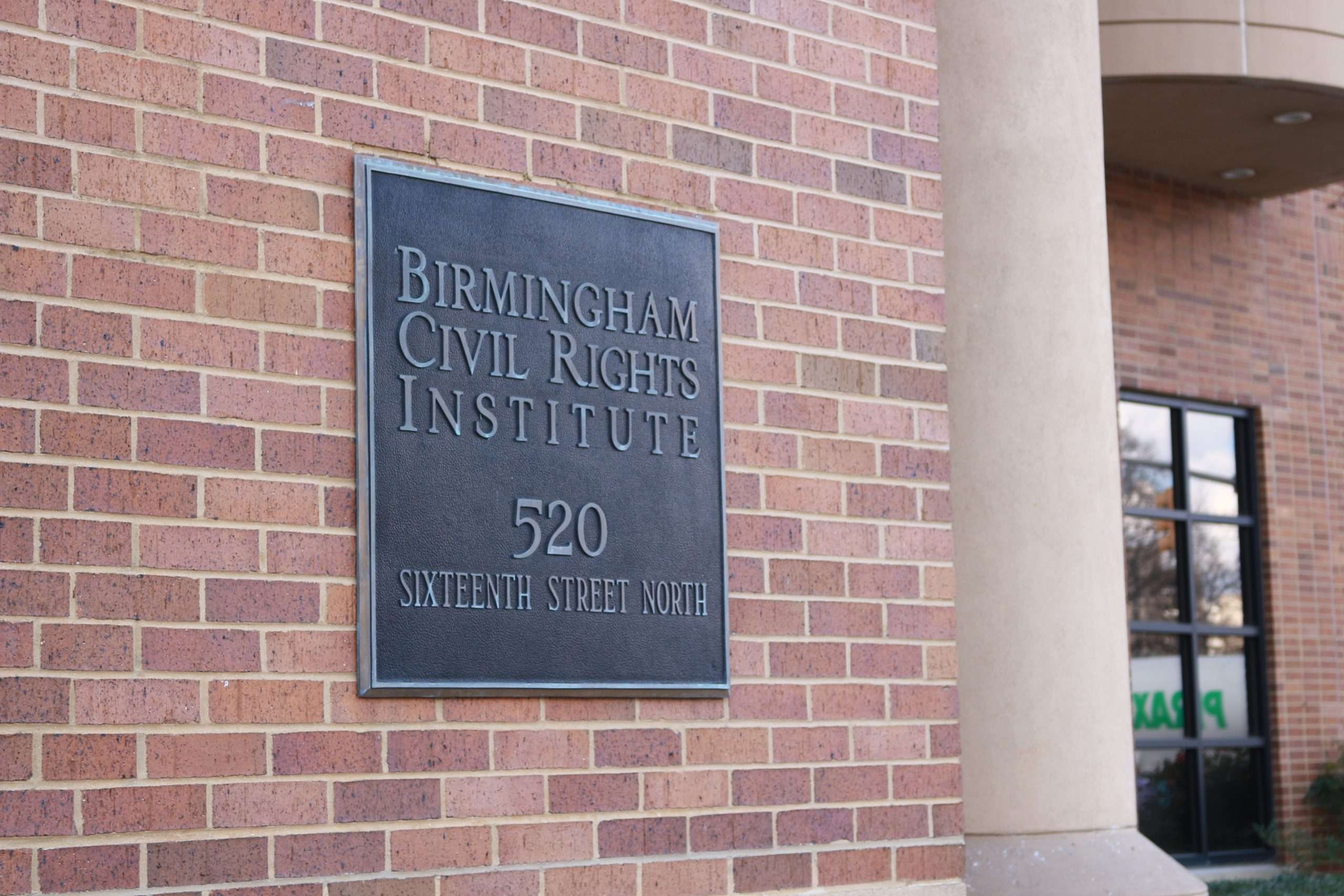
- The Birmingham Civil Rights Institute (BCRI) is a contemporary museum that links to the Birmingham Civil Rights National Monument, comprising significant sites from the Civil Rights Movement. Visitors can immerse themselves in a recreation of a segregated city in the 1950s, view a replica of a Freedom Riders bus, and see the actual jail cell door where Martin Luther King wrote his famous “Letter From Birmingham Jail.” The institute boasts an extensive archive of Civil Rights Movement documents and nearly 500 oral histories from the era.
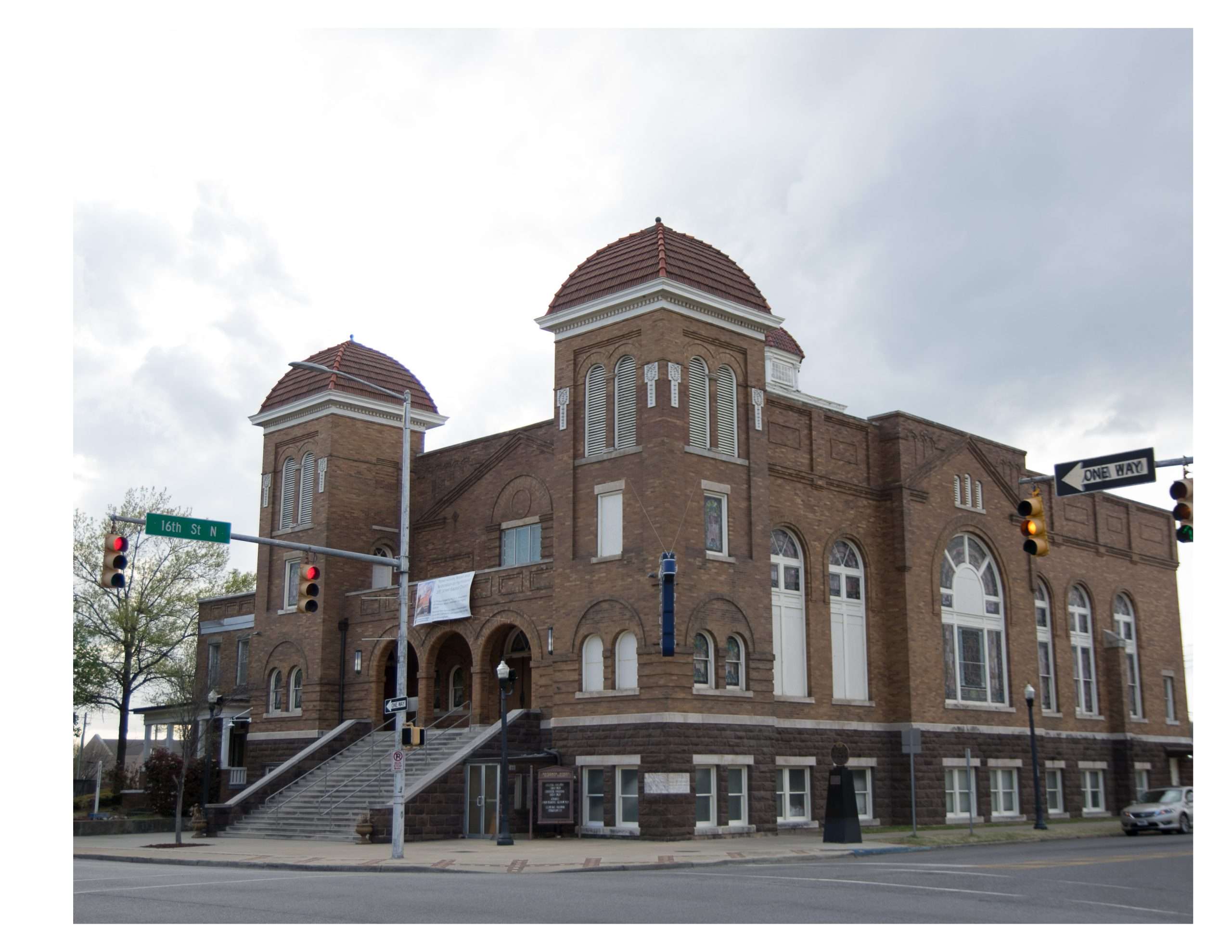
- 16th Street Baptist Church. Despite its somber history, the church remains a vibrant part of the Birmingham community. Throughout the Civil Rights Movement, it played a pivotal role as a gathering point for organizing marches and other activism. Tragically, in 1963, the church was bombed, claiming the lives of four young Black girls: Addie Mae Collins, Cynthia Wesley, Denise McNair, and Carole Robertson. This devastating event spurred the federal government to accelerate civil rights legislation.
- Historic Bethel Baptist Church. Constructed in 1926, the church was the focal point of a nonviolent protest movement that reverberated across the US and beyond. Led by Fred L. Shuttlesworth, Bethel served as the official starting point of the Modern Civil Rights Movement in Birmingham.
- Kelly Ingram Park is adorned with evocative sculptures portraying the civil rights struggle in Birmingham. This place served as a gathering place for the activities of the Southern Christian Leadership Conference and other pivotal groups during the movement.
- Angela Davis Home. Angela Davis is a prominent activist and author involved in the civil rights, feminist, and Black liberation movements. This Queen-Anne-style house, located at the junction of Center Street and 11th Court North, dates back to approximately 1900.
- Dynamite Hill Neighborhood. This neighborhood in Birmingham gained notoriety during the Civil Rights Movement for the frequent bombings. White supremacists targeted African American homes, aiming to intimidate and discourage integration efforts. Join a guided walking tour led by locals who have deep roots in the neighborhood and firsthand experience of its history.
- Greenwood Cemetery holds the graves of several prominent figures in the Civil Rights Movement. They include the attorney Arthur Shores, who fought against segregation in schools and other public facilities, and Reverend Fred Shuttlesworth, a key leader in the Birmingham Civil Rights Movement.
- Black-owned places to eat. Kill two birds with one stone – support black-owned culinary businesses and delight your taste buds. Such establishments include: Jamaya and Mellow that offer authentic Jamaican food, Adian’s Dining that focuses on Caribbean cooking, and Bantu that specializes on African dishes.
“I believe we are here on the planet Earth to live, grow up, and do what we can to make this world a better place for all people to enjoy freedom.”
Rosa Parks
Read also: Best US Domestic Airlines for Economy Class
2. Atlanta, Georgia: “The Cradle of the Civil Rights Movement”
During the early 1960s, Atlanta emerged as the cultural hub for the Civil Rights Movement. This city nurtured leaders like Martin Luther King, John Lewis, and numerous other figures who propelled the movement’s national growth. To fully embrace the atmosphere and historical significance of Atlanta, visit the following places.
Sweet Auburn District:
In the 1920s, Auburn Avenue rose as the bustling commercial heart of Black Atlanta. Fortune Magazine recognized the street as “The richest Negro street in America” in 1956. The area earned the affectionate moniker “Sweet Auburn,” attributed to businessman and civil rights advocate John Wesley Dobbs. Learn the places to visit for a memorable and insightful day:
- The Auburn Avenue Research Library. It’s the first Southeast’s public library that provides specialized reference and archival collections devoted to exploring African American culture.
- The APEX Museum. It’s the city’s sole museum exclusively committed to narrating the diverse and frequently overlooked narrative of the African Diaspora. Its exhibits cover topics ranging from Africa and the slave trade to African Women in S.T.E.M., Atlanta’s African American political figures, and a film about Sweet Auburn’s history.
- Historic signs. One sign denotes The Atlanta Daily World, the nation’s first black daily newspaper, which operated from this location from 1928 to 2008. While its headquarters have relocated, the publication remains dedicated to covering pertinent issues and events impacting Atlanta’s African American populace. The other landmark is The Royal Peacock, a black-owned nightclub that, during its prime, featured performances by artists like James Brown, B.B. King, and Aretha Franklin.
- Churches: pivotal hubs for the Civil Rights Movement. Big Bethel A.M.E. Church, Wheat Street Baptist Church, and Historic Ebenezer Baptist Church served as meeting places, organizing centers, and platforms for civil rights leaders like Martin Luther King. Our Lady of Lourdes Catholic Church also played a role in the movement by offering support and solidarity to the African American community during times of struggle.
- The Municipal Market. Have a snack in a legendary market opened in 1924. It served as a rare place where black and white citizens could interact on equal terms.
- Martin Luther King Jr. National Historical Park. It features the Visitor Center, showcasing the original farm wagon that carried King’s casket during his funeral procession. It also houses exhibits and a film dedicated to King’s legacy.
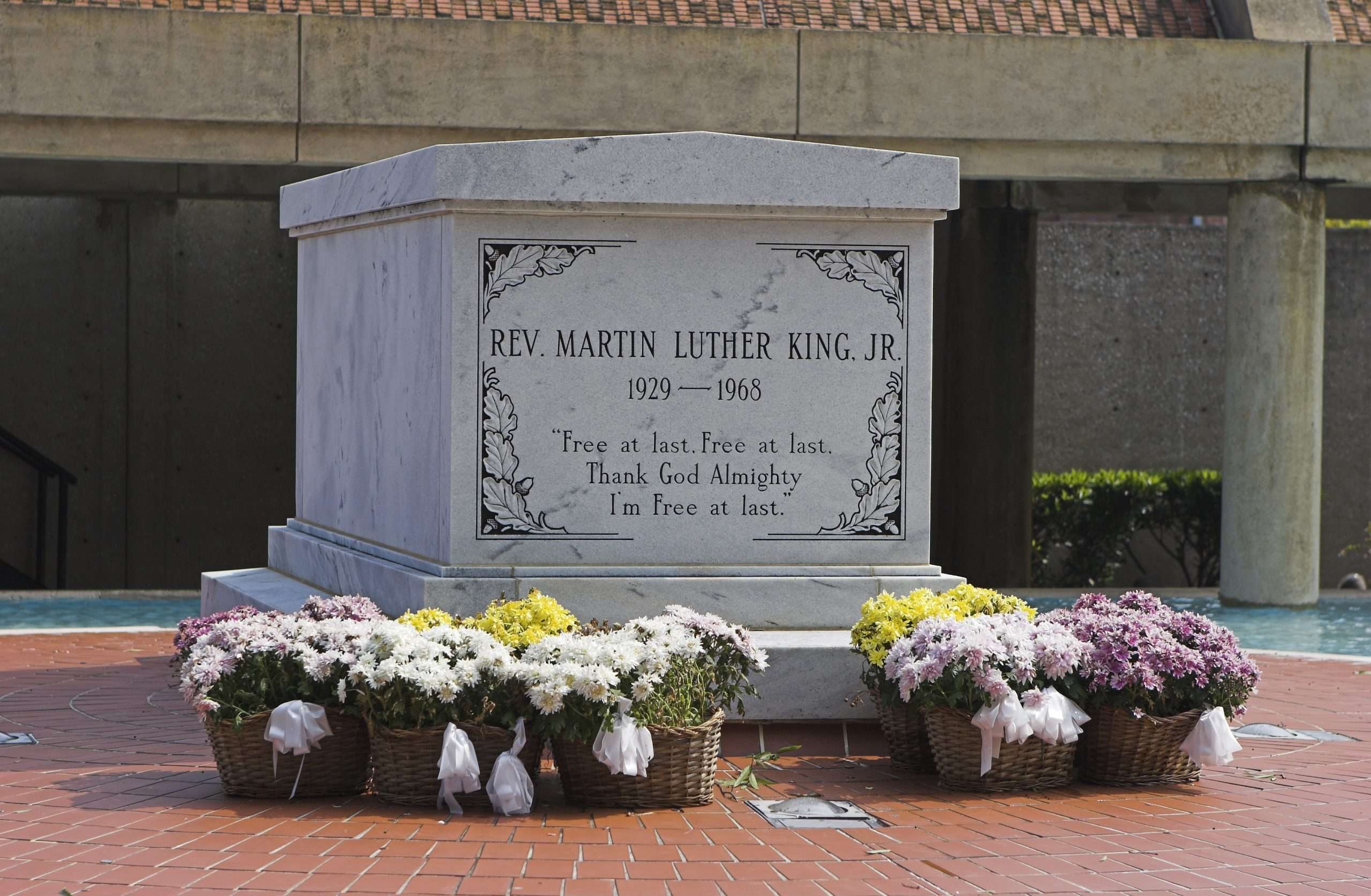
- The King Center. It features exhibitions about Dr. King, alongside the gravesites of Dr. King and his spouse, Coretta Scott King. Opposite the center is the Civil Rights Walk of Fame, inviting you to walk in the footsteps of civil rights pioneers.
- The Martin Luther King Jr. Birth Home. Observe the house from the street since it has been undergoing temporary closure for essential rehabilitation. But there’s a chance that the Birth Home could reopen by early 2026, likely by February, if the renovation stays on schedule.
Other Must-Visit Places:
- The National Center for Civil and Human Rights is in downtown Atlanta. It offers 3 key exhibits: civil rights (ensure equal treatment and protection under the law in employment, housing, and voting), human rights (encompass the fundamental rights and freedoms inherent to all human beings), and The Morehouse College Martin Luther King Jr. Collection (showcases artifacts, documents, and exhibits related to Martin Luther King’s work).
- The Carter Presidential Library and Museum. Jimmy Carter advocated for civil rights and equality during his presidency and beyond. The award-winning museum showcases 2-4 national traveling exhibits annually alongside permanent displays chronicling Carter’s life and accomplishments. Guests can explore a precise replica of the Oval Office, a president’s daily routine, impressive state gifts and embark on a virtual global journey through an interactive computer table. With its engaging and interactive features, the museum offers enjoyable experiences for visitors of all ages.
- World Peace Rose Garden. It serves as a visual representation of Dr. King’s commitment to peace and nonviolence, featuring a starburst design that symbolizes the brilliance of his ideals. With 185 roses of various colors and fragrances, the garden incorporates the Official Flower of the United States to honor Dr. King’s legacy and promote his message of peace. From the Peace Plaza, facing the rose garden, you can directly view the graves of Dr. and Mrs. King located across the street. Keep in mind that during winter, the garden may not be in full bloom, and the overall scenery might be less vibrant compared to other seasons.
- Oakland Cemetery is the city’s oldest public park that serves as the burial ground for numerous distinguished African Americans, such as John Wesley Dobbs, Maynard Jackson, and Carrie Steele Logan.
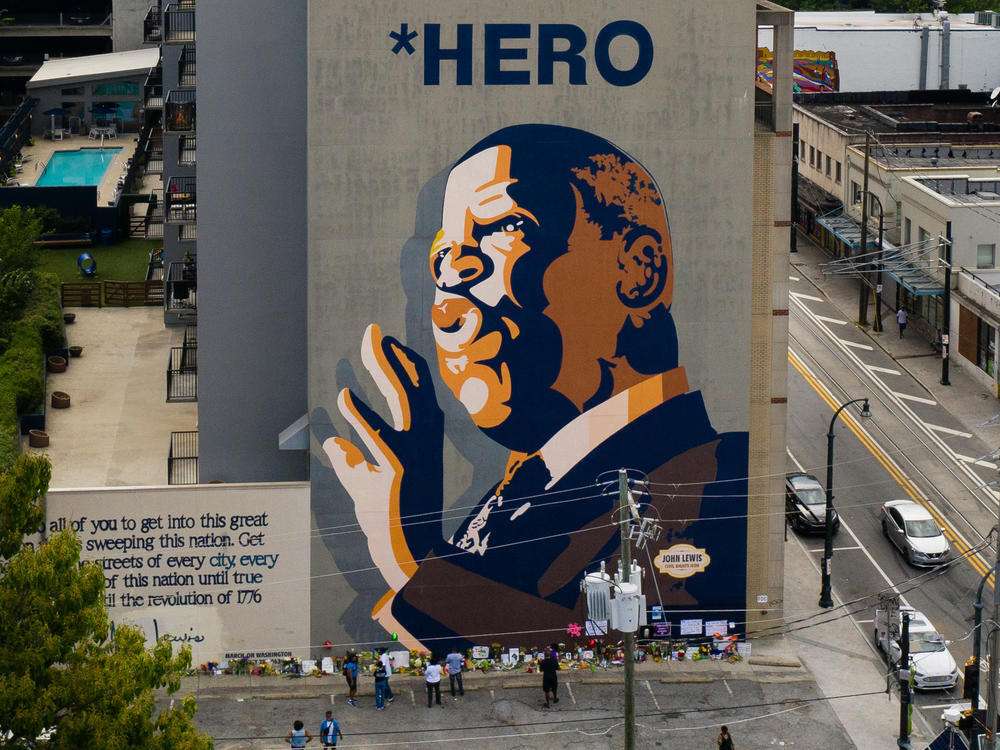
- John Lewis Mural. It’s recognized as the top mural in Atlanta by the Atlanta Journal Constitution and showcased in numerous film and TV projects. The mural pays tribute to Congressman John Lewis, a champion of civil rights.
- Paschal’s Restaurant. Combine having a tasty meal with a meaningful visit. Renowned for its fried chicken and Creole specialties like gumbo and catfish etoufee, Paschal’s Restaurant holds a rich historical significance in Atlanta. Paschal’s emerged as a significant gathering spot for renowned entertainers, politicians, and business figures during the civil rights era. Notably, it served as a meeting ground for influential civil rights leaders, including Dr. Martin Luther King.
“Knowledge makes a man unfit to be a slave.”
Frederick Douglass
Read also: February: US Local Event Roundup
Top Global D3. Memphis, Tennessee: “Home of the Civil Rights Movement”
Memphis was the site of several pivotal events, including the sanitation workers’ strike and the assassination of Dr. Martin Luther King. Additionally, Memphis is home to important landmarks and museums that commemorate the struggles and achievements of African Americans in the fight for equality and justice.
Must-Visit Places:
- The National Civil Rights Museum at the Lorraine Motel. Approaching the museum, you’ll feel the profound significance of this historic landmark. A wreath of flowers adorns the balcony where Dr. Martin Luther King stood for the last time before his assassination on April 4, 1968. Today, visitors from across the globe come to the museum to immerse themselves in Dr. King’s legacy and explore five centuries of civil rights and human rights history.
- Beale Street Historic District served as a significant hub for African American culture and activism during the mid-20th century. It was a center for black-owned businesses, entertainment venues, and community gatherings, providing a platform for civil rights leaders to organize and mobilize. Beale Street remains a vibrant center for music, nightlife, dining, and the arts. It hosts cultural landmarks like the Historical Daisy Theatre/Randle Catron Interpretive Center and the Withers Collection Museum & Gallery.
- Withers Collection Museum & Gallery. Ernest C. Withers was a prominent African American photographer known for his extensive documentation of the Civil Rights Movement. His photographs provide valuable insights into this pivotal period in American history, including sports, music, and politics. Withers’ work captures iconic figures and moments, offering a unique perspective on the social and cultural landscape of the time.
- The STAX Museum of American Soul Music contributed to the civil rights movement primarily by means of the music, a powerful cultural force during the struggle for civil rights. Soul music, which emerged from African American communities, often addressed social and political issues, resonating with the experiences and aspirations of the civil rights movement.
- The I AM A MAN Plaza is a significant public sculpture commemorating the 1968 Sanitation Workers’ Strike and Dr. Martin Luther King’s legacy. This tribute to the Civil Rights Movement, which led to Dr. King’s visit and subsequent assassination in Memphis, features a striking bronze and stainless steel sculpture of the iconic slogan “I AM A MAN.”
- Clayborn Temple. On April 3, 1968, Dr. Martin Luther King delivered his renowned “Mountaintop” speech at Clayborn Temple. He strived to rally support for the Memphis sanitation workers’ strike and emphasize the importance of nonviolent protest for economic justice. The speech, marked by prophetic words about seeing the Promised Land, tragically became Dr. King’s last as he was assassinated the following day, April 4, 1968.
- Black-owned places to eat. Want good food for good causes? Visit Cozy Corner for smoked cornish hen and rib tips, The Four Way for Southern cuisine, and Sage for egg rolls.
“I look to a day when people will not be judged by the color of their skin, but by the content of their character.”
Martin Luther King
Read also: Top Global Dark Tourism Destinations
Each destination boasts a variety of pivotal historic landmarks and cherishes a grandiose legacy. As Black History Month unfolds, embark on a journey to explore civil rights history. We wish you an enlightening and inspiring experience derived from these landmarks, as well as from the words and deeds of those who fought tirelessly for justice and equality.