The fastest way to fall asleep on a plane? Sit next to a historian. A deep dive into treaty revisions and minor policy changes is basically a free sleep aid. Be careful with your choice! If you end up sitting next to an engaging historian who loves storytelling, you might get a compelling history lesson instead of a nap!
But seriously, can you actually get good sleep in economy class? Between airport chaos, cramped seats, and constant noise, it feels impossible. The good news? It can be done. We’ve dug deep to find real, practical strategies—none of that basic “drink water, eat light, avoid caffeine” advice (we’ll leave that to the flight attendants).
Instead, we’re sharing smarter, less obvious sleep hacks on how to sleep on a flight—tips that might just change the way you travel. Keep reading to make your next flight way more restful. And when you’re ready to book, Ovago has your back with affordable fares, flexible flights, and secure payments—so you can sleep easily in the sky and on the ground.
Read in this post:
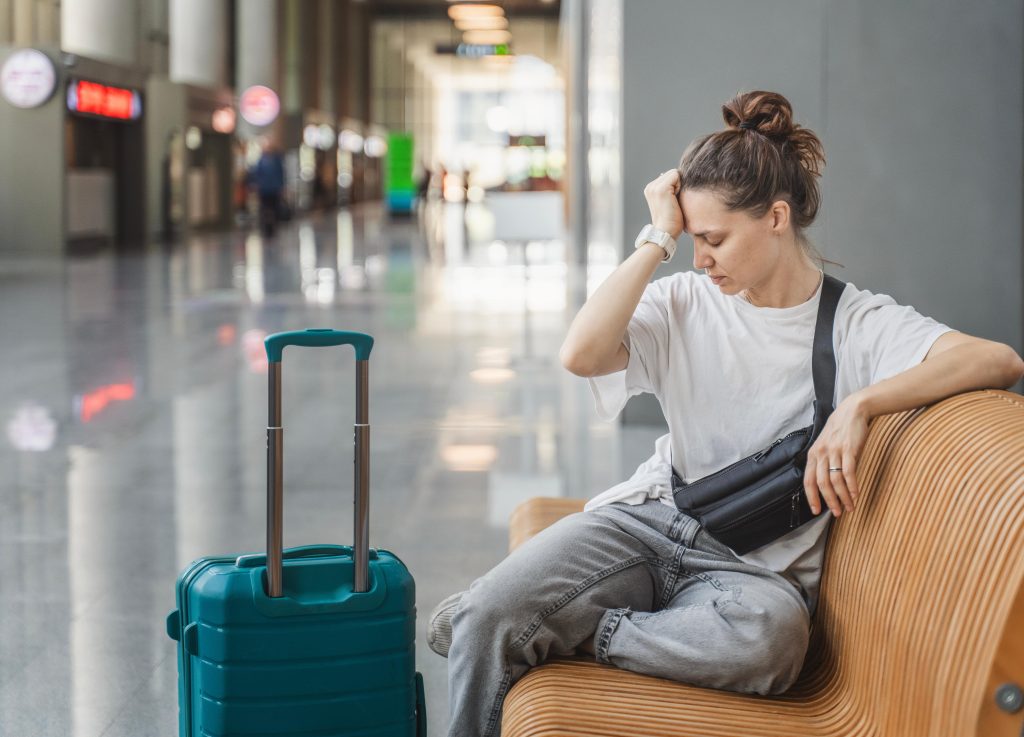
How to Sleep on a Long Flight: 10 Tips for Restful Travel
The tips below are gathered from seasoned travelers across various travel forums. We’ve selected the best for you—choose the ones that suit you and test what works best for your needs and preferences.
- Book the latest flight possible to align with your circadian rhythm. It’s your body’s internal clock that regulates sleep and wake cycles. This natural timing will make it easier to fall asleep.
- Increase your workout on the day of your flight to ensure you’re tired enough to easily sleep. Remember, even a short two-hour nap can help you adjust to a new time zone. But the more exhausted you are, the longer you’ll likely sleep.
- Set your watch to your destination’s time as soon as you board. While modern watches may update automatically, manually adjusting it can create a psychological shift. This helps your mind adapt faster to the new time zone.
- Have a glass of red wine with your meal before sleep. While experts often advise against drinking on planes, Jamie Zeitzer, co-director of Stanford’s Center for Sleep and Circadian Sciences, takes a more balanced view—as long as you’re not mixing alcohol with sleep medication. He warns against multiple cocktails but notes that a single glass of wine may help you relax enough to drift off.
- Dress smart for your flight! Layer up with warm, breathable clothing so you can easily adjust to changing temperatures—airplanes often get freezing mid-flight. Opt for natural fabrics and stretchy pants for comfort, as they won’t feel restrictive or lose shape when you shift positions. A hoodie helps keep your head warm and adds extra coziness. A scarf is also a versatile travel essential—it can serve as a blanket, a neck warmer, or a shoulder cover, adapting to the cabin’s temperature changes.
- Give your feet the care they need. Opt for slip-on shoes for easy airport security checks and a hassle-free experience in cramped airplane seats. Compression stockings are a must for long-haul flights, promoting circulation and reducing the risk of deep vein thrombosis (DVT). To stay warm, pack wool socks—cold feet can make the entire flight uncomfortable. Wear them when you board or layer them over compression stockings for extra coziness.
- Optimize your sleeping environment for maximum comfort. Block out external distractions like light and noise—sleep masks and noise isolators (which we’ll cover later) can help. For relaxation, go beyond music or audiobooks by trying sound generators and meditation apps. Top-rated options include myNoise, Sleep Sounds by Sleep Pillow, and Calm.
- If you wake up during the flight, take a short walk or stretch near your seat to improve circulation and prevent stiffness. Moving periodically reduces the risk of blood clots and can help you settle back to sleep more comfortably.
- Can’t sleep? No problem! Simply sitting with your eyes closed helps your body rest and adapt to a new time zone. While not a full substitute for sleep, it can reduce fatigue and promote relaxation. Try pairing it with deep breathing or meditation for even better results.
- For long layovers, consider booking a day hotel for a proper nap between flights. Many hotels quietly offer same-day rates at steep discounts compared to overnight stays. For instance, if you land at Dulles International Airport early in the morning, you could pre-book a Hilton Washington Dulles Airport room from 9 am to 5 pm for around $100—giving you time for a hearty breakfast before resting. With a 5–6 hour layover, you can sleep, freshen up, and continue your journey feeling refreshed. This strategy, combined with a red-eye flight, often results in significant savings. Use platforms like Dayrooms.com to find and book these rooms, with potential savings of up to 75% compared to traditional overnight stays.
Sleep better with Ovago!
Enjoy amazing flight deals, 24/7 live chat support, and flexible booking options for total peace of mind.
Seat Sleep Hacks: How to Sleep in the Middle Seat of a Plane, Choose the Best Seat, and Ensure Maximum Comfort
Four tips below will help you make smart choices to secure a great seat—especially if you book in advance, giving you more seating options:
- A window seat is often ideal for sleeping, as it provides a sturdy surface to lean against. It also keeps you undisturbed by row-mates and food carts while giving you control over the window shade to manage light exposure.
- If a flight isn’t fully booked—such as during low season or on an unpopular route—savvy travelers seek out empty seats nearby. The back of the cabin, particularly the last 3–4 rows, is often the best place to find extra space to stretch.
- For those who prioritize easy movement, an aisle seat in the middle section can be a smart choice. These rows are typically occupied by couples or groups, meaning they’ll wake each other—not you—if they need to move. Additionally, middle seats in this section are usually the last to fill, increasing your chances of an empty seat next to you for a more comfortable sleep.
- For flexible, healthy travelers without children, an emergency row seat can be a game-changer for better sleep. Located near the emergency exits, these seats offer extra legroom and a clear space in front—since there’s no reclining seat ahead. However, they come with specific requirements; passengers must be physically capable of assisting in an emergency and meet airline guidelines. Major airlines like Delta Air Lines (Comfort+) and United Airlines (Economy Plus) offer these seats. Check out this post for tips on securing an exit-row seat when flying with US carriers.
Regardless of whether you’re in a window, middle, or aisle seat, a few tricks can enhance your comfort:
- Use your carry-on as a footrest—placing it under the seat helps elevate your feet, reducing strain.
- Recline strategically—tilting your seat halfway prevents your body from sliding down and reduces pressure on your lower spine.
- Cross your arms or hug a pillow—this helps stabilize your upper body and prevents your head from nodding forward or sideways, making it easier to stay asleep.
So far, we’ve covered general sleep strategies that apply to almost any flight. But what if you have the option to choose between economy class airlines? In that case, why not pick one that offers the best seats—since seat quality has the biggest impact on in-flight sleep?

How to Sleep on an Overnight Flight Comfortably: Choose the Right Airline!
A comfortable flight seat depends on a few key factors—all of which are essential for your overall comfort, especially considering your physiology and health.
- Seat Recline – Allows you to achieve a more horizontal position for better rest.
- Seat Pitch – Critical for taller passengers, as more seat pitch means extra legroom, reducing knee strain and discomfort on long flights.
- Seat Width – Essential for broader-shouldered or larger passengers, or for those who simply dislike feeling confined.
One Approach: Focus on What Matters Most
A comfortable economy seat typically has:
- Around 18 inches of width for more space
- 32–34 inches of seat pitch for better legroom
- 5–9 inches of recline for improved rest
For accurate details on seat dimensions for a specific flight, check AeroLOPA or visit the airline’s official “Seat Selection” or “Aircraft Information” page.
Alternative Approach: Focus on Overall Seat Quality
Some airlines stand out for offering a more comfortable economy class experience. For example, Japan Airlines’ Airbus A350-1000 features 34 inches of seat pitch and over 18 inches of width, with seats designed for a deeper recline angle—even in the upright position—for added comfort. For more top-rated options, check Skytrax’s Best Economy Class Airline Seats. It provides an updated, unbiased ranking of airlines based on seat quality and comfort each year.
Based on this Skytrax’s rating, we’ve created a detailed guide to the best economy class seats. In this guide, we also highlight a standout option—Air New Zealand’s Economy Skycouch, a game-changer for families and couples seeking extra comfort in-flight.
Don’t forget the option to upgrade to premium economy—a reasonably priced choice for many travelers that significantly enhances sleeping comfort, especially on long-haul flights. While business class may be out of reach for some, premium economy offers a practical way to get better rest without breaking the bank.
5 Essential Items for Better Sleep on a Flight
Below, we won’t list books, tablets, notebooks, or even VR glasses. Our goal is to be informative, not to fill space with unnecessary words—remember? Instead, we’ll focus on the essentials for quality sleep: ensuring relaxation, comfort, and warmth.
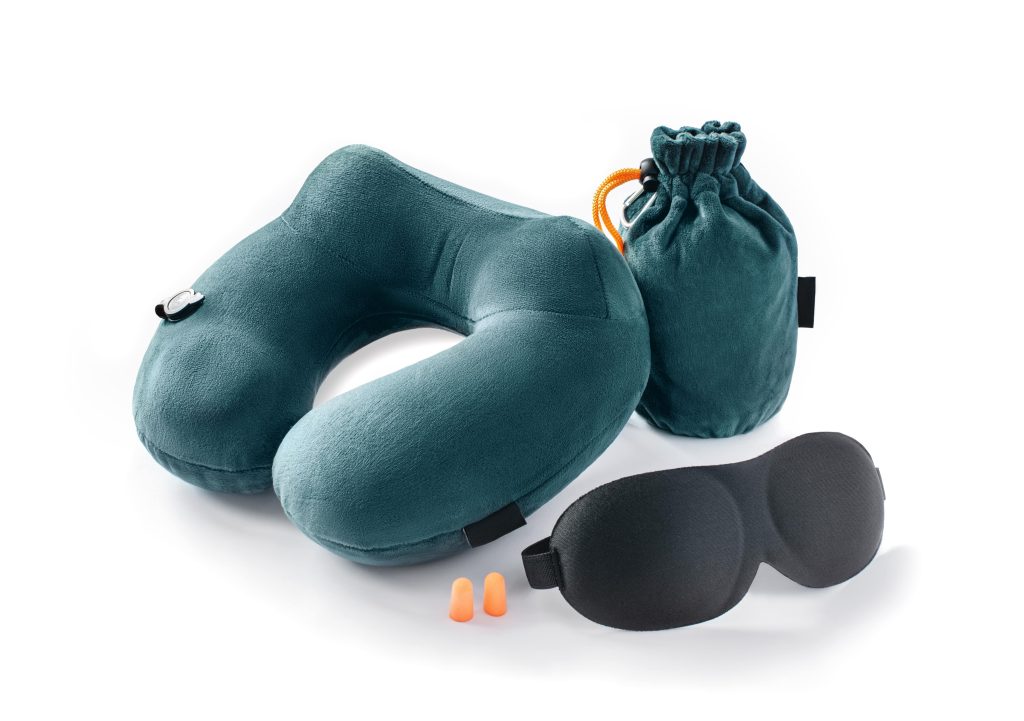
- Block the Noise: Choose what feels most comfortable. For relaxing audio, opt for noise-canceling headphones or earbuds (the latter pair best with any neck pillow). If you just need silence, go for workshop ear protectors or simple earplugs. Most of these options are affordable and effective at blocking noise and creating a calm environment.
- Pick the Right Neck Pillow: With so many options available, choosing the right neck pillow can make all the difference. A bean-bag sausage-style pillow is a versatile choice, doubling as lumbar support or keeping your head upright while you sleep. For a wraparound design that won’t interfere with headphones, consider the BCOZZY Neck Pillow. If you prefer a more structured option, Trtl’s fleece wrap scarf features a hidden internal support system that holds your neck and chin in an ideal upright position—perfect for middle or aisle seats.
- Buy a Great Sleep Mask: A good sleep mask blocks out light, feels comfortable for long wear, and stays in place without pressure on your eyes. The top sleep masks for flights include Manta Sleep Mask PRO, Alaska Bear Natural Silk Sleep Mask, and Ostrichpillow Eye Mask.
- Pack an OTC nasal spray: Airplane cabins are dry and pressurized, which can cause nasal congestion or discomfort, especially on long-haul flights. The best OTC nasal sprays help keep your nasal passages clear for better breathing. Top options include Flonase, Afrin Original Nasal Spray, and Xlear Natural Saline Nasal Spray.
- Bring a Cozy Blanket: The best blanket for a flight should be compact, lightweight, warm, and easy to pack. Top choices include Travelrest 4-in-1 Premier Class Travel Blanket and BlueHills Ultra Compact Travel Blanket. If you’re using a blanket, fasten your seatbelt over it, not underneath, so flight attendants can see it—otherwise, they’ll wake you if the seatbelt sign turns on.
What to Take to Sleep on a Long Flight: Choose the Best Flight Sleep Aids
Considering supplements for better sleep during your flight and a refreshed feeling after landing? The best sleep aid depends on several factors, including flight duration, medication sensitivity, risk of grogginess, and personal health conditions. Let’s view popular sleep aid types and explore when to use or avoid each of them:
- Prescription Sleep Medications: Ambien, Temazepam, and Trazodone are effective for deep sleep on long-haul flights, especially for those with severe flight anxiety or chronic insomnia. However, they come with potential side effects and should only be used if prescribed by a doctor. Avoid these medications during a flight if you’ve never taken them before or if you plan to drink alcohol.
- Over-the-Counter Sleep Aids: Benadryl, Unisom, and ZzzQuil provide light to moderate sedation with fewer risks than prescription sleep aids. They’re ideal for medium-length flights (4–8 hours) when you need rest but want to wake up refreshed. Consult a doctor before use, as they can still cause side effects and have restrictions.
- Natural Sleep Aids and Supplements: Melatonin, Magnesium Glycinate, Valerian Root, and L-Theanine promote gentle relaxation with minimal side effects. They’re ideal if you want to fall asleep naturally without heavy sedation and wake up feeling refreshed and alert.

Final Thoughts: No Sleep? No Problem!
If you struggle with insomnia or are simply too sensitive to sleep comfortably on a plane—don’t stress! Even seasoned travelers, including those flying in reclining first-class seats, sometimes can’t sleep in the air.
If you find yourself in that situation, stop forcing sleep and use the time to read, watch a movie, or just unwind. Accepting that you’re not someone who sleeps well on planes can actually make the flight more relaxing—you’ll catch up on rest later. Safe travels with Ovago—your trusted partner for affordable flights!