What if the floating mountains from Avatar weren’t fantasy at all? They aren’t.
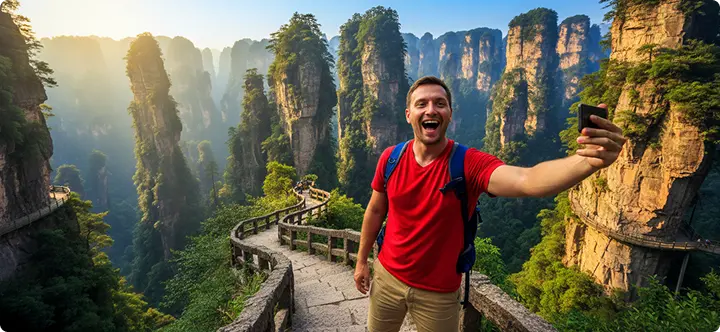
The Avatar Mountains in China look almost unreal when you first see them. Thousands of narrow stone pillars rise from forested valleys inside Zhangjiajie National Forest Park. You may recognize their shape from the fictional Pandora in the Avatar movie. These formations inspired the film’s floating peaks. And they are surely worth seeing.
If you are planning a visit there, you should know that it takes more strategy than you might expect, and there are many factors to take into account.
In this guide, you’ll learn exactly how to reach Zhangjiajie efficiently, where to go, how much tickets cost in 2026, and how to plan a smooth, budget-conscious trip overall. Discover more unusual destinations for your bucket list.
Read in this article:
Where are China’s Avatar mountains?
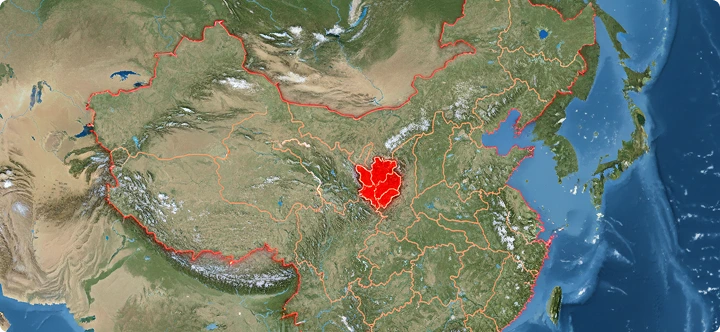
China’s Avatar Mountains lie in Hunan province in southern China. They form part of the Wulingyuan UNESCO Scenic Area, which includes Zhangjiajie National Forest Park, Tianzi Mountain, and several protected zones.
Zhangjiajie lies well within reach of China’s major cities:
- Beijing: about 930 miles (1,500 km) south
- Shanghai: about 800 miles (1,300 km) southwest
- Guangzhou: about 680 miles (1,100 km) northwest
Domestic flights from these hubs take 2 to 3 hours.
Zhangjiajie is a compact mountain city. The forest park entrance is 19 miles (30 km) north of downtown.
Once inside, paved trails, shuttle buses, elevators, and cable cars handle most elevation changes. The terrain feels dramatic, yet the logistics are well organized.
Next in this series: Catatumbo Lightning Explained: Is It Dangerous and Why It Happens
What are the Avatar Mountains called in real life?
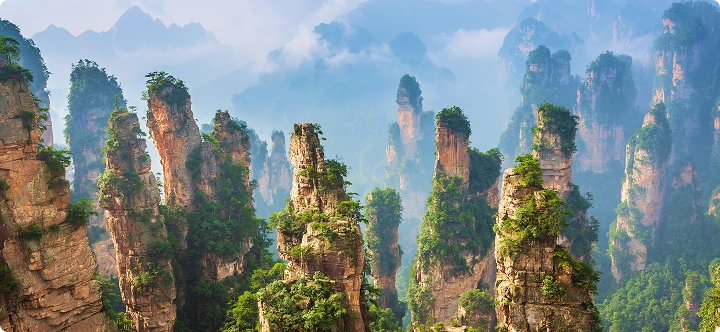
The formations sit inside the Yuanjiajie Scenic Area, one of the park’s most visited sections.
After Avatar debuted in 2009, officials renamed a pillar once known as Southern Sky Column as Avatar Hallelujah Mountain. Hollywood rarely changes geography, but this time it left a mark.
These towers consist of quartz sandstone. Wind, rain, and temperature shifts carved them over millions of years into narrow vertical columns. Most pillars rise between 650 and 1,300 feet (200–400 meters). Some peaks in the wider Wulingyuan area exceed 3,280 feet (1,000 meters) above sea level.
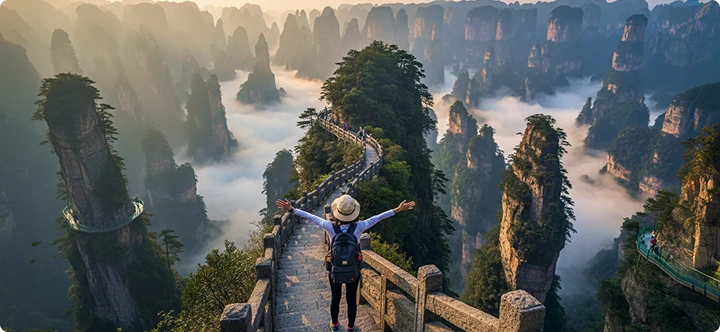
On misty mornings, clouds weave between the stone columns. The lower forest disappears, and the pillars appear suspended in midair.
💡 Did you know?
More than 3,000 quartz sandstone pillars stand across the Wulingyuan Scenic Area. Many still carry traditional Chinese names that existed long before the Avatar connection. Pandora may have boosted their fame, but these formations were impressive long before the box office noticed.
What is Zhangjiajie National Forest Park?
Zhangjiajie National Forest Park opened in 1982 as China’s first national forest park. It later became part of the larger Wulingyuan Scenic Area, which earned UNESCO World Heritage status.
Key facts
- Established: 1982
- UNESCO status: 1992
- Area: Over 4,800 hectares
- Elevation range: 650 feet to 3,900 feet (200 meters –1,200 meters)
- Main zones: Yuanjiajie, Tianzi Mountain, Yangjiajie
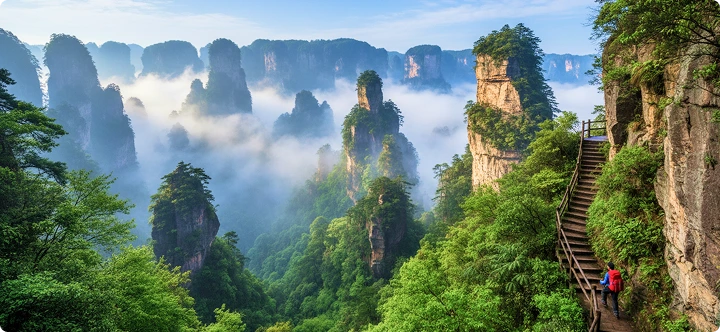
Inside the park, you’ll find forest trails, scenic overlooks, shuttle buses, cable cars, and the Bailong glass elevator. You’re exploring towering cliffs and deep valleys, but you won’t need survival skills to enjoy them. The park runs on marked paths and organized transport, so the scenery feels wild while the experience stays manageable.
Next in this series: 10 Places and Natural Events Around the World That Seem Unreal
How to get to Zhangjiajie
The nearest airport to the city is Zhangjiajie Hehua International Airport (DYG). It handles domestic flights and limited international connections.
From the U.S., there are no direct flights that could get you there. Instead, you will connect through major Chinese hubs such as:
- Beijing Capital International Airport (PEK)
- Shanghai Pudong International Airport (PVG)
- Guangzhou Baiyun International Airport (CAN)
The total travel time from the U.S. usually ranges from 21 hours to 30 hours, depending on your departure city and layover length.
Economy flight pricing from the US (2026 estimate)
Round-trip economy fares to Zhangjiajie vary widely depending on season and booking window.
- From Los Angeles, prices typically range from $900 to $2,200.
- From New York, fares often range from $1,500 to $3,300, especially on carriers such as Air China with one connection.
Spring and late autumn typically offer better pricing. Summer and major holiday periods push fares higher, especially if you book within a few weeks of departure. December rarely rewards procrastination.
Booking two to four months in advance usually delivers the best balance between price and schedule flexibility.
Next in this series: Nazaré Giant Waves: Watching the Atlantic Breathe
Transportation from Zhangjiajie Airport to the park
Taxi
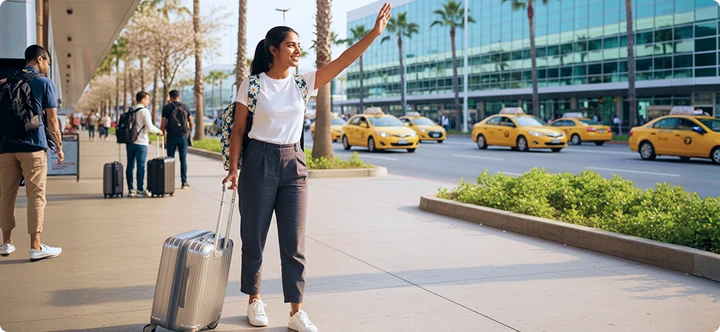
A taxi offers the simplest way to reach Wulingyuan from Zhangjiajie Hehua International Airport (DYG).
The drive covers about 22 miles (35 km) and takes a bit less than an hour. Expect to pay around RMB 105 ($15) during the day. Night fares usually run about 20% higher.
Official rates follow a tiered structure:
- First 1 mile (1.6 km): RMB 6 ($0.80)
- 1 mile to 6 miles (1.6 to 10 km): RMB 2 per km ($0.30 per km)
- Above 6 miles (10+ km): RMB 3 per km ($0.40 per km)
For comparison:
- Downtown Zhangjiajie: 15 miles (25 km) — 25 RMB ($3 to $4)
- To Tianmen Mountain: 12 miles to 15 miles (20 to 25 km) — RMB 20 to RMB 40 ($3 to $6)
Didi ride-share also operates in the area and may cost slightly less, depending on demand.
Airport shuttle bus
An airport shuttle connects Zhangjiajie Hehua International Airport with downtown stops, including the Post Office Building and Zhangjiajie International Hotel.
- Distance: 4 miles (6.5 km)
- Duration: about 20 minutes
- Operating hours: 9:00 am to 12:00 am
- Frequency: every hour
- Cost: Free with a same-day boarding pass or flight ticket
The shuttle does not go directly to Wulingyuan. You’ll need a taxi onward to the park entrance.
Plan Your Zhangjiajie Flight with Ovago
Compare fares in minutes and book with confidence.
Next in this series: Charyn Canyon Travel Guide: How to Visit in Kazakhstan
Best time to visit Zhangjiajie
Zhangjiajie changes dramatically by season, and it heavily influences the experience you will have there.
Spring mist
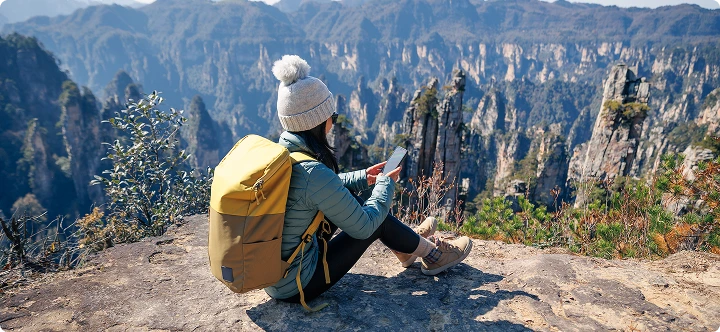
From March to May, morning fog drifts between the pillars and creates the floating effect many visitors hope to see. Temperatures range from 50°F to 70°F (10°C to 21°C). Crowds stay moderate, making spring a strong balance between atmosphere and comfort. If you’re chasing the classic “Avatar” look, this is your season.
Summer crowds
July and August bring school holidays, and domestic travel peaks. The mountains turn lush and green, but expect long lines at elevators and cable cars. High humidity can make steep walks more tiring. Summer rewards patience and early alarms.
Autumn clarity
September and October offer clearer skies and milder air. Visibility improves, which makes panoramic viewpoints more rewarding. Crowds ease slightly compared to summer, especially on weekdays.
Winter snow
From December through February, snow occasionally dusts the pillars and transforms them into white towers. Visitor numbers drop, but some trails may close during icy conditions. Fewer crowds come with colder trade-offs.
Which season is right for you?
| Season | Weather | Crowd level | Best for |
| Spring (Mar–May) | Cool, misty | Moderate | Atmospheric photos |
| Summer (Jun–Aug) | Hot, humid | High | Lush greenery |
| Autumn (Sep–Nov) | Clear, mild | Very high | Sharp mountain views |
| Winter (Dec–Feb) | Cold, occasional snow | Low | Quiet visits |
Next in this series: Socotra Travel: Your Gateway to the World’s Most Alien Island
How many days do you need in Zhangjiajie?
Most travelers need three full days to see the main highlights at a comfortable pace. You can squeeze it into two days if you move fast, but four days will give you welcome flexibility, especially if the weather changes suddenly.
2-day itinerary (fast-paced)
- Day 1:
Take the Bailong Elevator up to Yuanjiajie early in the morning. Explore the Avatar Hallelujah Mountain viewpoints, then walk toward Tianzi Mountain in the afternoon. - Day 2:
Focus on Tianzi Mountain panoramas and descend by cable car. If time allows, stop at Ten-Mile Gallery before departure.
This schedule works if you move efficiently and start early each day. Expect long walking hours.
3-day optimal itinerary
- Day 1: Yuanjiajie Scenic Area
Arrive before 9 am. Use the elevator up, hike between viewpoints, and descend later in the afternoon. - Day 2: Tianzi Mountain and Yangjiajie
Start at Tianzi for wide panoramas, then explore quieter Yangjiajie trails, which feel less crowded. - Day 3: Tianmen Mountain
Ride the 7.5 km (4.7 miles) cable car, walk the cliff paths, and climb the 999 steps to Heaven’s Gate Cave.
Three days allow steadier pacing and room for weather adjustments.
4-day relaxed itinerary
In four days, you can explore all of the above, but also:
- Add the Zhangjiajie Glass Bridge to your itinerary
- Explore longer hiking trails inside the park
- Visit sunrise or sunset viewpoints
🔆 Tip:
Fog changes everything. If visibility matters to you, build one buffer day into your schedule. The mountains can look entirely different 24 hours later.
Top things to see inside Zhangjiajie National Forest Park
Yuanjiajie Scenic Area (Avatar Peaks)
Yuanjiajie is where you’ll see the formations that inspired Pandora. It’s also the busiest section of the park, so expect company.
The Bailong Elevator delivers visitors directly to the plateau, which means viewing platforms are filled by mid-morning. Arrive before 9 am or after 3 pm for shorter lines and clearer views. The mountains look timeless. The queues do not.
Skip the first lookout and follow the full loop trail. Most visitors gather at the main Avatar Hallelujah Mountain platform, but the edge paths offer quieter angles and wider sightlines. A few extra steps usually earn you a better photo.
Tianzi Mountain
Tianzi feels more expansive than Yuanjiajie. Instead of tight vertical clusters, you’ll see rolling peaks layered across the horizon.
Sunrise works especially well here. Early light reveals depth that fades later in the day.
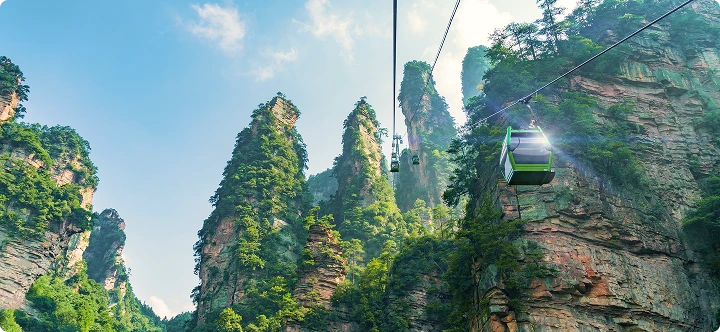
A one-way cable car ride there costs about RMB 72 ($10) and offers broad views over forested valleys.
Bailong Elevator
The Bailong Elevator climbs 1,070 feet (326 meters) along a sheer cliff. It ranks among the tallest outdoor elevators in the world.
A one-way ride costs RMB 65 ($9), and it replaces nearly two hours of uphill hiking.Lines here peak between 10 am and 2 pm. Ride up early and hike down to avoid bottlenecks.
Zhangjiajie Glass Bridge
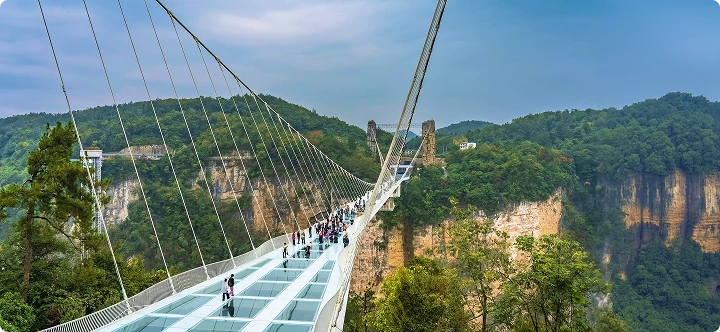
The glass bridge sits in Zhangjiajie Grand Canyon, separate from the main park.
It stretches 1,410 feet (430 meters) across a deep gorge. Tickets usually range from RMB 138 to RMB 220 ($19–$31), depending on the season.
Timed entry limits how many visitors can enter at once, which keeps the walkway from feeling overcrowded. Early afternoon often feels calmer than the late-morning tour rush.
If heights make you uneasy, you can use the provided shoe covers and focus on the canyon walls instead of looking straight down.
Tianmen Mountain & Heaven’s Gate Cave
Tianmen Mountain operates separately and sits closer to Zhangjiajie city.
The cable car there runs 4.7 miles (7.5 km) and takes about 30 minutes, ranking among the longest passenger cableways in the world. A full scenic ticket costs around RMB 278 ($39).At the summit, glass walkways line the cliffs and 999 steps climb toward Heaven’s Gate Cave. The staircase is steep, so pace yourself. Fog sometimes hides the natural arch, so leave flexibility in your schedule if this view is a priority.
Next in this series: Mendenhall Ice Caves: Alaska’s Surreal Frozen Wonder
Zhangjiajie entrance fees and ticket costs
If you are planning your trip for 2026, these are the prices you can expect to pay for each attraction:
- Zhangjiajie National Forest Park entrance (4-day pass):
RMB 248 ($34)
Includes access to the park and environmental shuttle buses. - Bailong Elevator (one way):
RMB 65 ($9) - Tianzi Mountain cable car (one way):
RMB 72 ($10) - Zhangjiajie Grand Canyon Glass Bridge:
RMB 178 ($25) base ticket
RMB 138– RMB 220 ($19–$31) depending on package and season. - Tianmen Mountain scenic area (includes cable car route):
RMB 278 ($39)
Multi-day park tickets include internal shuttle buses, but cable cars, elevators, and special attractions require separate fees.
Next in this series: Red Crab Migration on a Budget: How to Experience “It’s Raining Crabs”
Is Zhangjiajie worth visiting?
If you’re drawn to dramatic landscapes and unusual geology, Zhangjiajie is absolutely worth it. The scale feels different from places like the Grand Canyon: instead of wide, open depth, you get vertical intensity. Thousands of quartz sandstone pillars rise straight out of forested valleys, stacking layers of rock in every direction until the skyline looks almost engineered by nature.
What makes Zhangjiajie unique is how wild the scenery feels compared to how accessible the experience is. Unlike Patagonia’s remote, rugged vibe, you don’t need multi-day hikes to reach the best viewpoints here. Elevators, cable cars, and shuttle buses connect the main scenic areas, so you can cover a lot in a short time.
If the Norwegian fjords impress you with water and open space, Zhangjiajie is the opposite: tight, concentrated, and tower-filled, with stone columns crowding the horizon rather than sweeping coastlines.
The best experiences usually come on clear mornings and during shoulder seasons, when visibility is sharper, and crowds are easier. If you want nature that feels raw and empty, the infrastructure may be a downside, but if you want surreal scenery without extreme effort, Zhangjiajie delivers.
Next in this series: Why Lofoten Islands Should Be in Your US–to–Norway Bucket List
Estimate your Zhangjiajie trip budget
- Flights
U.S. to Zhangjiajie: $900–$3,300 round-trip economy
(LA from $900–$2,200; NYC from $1,500–$3,300) - Park tickets and major attractions
Forest Park pass: $34
Bailong Elevator (one way): $9
Tianzi cable car (one way): $10
Glass Bridge (base): $25
Tianmen Mountain: $39 - Estimated total for attractions: $90–$130, depending on choices
- Accommodation (4 nights)
Budget hotel: $100–$160 total
Mid-range hotel: $240–$480 total - Cable cars and extras
(If doing multiple one-way rides + optional extras): $20–$60 - Local transport
Airport taxi + local rides: $30–$60
Total estimated 5-day trip cost:Budget range: $1,150–$1,600
Mid-range amounts: $1,400–$2,200+