Let’s be frank! Traveling can be a significant expense, especially when it comes to airfare. Even frequent fliers, familiar with flight costs, constantly seek ways to save money or improve their travel experiences. Whether you fly often or rarely, domestically or internationally, in any class, with any airline, you deserve to know how to get the most out of your travels.
And the good news? There are plenty of options available to you! In this article, we’ll explore some of the most effective strategies so you can choose the ones that best suit your needs and leave behind the ones that don’t. Consider this article your first confident step toward becoming a money-savvy traveler.
Read in this article:

Common Travel-Related Reward Providers
- Airlines offer their own frequent flier programs, allowing passengers to earn rewards (“miles”) for flights with that airline. Examples include British Airways Executive Club, Cathay by Cathay Pacific Airways, and Miles & More by Lufthansa.
- Banks and credit card issuers offer travel credit cards that allow cardholders to earn points or miles for their purchases. These rewards can typically be redeemed for flights, hotel stays, rental cars, and other travel-related expenses. Examples include Chase Ultimate Rewards, American Express Membership Rewards, and Citi ThankYou Points.
- Cruise lines, hotel chains, and car rental companies offer loyalty programs designed to reward their customers. These programs allow members to earn points or credits for their purchases, which can be redeemed for perks like free cruise nights, hotel stays, or rental days. Additional benefits often include priority services, cabin or room upgrades, and exclusive events.
- Collaborations: The businesses above team up to provide customers with diverse rewards and perks. For example, Hyatt Hotels Corporation partners with airlines like American Airlines and Emirates to enhance benefits for World of Hyatt loyalty program members. Airlines also unite into alliances like Star Alliance and oneworld, enabling passengers to earn and use miles across multiple airlines. Additionally, restaurants often partner with the mentioned travel and hospitality businesses to offer joint promotions and rewards to their members.
Common Types of Travel Reward Currency
By engaging with travel reward programs offered by the providers mentioned above, you can accumulate ‘travel reward currency’. As a program member, you can exchange this currency for a variety of travel-related perks. These include flights, hotel stays, car rentals, upgrades, access to airport lounges, and more. These are common types of travel reward currency:
- Miles. When you choose to spend your money with one airline or airline alliance, you earn miles that can be redeemed for free flights, seat upgrades, and priority services. The term “miles” doesn’t signify the distance you’ve traveled or can travel for free. It’s simply the rewards currency used by airlines.
- Travel Points. In most cases, “miles” is associated with airline loyalty programs, while “points” is commonly used across a spectrum of travel rewards programs. This includes hotels, dining, rental cars, and various other sectors within the travel industry.
- Cash Back. When you use a credit card that offers cash back rewards for travel spending, you earn a percentage of your purchase amount back. For example, if you use a credit card that offers 2% cash back on travel purchases and you spend $1,000 on a flight, you would earn $20 cash back. This $20 can then be applied as a credit towards your credit card bill, effectively reducing the amount you owe.
- Vouchers or Certificates are granted by the providers mentioned above to their customers. These vouchers or certificates typically have expiration dates and can be redeemed for discounts on flights, hotel stays, car rentals, as well as for free flight and hotel upgrades, among other travel services.
- Gift Cards are commonly issued by airlines, hotels, car rental companies, cruise lines, and online travel agencies as rewards for loyal customers. They can use these cards, which typically have expiration dates but offer flexibility, to pay for various travel-related expenses. These may include flights, hotel stays, rental cars, cruises, vacation packages, and more.
- Travel Credits are common perks of premium credit cards or travel packages. They can be used to offset eligible travel expenses like airline tickets, hotel stays, rental cars, airport lounge access, and baggage fees. However, be aware that they may expire and have limited applicability to certain travel expenses.
In the image below, you can observe a general set of options available to enhance your travel experience. Further in the article, we delve into the various opportunities each option offers.


Read also: Your Guide to Budget-Friendly and Comfortable Air Travel with Airlines Operating in the US
4 Money-Saving and Rewarding Opportunities Offered by Airlines
Each of the four opportunities offered by airlines can help enhance your travel experience. By combining some or all of them, you’ll earn more miles or points, unlock exclusive perks, and enjoy greater flexibility when redeeming rewards.
1. Frequent Flier Programs
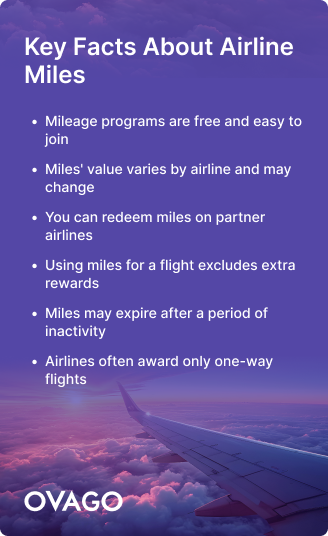
Important to Note: While the term ‘frequent flier’ is commonly used, it’s not obligatory. Even if you rarely fly, you can easily enroll on the airline’s website or its mobile app. Once enrolled, you will receive a frequent flier number. Simply input it during ticket purchase to start accumulating miles. Whether you accumulate enough rewards for redemption is uncertain, but you have nothing to lose!
Who’ll Benefit Most:
- Those living close to an airport primarily serviced by one airline, as it will be easy and convenient to remain loyal to that airline.
- Frequent travelers, flying multiple times per year. Infrequent travel makes earning enough miles for free flights challenging, as miles may expire with inactivity.
- Members who integrate their frequent flier program with other travel rewards options, such as utilizing travel credit cards, airline shopping portals, and staying at partner hotels.
What You Can Earn with Frequent Flier Programs:
Standard Benefits (varying by program):
- Free priority services (check-in, boarding, and baggage handling)
- Free flights and cabin upgrades
- Free access to better seats
- Expedited security screening
- Dedicated customer service lines
- Waived fees (e.g., booking or flight change fees)
- Discounted tickets or companion passes
- Free or discounted partner services (hotels, car rentals, restaurants, etc.)
- The ability to share miles with family and friends
- Access to exclusive experiences (e.g., backstage tours, VIP meet-and-greets)
- Free or discounted products like electronics, luggage, and travel accessories
- Travel vouchers for in-flight purchases, checked baggage, or partner services
- The ability to donate miles to charities supported by the airline
Elite Status Tiers:
Frequent flier programs often have multiple tiers of elite status, such as Silver, Gold, and Platinum. You can qualify for elite status by meeting the airline’s requirements, usually by flying a certain number of miles within a calendar year. Elite status benefits are generally more exclusive and extensive than standard benefits. For instance, standard benefits provide limited premium lounge access, usually depending on ticket class rather than status. However, with elite status, you often gain access to these lounges even when flying economy class. Note that you may need to requalify for elite status each year by meeting the airline’s criteria again.
Example of how you can earn miles:
Ticket prices can fluctuate significantly. But a standard, reasonable fare for domestic flights typically requires 12,500 miles or points per one-way trip or 25,000 for a round trip. To illustrate, let’s assume you earn 5 miles for each dollar spent on airfare. A $500 round-trip ticket would yield 2,500 miles. To accumulate enough miles for a free round-trip flight requiring 25,000 miles, you would need to purchase that same $500 flight ten times. In essence, it’s similar to a retailer promotion: “Buy 10, get one free.”
Key Factors to Consider When Choosing a Frequent Flier Program:
- What are the best frequent flier programs? Check out reputable reviews like U.S. News & World Report. According to it, the most praised frequent flier programs include Alaska Airlines Mileage Plan, Delta SkyMiles, United MileagePlus, American Airlines AAdvantage, and more.
- What’s your hub city? If you reside in Atlanta, Delta SkyMiles could be a suitable choice, whereas American AAdvantage may be preferable for Dallas residents. If your travel aspirations include international destinations, you may find Southwest Rapid Rewards less appealing.
- What are dominant airlines near your location? To discover them, consult the market share data for any US airport available at the Bureau of Transportation Statistics.
- Do these airlines regularly fly to your frequent destinations? To find out, visit the airline’s website to explore their route map or use the flight search tool to see available destinations. Alternatively, you can check the Ovago website, which aggregates flights from multiple airlines to provide a comprehensive view.

Read also: Flight Price Alerts by Ovago Explained
2. Airline Collaborations
Important to Note: Understanding airline alliances and partnerships is crucial if you want to maximize your miles. If you’re using AAdvantage miles solely to book flights on American Airlines, you’re overlooking a wide array of opportunities. Most airlines have formed partnerships with carriers across the globe. Why not benefit from them?
Who’ll Benefit Most: Frequent fliers whose destination needs may vary significantly, requiring a high level of flexibility.
Types of Airline Collaborations:
- Airline Alliances are extensive networks of partner airlines that offer frequent fliers a wealth of benefits beyond what a single carrier can provide. The three major global alliances include: Star Alliance (includes 26 airlines such as Lufthansa, Singapore Airlines, and Swiss International Air Lines), oneworld (consists of 13 member airlines, including Cathay Pacific, Japan Airlines, and Iberia), and SkyTeam (brings together 19 airlines, including Air France, China Airlines, and Delta Air Lines).
- Individual Airline Partnerships. Some airlines prefer not to join global alliances like Star Alliance, SkyTeam, or Oneworld. Instead, they form strategic partnerships with other carriers. Emirates and Qantas and JetBlue and Icelandair are examples of such partnerships.
Main Advantages of Airline Alliances & Partnerships vs. Individual Frequent Flier Programs:
- Access to more destinations via coordinated schedules and seamless connections.
- You can earn and redeem frequent flier miles or points across all member airlines.
- Elite status often extends across all alliance members and partners.
Maximizing Your Miles, an Example Using Partner Programs:
Suppose you want to fly United Airlines from Chicago (ORD) to Honolulu, Hawaii (HNL). If you book directly through United’s MileagePlus program using United miles, expect to pay between 30,000 and 45,000 miles for a round-trip ticket, or even more during peak holiday periods. However, you can book the same United flight for a fraction of the price by redeeming miles from a partner program like Turkish Airlines Miles & Smiles, which lets you book United flights from anywhere in the US to Hawaii for just 10,000 miles each way. This is because Turkish Airlines is a Star Alliance partner of United Airlines.
Flexibility You Get With Partner Programs:
When you purchase a flight with cash rather than using miles, you can often opt to earn miles with a partner airline’s frequent flier program. For instance, if you seldom fly with Aegean Airlines, collecting a small number of Aegean miles that might be difficult to redeem may not be advantageous. Instead, when booking an Aegean flight, you could choose to credit those miles to a program you use more frequently, like United Airlines MileagePlus or Singapore Airlines KrisFlyer.
Planning a Trip with Partner Airlines:
If you’re planning a trip with stops in specific cities, use tools like FlightConnections.com or FlightsFrom.com to identify airlines serving those cities’ airports. These resources offer lists of direct flights and allow filtering by airline, alliance, or country. Once you have a list of potential airlines, identify which rewards programs let you book them using miles. Global airline alliances simplify this process since you can redeem miles from any member across all partner airlines.
Key Factors to Consider When Choosing an Airline Partner Program:
- Primary Airlines. Determine the primary airlines you often fly with. If you regularly book flights with one airline, explore its partner networks to see if they meet your travel needs.
- Travel Patterns. Analyze your typical travel destinations and routes. If you frequently travel internationally, an alliance or partnership with a global reach like Star Alliance could be beneficial. For regional travel, smaller partnerships may work better.
- Hub Location. Identify the major airline hub closest to your location. Flying from a hub allows for more frequent, direct flights. For instance, if you live near an Emirates hub, their partnership with Qantas might be advantageous.
3. Airline Shopping Portals
Important to Note: Nearly every major airline, including American Airlines, United Airlines, Delta Air Lines, and Southwest Airlines, operates a shopping portal. These portals are part of broader loyalty programs and are designed to encourage the earning of frequent flier miles through everyday online shopping.
Who’ll Benefit Most: If you’re a loyal frequent flier program member, you’ll maximize your benefits and earn miles more efficiently.
Main Advantages of Airline Shopping Portals:
- Earning Extra Miles. By shopping through these portals, you earn additional miles on top of your regular rewards. This accelerates progress toward free flights, upgrades, and other travel benefits.
- Wide Range of Retailers. Most portals offer a vast selection of partner retailers, making it easy to earn miles on everyday purchases, from electronics to clothing and even subscriptions.
- Stackable Rewards. Airline shopping portals often allow you to stack rewards with other promotions or credit card benefits, maximizing the value earned per purchase.
- Special Promotions and Bonuses. Many portals offer seasonal promotions or bonuses for spending certain amounts, giving extra incentives for increased mileage accumulation.
- Ease of Use. They are usually simple to navigate, enabling you to shop directly through the portal with links to partner stores.
4. Airline Credit Cards
Important to Note: An airline credit card is designed specifically for frequent fliers, often co-branded with an airline to provide substantial rewards. In recent years, airlines have enhanced these cards by offering bonus miles on everyday spending categories like dining, gas, and hotels, making them practical as everyday payment cards rather than being used solely for airline perks.
Who’ll Benefit Most:
- Frequent Fliers. Travelers who take not fewer than four flights annually and consistently choose the same airline will find value in these cards.
- Bag Checkers. Major airline cards often include free checked baggage for at least two passengers on the same booking. With checked bags usually costing $30 each way, a round trip with a partner could cost $120, surpassing the typical annual fee of many airline cards.
- Good Credit Holders. Most travel credit cards require a good credit score (690 or higher). You can check your score for free using tools like Credit Karma.
- Dual Airline Fliers. If you frequently fly two airlines, such as United and American from Chicago O’Hare, consider holding two airline cards. Although paying two annual fees isn’t ideal, the perks from both cards could outweigh the costs through free checked baggage and other benefits.
Pros and Cons of Airline Credit Cards:
Pros:
- Sign-Up Bonus. After meeting a spending requirement, new cardholders can quickly earn enough miles for a free domestic flight. This is on top of miles earned from regular spending.
- Priority Boarding. Cardholders often enjoy early boarding, ensuring access to overhead bin space for carry-ons.
- No Expiration. Some cards prevent frequent flier miles from expiring, allowing you more time to accumulate miles for valuable rewards.
Cons:
- Annual Fees. Most cards charge annual fees, often around $100, which may require careful consideration of whether the benefits justify the cost.
- High Interest Rates. These cards often have high-interest rates, so paying the full balance each month is crucial to avoid expensive charges.
- Complexity. Airline cards come with unique features and rules, separate from the frequent flier program, potentially complicating their use.
If you’re not committed to one specific airline but still want free flights, consider a general travel credit card. These cards, issued by banks and other financial institutions, offer travel rewards without restricting you to a single airline. Some of the top options include the Chase Sapphire Preferred® Card, Citi Premier® Card, and Capital One Venture Rewards Credit Card.

More Travel Perks to Polish Your Smart Travel Strategy: Hotels, Car Rentals, Cruises, and Restaurants
Important to Note: Frequent flier programs often partner with other travel and hospitality businesses. For example, Marriott Bonvoy® members can convert their points to frequent flier accounts and earn airline miles from their stays through partnerships with over 35 different airlines.
Each of the following programs aims to incentivize repeat business by offering benefits that make members feel valued while providing tangible rewards for their loyalty:
- Cruise Lines offer loyalty programs that reward repeat travelers. Members earn points based on cruise nights or cabin category, with higher-tier benefits like priority boarding, exclusive events, complimentary services, and cabin upgrades. Examples include Royal Caribbean’s Crown & Anchor Society and Carnival’s VIFP Club.
- Hotel Chains. Hotel loyalty programs provide points for each stay, which can be redeemed for free nights, upgrades, or other perks. Higher-tier members often receive complimentary breakfast, late checkout, and enhanced amenities. Popular programs include Marriott Bonvoy, Hilton Honors, and World of Hyatt.
- Car Rentals offer loyalty programs that reward customers with points, rental credits, or status upgrades. Higher status often means free vehicle upgrades, expedited services, and priority reservations. Major programs include Hertz Gold Plus Rewards, Avis Preferred, and Enterprise Plus.
- Dining Rewards Programs, often partnered with credit card companies or frequent flier programs, offer points or miles for dining at participating restaurants. Customers can earn rewards toward free meals, gift cards, or travel points. Popular examples include OpenTable Rewards, United MileagePlus Dining, and American Airlines AAdvantage Dining.
Ovago Special Flight Deals: The Perfect Finishing Touch for Your Smart Travel Strategy
Travelers often wonder if they can earn airline miles through online travel agencies like Ovago. Not only can you accumulate airline award miles on Ovago bookings as if you were booking directly, but you’ll also enjoy the cost-saving benefits of our deals and services.
Great Flight Deals:
We offer a range of budget-friendly flight options. Follow us on Facebook and Instagram, check out our blog, or subscribe to our emails for updates on exciting Ovago discounts. Our flight deals provide cheap Ovago airline tickets, including:
- Last-Minute Deals: Perfect for spontaneous travelers seeking adventure on short notice.
- Early Bird Discounts: Rewarding travelers who book trips well in advance.
- Airline Partner Deals: Special discounts in collaboration with over 500 airline partners.
- Event-Related Promotions: Limited-time promo codes tied to holidays and special occasions.
Price Drop Protection:
If the price of your booked flight drops within 24 hours, we’ll notify you, rebook your flight, and issue a new ticket with the same itinerary but a different booking number. The savings will be credited to you in the form of a flight coupon, usable on your next trip, offering peace of mind with every booking.
Book Now/Pay Later Option:
Through a partnership with Affirm, Ovago lets you manage payments on your schedule with flexible monthly options and no late fees. Choose the best monthly payment plan for you, receive notifications, and complete transactions through the Affirm website or app.
Now you’re fully equipped to transform every travel opportunity into a rewarding experience! Look forward to more blog updates from us, providing guidance on crafting a finely tuned, smart travel strategy. Don’t forget to book your bargain flight with Ovago, your reliable travel partner.