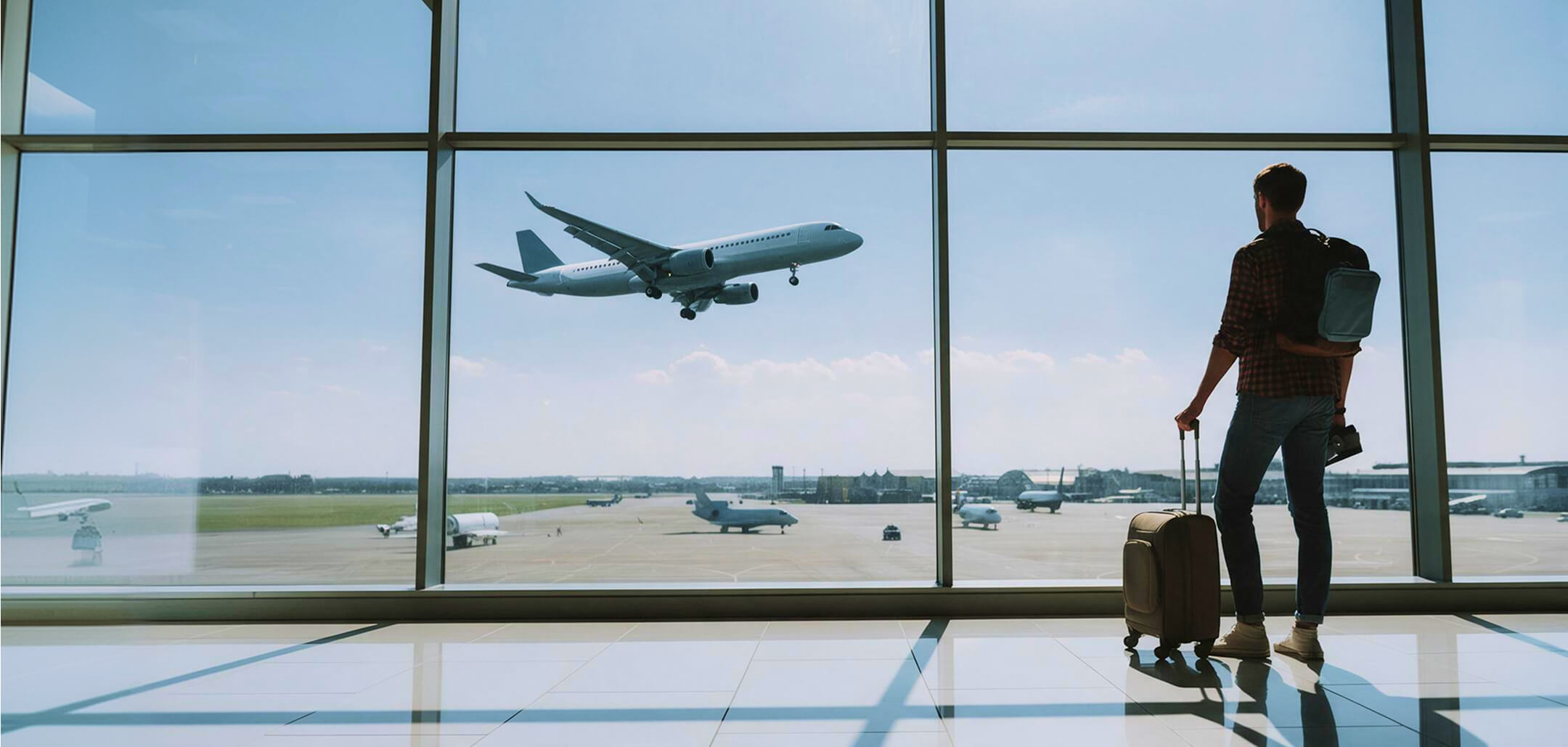

Skiplagging is a real way travelers take advantage of how airlines price connecting routes through their hubs, and it can seem like an easy way to save money on your next flight. It is also a practice that airlines actively fight, and the consequences can end up outweighing whatever the ticket saved in the first place. Before you get tempted by the savings, it is worth understanding what is really at stake.
Read in this article:
What skiplagging is, and why airlines consider it a violation
So what is skiplagging? Also called hidden-city ticketing, skiplagging happens when a traveler books a connecting flight that costs less than a nonstop ticket to the layover city, then deliberately skips the final leg to end their trip at that layover instead.
Example
For instance, a nonstop ticket from New York to Charlotte costs $350, while a ticket from New York to Atlanta that connects through Charlotte costs $220, even though it covers more distance and includes an extra flight. In a skiplagged version of that trip, a traveler’s real destination is Charlotte, so they would get off at the layover and never board the onward flight to Atlanta.
How is it possible?
The price gap comes from how airlines price tickets on different markets, not simply from the distance flown. Competition on one route can push a longer connecting flight below the price of a shorter nonstop trip. Airlines use different fare levels and demand forecasts for different origin-and-destination markets, which can produce prices that look illogical when two itineraries overlap. This pricing quirk helps explain why skiplagging is possible: a traveler can book a cheaper connecting flight with the intention to end their journey in the layover city and not take the final leg of the flight.
This, however, does not mean the airline has approved using only part of the cheaper itinerary. Major carriers treat the ticket as a contract for the full journey. American Airlines, Delta Air Lines, United Airlines, and other airlines prohibit buying a ticket to a farther city when the traveler’s real destination is the layover stop.
That “full journey” contract extends to more than the passenger. It also determines where a checked bag goes: does skiplagging work with checked bags? It does not, since a bag stays tied to the ticketed final destination and keeps traveling there regardless of where the passenger gets off. Irregular operations can create further complications because the airline’s obligation is to transport the passenger to the destination printed on the ticket, not to preserve a particular connection city.
Is skiplagging actually illegal?
Is skiplagging illegal? No. Skiplagging is not illegal under US law. No federal or state statute prohibits buying a ticket and choosing not to fly every segment of it.
So if it isn’t against the law, why do airlines treat it as such a serious offense? What it violates is the airline’s contract of carriage, the terms every passenger agrees to the moment they buy a ticket. This makes it a civil and contractual matter between the passenger and the airline, not a criminal one.
This distinction matters in practice. Airlines cannot have someone arrested for skiplagging. What they can do is cancel the unused portion of a ticket, strip frequent flyer miles tied to the booking, bill the fare difference, or ban a traveler from future bookings. None of that requires a courtroom. It just requires the airline noticing.
What actually happens to travelers who get caught skiplagging
In theory, skiplagging looks like a smart way to save. Reality, however, paints a different picture.
Real cases show what skiplagging American Airlines flights can cost a traveler. In 2023, a 17-year-old traveling from Gainesville, Florida, to New York City via Charlotte, North Carolina, planned to end his trip in Charlotte. American Airlines staff became suspicious after seeing his North Carolina driver’s license at check-in and questioned him about his travel plans.
After the airline determined he planned to end his trip in Charlotte, American Airlines canceled his $150 ticket, and his family had to buy a new $400 direct ticket just to get him home. His father also claimed the airline had banned him from flying with them for three years, but the airline neither confirmed nor denied this claim.
Delta Air Lines, like American Airlines, spells out the same prohibition in its own contract of carriage, so skiplagging a Delta Air Lines itinerary carries the same risk even without a headline-grabbing case attached.
Lufthansa took a more direct approach, suing a passenger who booked a round-trip business-class ticket between Oslo and Seattle with a connection in Frankfurt in 2016. He flew the outbound itinerary in full but skipped the final leg of the return journey, traveling separately to Berlin instead. Lufthansa argued that this violated its fare rules and sought about €2,112 (roughly $2,385) in damages for the fare difference.
A Berlin court dismissed the case in December 2018, but the airline appealed, turning what should have been a routine trip into a multi-year legal dispute. Lufthansa withdrew its appeal in October 2019, letting the ruling in the passenger’s favor stand.
Airlines have also targeted companies that promote skiplagging. American Airlines sued a booking platform built around finding these fares, arguing the site misused its trademarks and misled travelers. In October 2024, a federal jury in Fort Worth awarded American Airlines $9.4 million, split between $4.7 million in copyright infringement damages and $4.7 million in disgorged revenue. Notably, the jury rejected the trademark claim that had been the centerpiece of American Airlines’s argument, so even the airline’s win came with limits.
What the cases show: skiplagging costs. A canceled ticket forces a pricier replacement fare, paid on the spot. And airlines are willing to fight this for years in court, pursuing the platforms that promote it, even when the win comes with real limits.
Why airlines fight skiplagging so aggressively
Airlines fight skiplagging so aggressively because of how the price gets set, not just because a seat goes empty. A connecting ticket to a farther city is priced against competition on that specific route, which often makes it cheaper than a nonstop ticket to the layover city, where the airline faces less competition and can charge more. That connecting price assumes the passenger is actually flying on to the farther city.
When a traveler skiplags, they reach the layover city, their real intended destination, while only paying the cheaper “passing through” rate instead of the higher price the airline would have charged someone who set out to end their trip there. On top of that, the seat on the unflown final leg still goes out empty, too late for the airline to sell it to a passenger who genuinely wanted that flight.
Skiplagging American Airlines cases in particular have drawn attention because the carrier has been the most public about enforcing its rules, but the underlying math is the same for every airline that sells connecting fares.
That is also why detection is not just a matter of luck for the traveler. Airlines cross-reference frequent flyer numbers and booking history across trips, which is how they separate occasional, accidental missed connections from a repeated pattern. A single missed flight rarely raises a flag. A frequent flyer account with the same kind of gap trip after trip is a different story, and it is the pattern, not the individual flight, that tends to draw attention.

Book the ticket that actually gets you there
Compare real fares to your destination, no workarounds required
Is it worth the risk, and does it matter how you booked?
Skiplagging is not worth the risk. The possible loss of a paid flight, loyalty benefits, or having to pay the fare difference outweighs a relatively modest saving on one ticket.
A specific booking channel does not remove that risk. The practice depends on the itinerary and the airline’s fare rules, not on whether you bought the ticket directly from the carrier or through a travel agency. Booking through a third party does not turn skiplagging into an airline-approved fare.
For example, Delta Air Lines explicitly states that when a travel agency issues a Delta Air Lines ticket, the passenger still enters into a contract of carriage with Delta Air Lines. Its rules also apply prohibited-ticketing remedies to passengers, ticket purchasers, agents, and travel agencies.
This is especially important if you have spent years building miles or elite status. Saving on one flight can endanger benefits accumulated across many previous trips. Even travelers without a loyalty balance face the simpler financial risk of losing unused flights or having to buy a replacement ticket at the last minute.
The value of a lower fare changes quickly when the ticket carries consequences that can affect the rest of your trip or your relationship with the airline.
You might also like to read: How airlines decide when to raise fares.