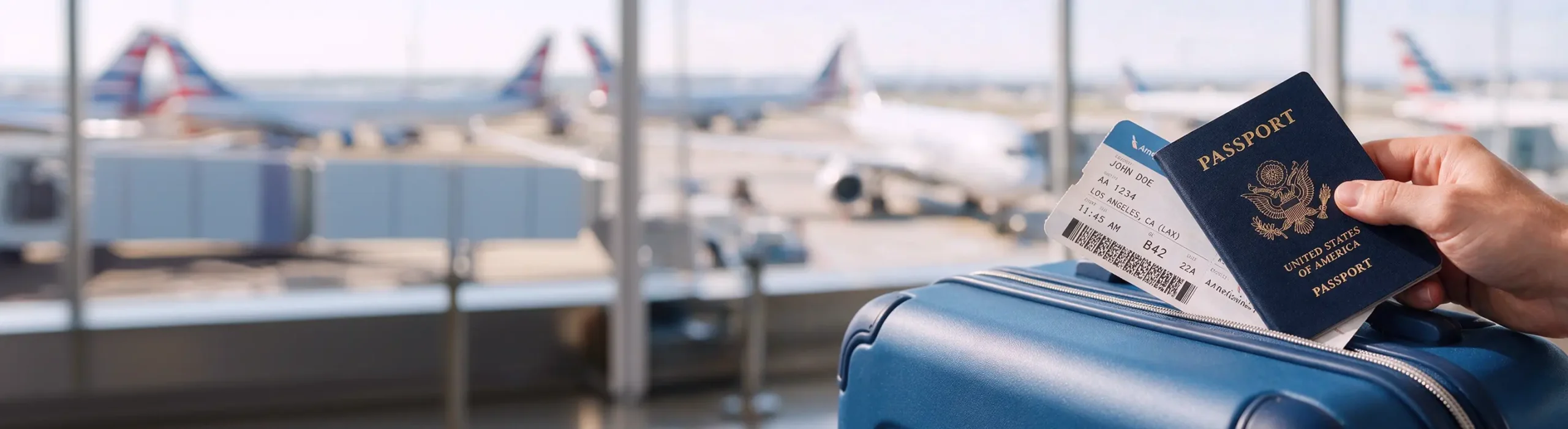

Since February 1, 2026, travelers who arrive at a US airport security checkpoint without a REAL ID, passport, or another accepted form of identification can face a $45 TSA fee. The fee is separate from REAL ID enforcement, which began on May 7, 2025, although the two changes are easy to confuse.
The fee catches people off guard because they assume a standard driver’s license is enough to fly or do not realize a valid passport works just as well as a REAL ID. The easiest way to avoid it is to bring a REAL ID, passport, or another document TSA already accepts.
Read in this article:
What the new TSA $45 fee actually is
The TSA $45 fee is a payment for TSA ConfirmID, a backup identity-checking process for travelers who arrive without an accepted ID. TSA began charging the fee on February 1, 2026.
ConfirmID is not the same as REAL ID enforcement. TSA began enforcing REAL ID requirements on May 7, 2025, when noncompliant state licenses stopped qualifying as acceptable identification for domestic flights.
ConfirmID gives you one more chance to prove your identity before TSA turns you away from the checkpoint.
Here is how it looks in practice:
- TSA ConfirmID costs $45 per traveler
- The payment covers a 10-day travel period
- Each traveler aged 18 or older must complete the process separately
- Payment does not guarantee successful identity verification
- You must pay again if you pass through another checkpoint after the 10-day period ends
- The fee only applies when you cannot present another acceptable form of ID
The fee is not included in your airline ticket, and your airline does not collect it during booking. You pay through the federal government’s Pay.gov platform when you need to use ConfirmID.
After payment, keep the receipt on your phone or print a copy. TSA requires proof of payment when you use the process during the 10-day window.
If your trip lasts longer than 10 days and you pass through another checkpoint without acceptable identification, you must pay another $45. In other words, ConfirmID can rescue the trip, but it is an expensive substitute for bringing the right ID.

Who is most likely to pay the TSA $45 fee
The travelers most likely to pay are those who assume the driver’s license already in their wallet will still work. A license can remain valid for driving while no longer qualifying as acceptable identification at airport security.
Frequent international travelers can also face the fee unexpectedly. If you usually carry a passport abroad, you probably have not needed to think about your driver’s license at the airport. The surprise comes on a domestic trip, when your passport stays at home, and your regular license no longer gets you through security.
You are more likely to face the fee if you:
- Have not checked whether your license is REAL ID-compliant
- Usually fly internationally but leave your passport at home for domestic trips
- Have not flown domestically since REAL ID enforcement began
- Assume every valid driver’s license works at TSA checkpoints
- Assume the person booking your trip has checked the ID rules for you
TSA reported in early February 2026 that 95% to 99% of travelers were already presenting REAL IDs or another acceptable form of identification. This high compliance rate also makes the issue easier to miss.
Most people around you will pass through security normally, which makes it easy to assume your own ID will work too.
Tip: Check the exact ID you plan to carry against the list of acceptable identification documents, even if TSA accepted the same type of license on an earlier trip.

What happens if you show up without acceptable ID
If you arrive without an accepted ID, TSA directs you to ConfirmID before you enter the regular security line. You can then pay the $45 TSA ConfirmID fee for an additional identity check.
The process can take up to 30 minutes, which becomes a serious problem when boarding has already started.
At the airport, the following things may happen:
- TSA directs you to ConfirmID
- You pay $45 or show proof of advance payment
- TSA attempts to verify your identity
- You may pass the screening or need additional verification
- Additional screening can extend the wait
- Verification can still fail
- A long delay can cause you to miss your flight
If you already know that your license is not REAL ID-compliant and you are not bringing another accepted document, TSA recommends paying online before you reach the airport. Paying ahead will not remove the extra checks, but it does save you from handling the payment at the airport.
Use only the official Pay.gov form. Avoid websites that claim to provide faster TSA verification, airport appointments, or priority processing.
ConfirmID is a backup for travelers without the right ID, but bringing that ID is cheaper, faster, and far less stressful.

Two ways to avoid the TSA $45 fee entirely
You can avoid the fee entirely by bringing a REAL ID-compliant license, a valid US passport, or another form of identification TSA accepts.
If you already own a valid passport, the fastest solution is simply to bring it. It requires no DMV appointment, no new application, and no additional payment before your flight.
A REAL ID becomes more convenient if you fly domestically often. Once you have one, that license is all you need for domestic flights, so your passport can stay at home.
REAL ID vs passport
A passport is a good option if you:
- Already have a valid passport
- Need an immediate solution for an upcoming domestic trip
- Fly domestically only occasionally
- Want to avoid a DMV appointment
Get a REAL ID if you:
- Fly within the US regularly
- Prefer carrying your driver’s license
- Do not want to bring a passport on routine domestic trips
- Have enough time to complete the DMV process before traveling
A valid passport card also works as identification at a domestic TSA checkpoint. However, it does not replace a passport book for most international air travel.
Whichever acceptable document you use, add it to your travel checklist before leaving for the airport. Even the right ID cannot help when it is still sitting at home.
Why getting a REAL ID takes longer than you expect
Getting a REAL ID usually takes more than a quick trip to the DMV. Appointment availability varies by state and location, so starting early gives you more options.
The appointment is only part of the process. Each state has its own document checklist, but you will generally need proof of identity, residency, Social Security number, and lawful status.
New Jersey shows how quickly the wait can stretch. The average REAL ID appointment wait reached 75 days before the state expanded services and adjusted parts of the application process. By mid-2026, the average had fallen to approximately 40 days.
Even after that improvement, the average wait still exceeded a month. Appointment availability also varied within the state, with some locations offering openings sooner than others.
Before booking a REAL ID appointment:
- Visit your state’s official licensing website
- Review the complete document checklist
- Check availability at several nearby offices
- Leave time to replace missing documents
- Keep your passport available as a backup if you already own one
Bring the wrong paperwork, and you could end up making the same trip twice. Checking the requirements in advance gives you a better chance of completing the application the first time.

Ready to fly out of the US but not too far?
Mexico has a unique experience to offer.
Check your passport before your next booking
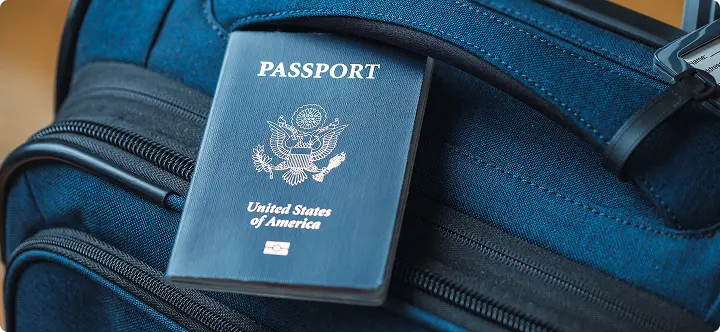
If you already have a passport, check the expiration date before booking your next trip. A valid passport gives you the fastest way around the TSA $45 fee without visiting the DMV.
Once you know it is valid, keep it somewhere secure but easy to grab when you pack. Add it to the same preflight checklist as your wallet, medication, phone, and boarding pass.
One quick check can save you from reaching security with the wrong license and no backup plan.