

Flight prices rarely move in straight lines. They drift, pause, spike, correct, and sometimes behave irrationally for reasons travelers never see. That’s why many budget-savvy travelers don’t just search for flights once. They watch prices over time.
Flight price alerts, also often called airline price alerts, exist for exactly this reason. They don’t promise perfect timing but context, which is what allows you to book with confidence instead of guesswork.
This article explains how:
- flight price alerts work
- airfare tracker systems monitor changes
- to use alerts thoughtfully (using Ovago’s price alert service as a real-world example).
Read in this article:
What are flight price alerts and how do they work
A flight price alert is a monitoring tool tied to a specific flight search, not a destination in general. Once activated, it tracks how prices change for your chosen route, dates, and other flight details.
Instead of checking prices manually every day, the system tracks fares for you, sending periodic monitoring emails and additional alerts when meaningful events occur.
Two clarifications matter here:
- Price alerts do not predict the future with certainty.
- They compare today’s fare either to the price you subscribed to or to the previous price (Ovago price alerts use the second approach).
That distinction is important. Alerts are not crystal balls. They are decision aids, designed to highlight moments when action might make sense.
Read also: When to Book International Flights in 2026
How flight price tracking websites monitor airfare changes
Such websites continuously collect fare data from airlines and global distribution systems. What they look for is not just price changes, but patterns.
In practical terms, airfare tracking systems monitor:
- average price today for the route
- recent price movement (up, down, or stable)
- how prices behave as the departure date approaches
- how the current price compares to typical prices for similar booking windows
Modern systems don’t just log numbers. They look at price behavior over time and compare it to historical trends for the same route. That’s why alerts are usually periodic, not instant. A single price change rarely means much. A sustained trend does.
Read also: Why Flight Prices Change So Often
Flight deal alerts vs manual price checking
Manually checking prices has one advantage: you see everything. It also has one major downside: you see everything. Daily manual checks make it harder to recognize patterns. You notice individual price points, not trajectories. That often leads to premature booking or endless waiting.
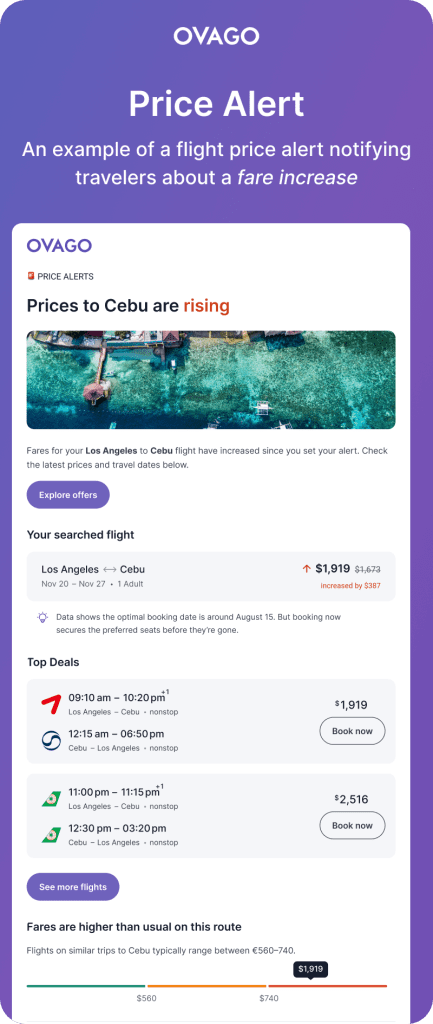
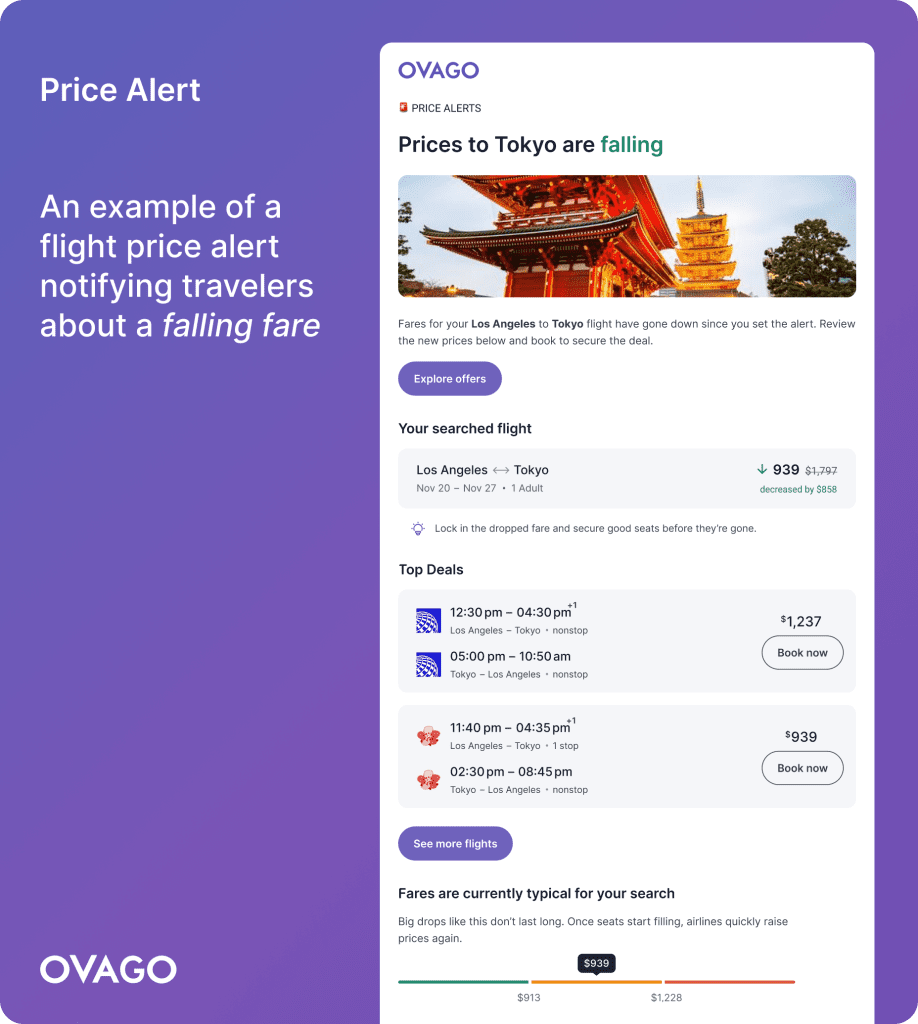
Flight deal alerts, by contrast, compress information. They tell you that prices are trending down, stable within a small range, or starting to rise. The trade-off is control versus clarity. Alerts remove some granularity, but they add perspective, which is usually what budget travelers are missing.

Read also: How Often Do Flight Prices Change?
Is there a “best” flight price tracker? What actually matters
There is no universally “best” flight price tracker in the abstract. What matters is how the system thinks, not how flashy the interface looks. Reliable trackers tend to share a few traits:
- they compare prices against your subscribed baseline or to the previous price
- they distinguish between noise and real movement
- they communicate uncertainty clearly
- they don’t push constant urgency
The most useful trackers don’t just say “book now” or “wait.” They explain why a recommendation exists (or why one doesn’t).
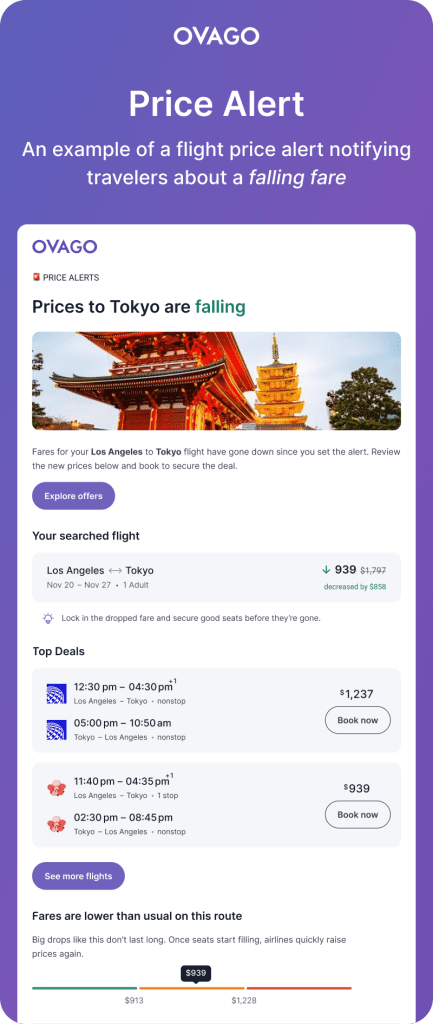
Ovago price alerts and when they help most
Ovago’s price alerts are designed for travelers who already know where and when they want to fly, but want help deciding when to book. They work best when:
- your travel dates are fixed or semi-fixed
- you’re monitoring international or long-haul routes
- you’re booking weeks or months ahead
- you want fewer, more meaningful signals instead of daily noise
They are not designed for last-minute gambling or ultra-flexible inspiration browsing but for watching a known route intelligently.
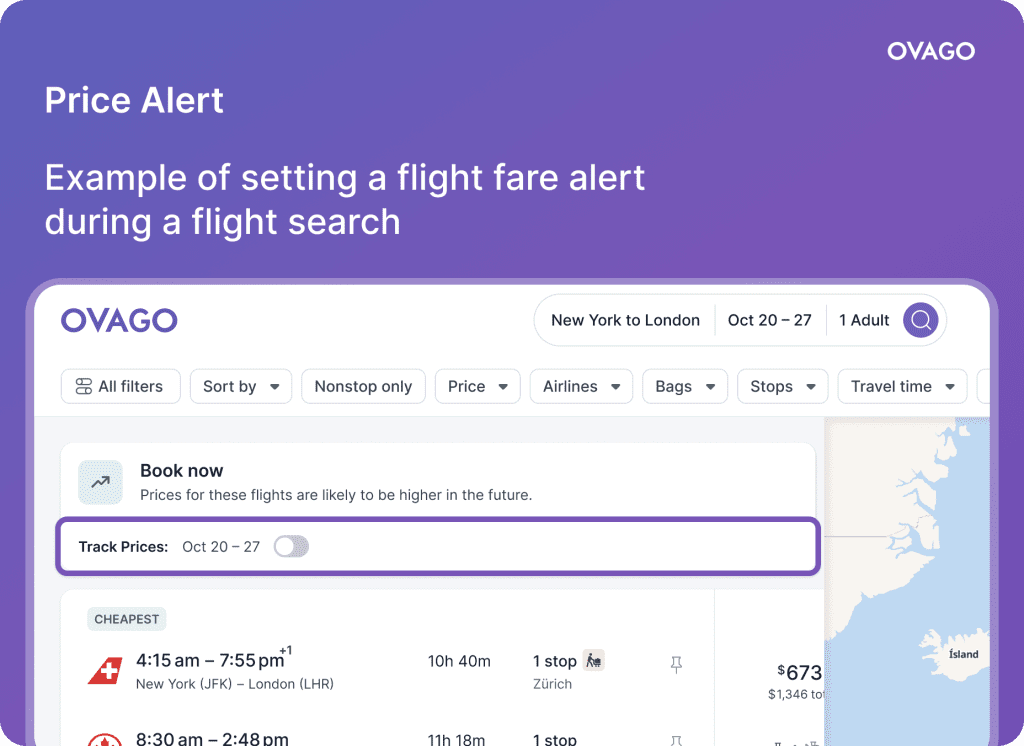

How to set flight price alerts
The setup is intentionally simple.
- Start by running a flight search on Ovago with your preferred route, dates, and passenger details.
- Once the results load, click the Track prices toggle for that search.
- If you’re not signed in yet, you’ll be prompted to sign in using Email, Apple, or Google, which allows us to send you price alert emails.
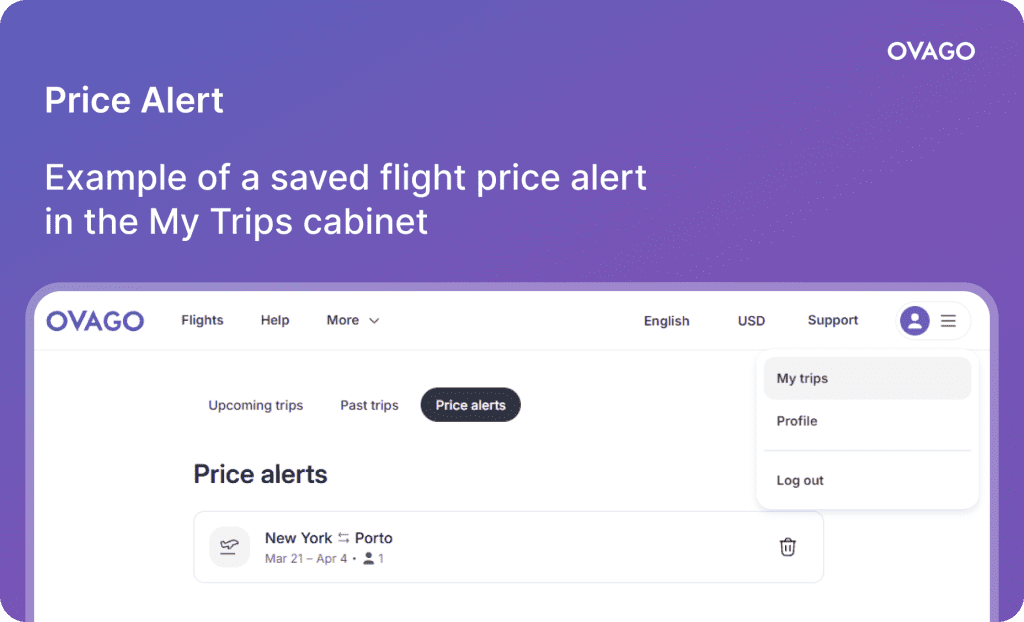
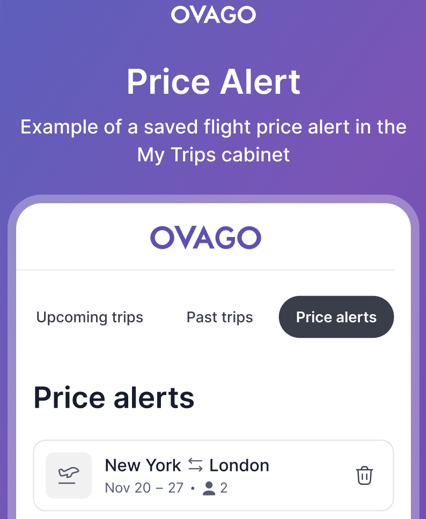
After authorization, price tracking for that specific search is enabled automatically. There is no separate activation step beyond this. The search parameters you’ve chosen are saved and monitored, and the alert appears in your My Trips cabinet. From there, you can view all active price alerts or delete a saved search at any time. To add additional alerts for other routes, simply repeat the same steps for a new search.
If you ever want to stop receiving alerts for a specific route, click Stop tracking at the bottom of any price alert email. You’ll be taken to your My Trips cabinet, where all alerts can be managed centrally.
An important disclaimer: You may not receive price alert emails if there are no available flight offers for your specific search parameters, or if price behavior on that route does not produce meaningful signals. This does not indicate a system issue. Some routes simply remain flat, illiquid, or unpredictable for extended periods.
Read also: How to Decode Online Economy Booking Reviews
What happens after you create a price alert
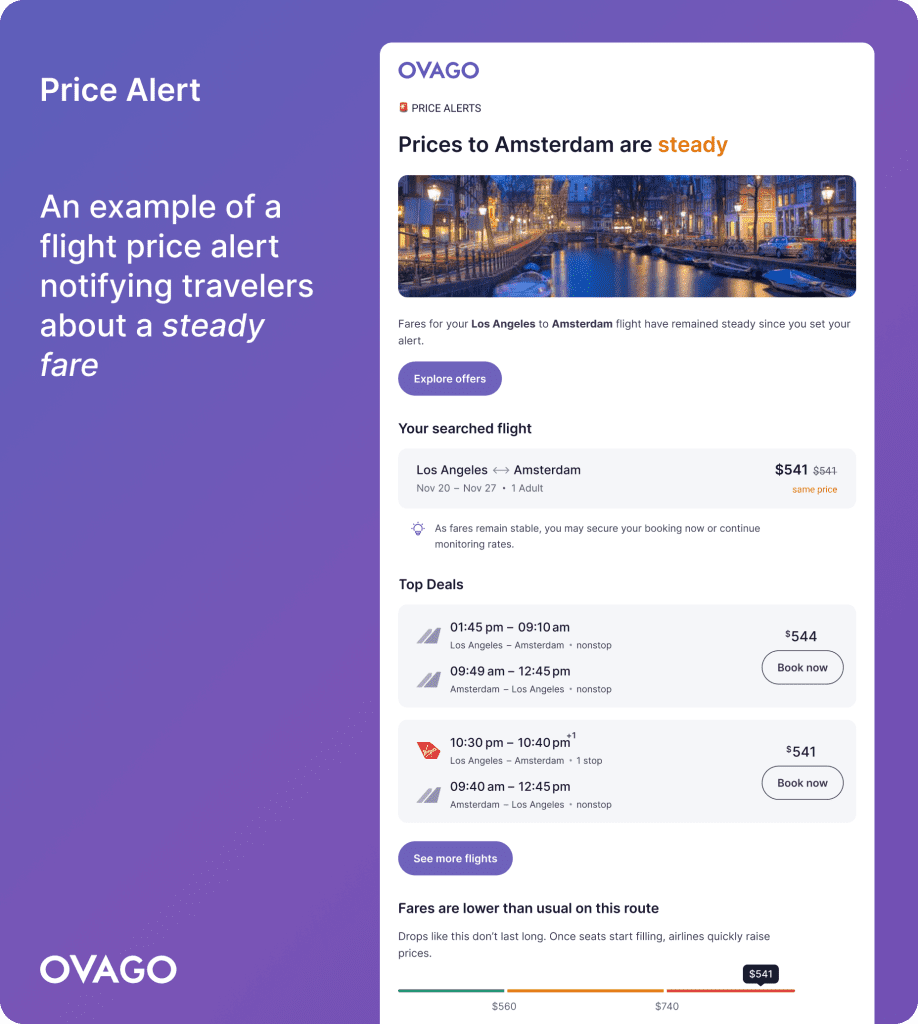
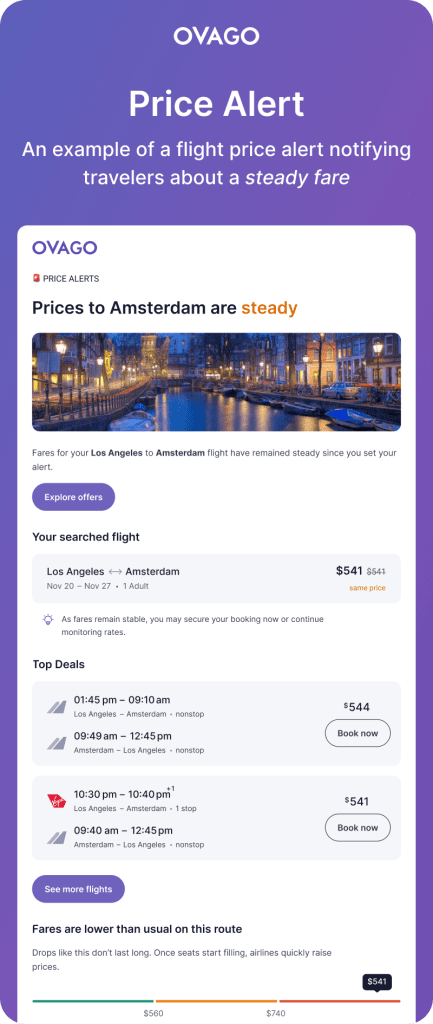
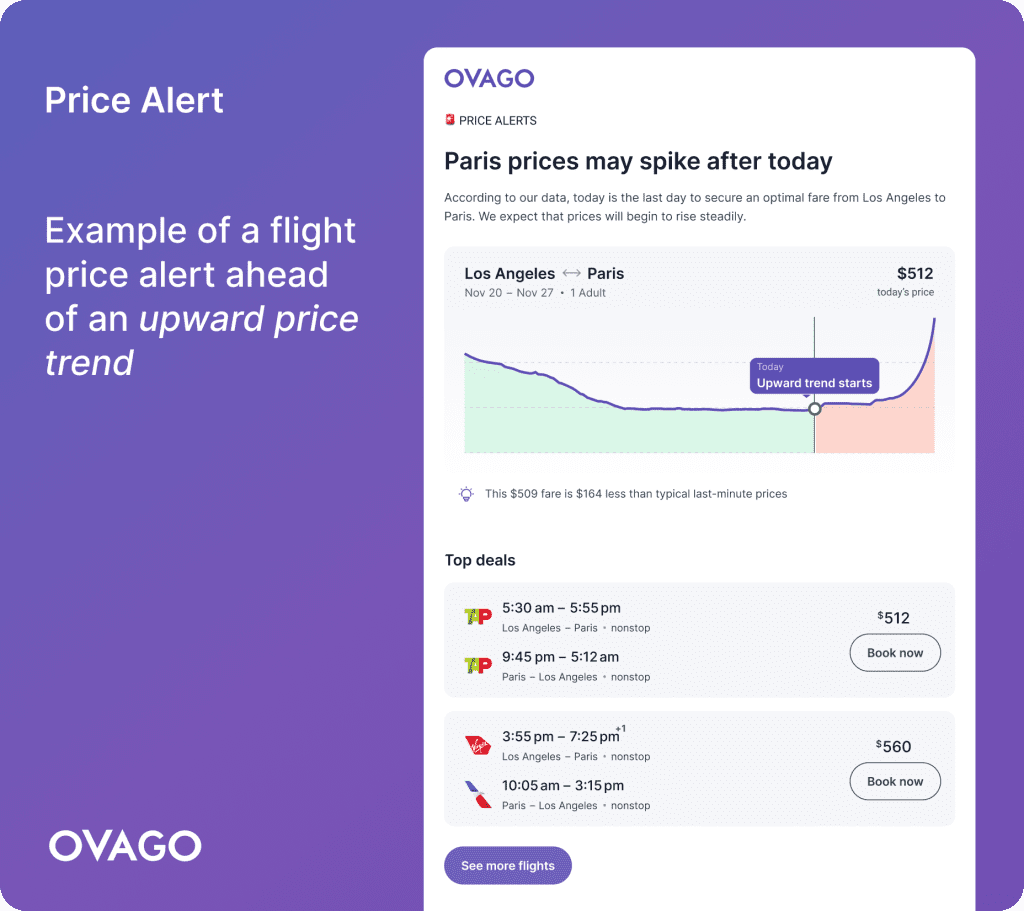
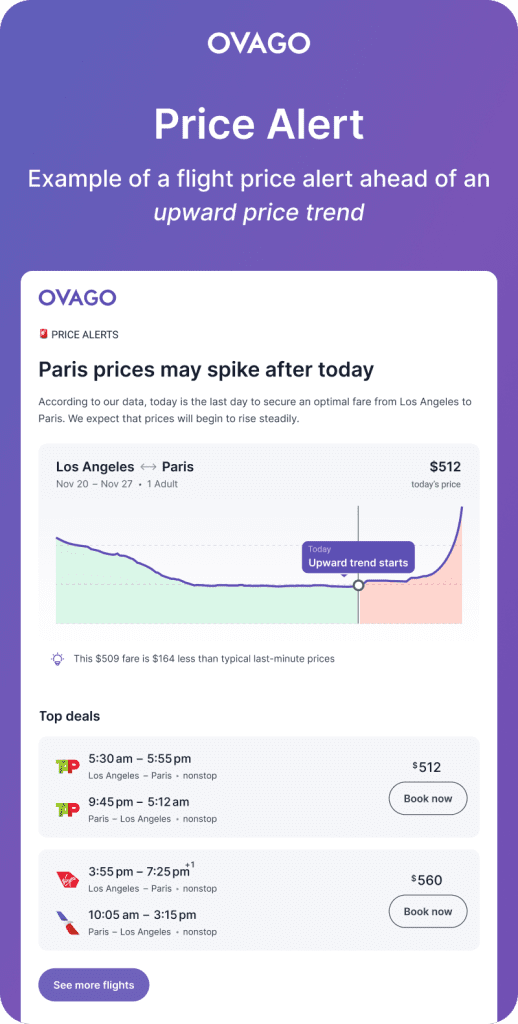
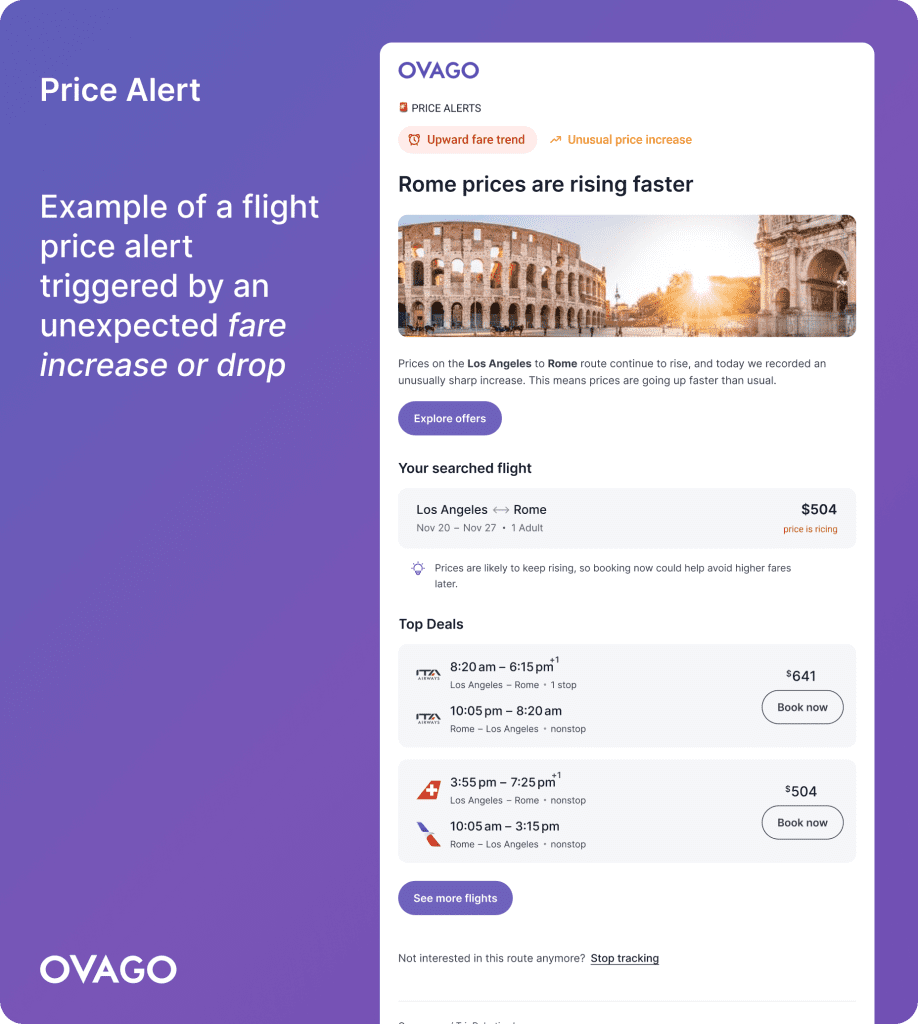
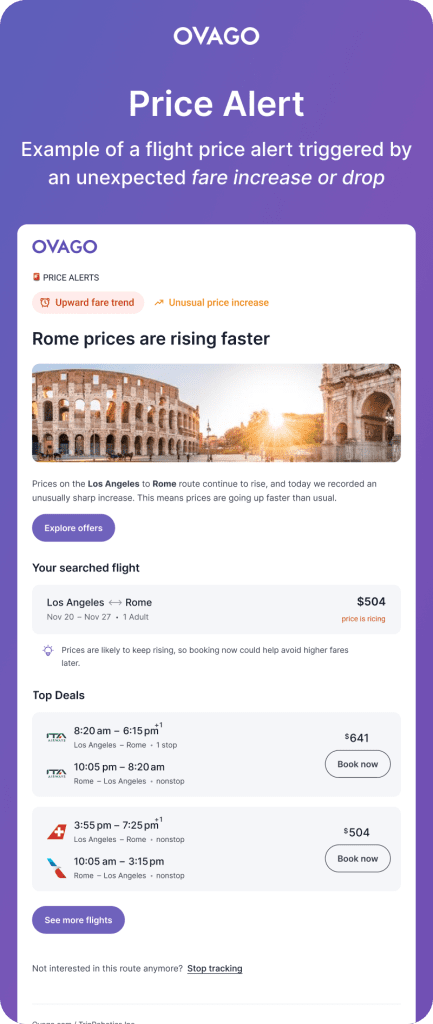
Once the alert is active, Ovago monitors prices for your exact search and sends emails periodically. In general, these alerts fall into two broad categories:
- Price monitoring alerts, which track how fares behave over time and provide context on whether prices are stable, rising, or falling.
- Volatility alerts, which flag rapid or unusual price movements when fares change more abruptly than expected.
Each alert email includes:
- a short explanation of the price movement
- a small selection of current flight offers
- a link to “show all flights” for full context
Read also: Top Low-Cost Airlines for 2026
How often price alert emails are sent
Email frequency adjusts as your trip approaches. As the departure date gets closer, airfare tends to change more noticeably, and those changes matter more for booking decisions. That’s why price alert updates become more frequent closer to departure.
Ovago helps travelers save on flights through smarter planning.
You also get 24/7 human support, flexible payment options, and help with complex routes.
What price alerts cannot predict (and why that matters)
Even with advanced price tracking systems used by Ovago, which combine AI-driven analysis with predictions based on multiple market signals, some price changes are caused by events outside any system’s control. They include:
- sudden airline inventory changes
- schedule adjustments
- operational disruptions
- geopolitical or regulatory developments
An important disclaimer: Ovago continues to enhance its price alert service, developing additional alert types to give travelers more context for informed booking decisions.
Are flight price alerts always accurate?
They are accurate about what has happened and cautious about what may happen. Price alerts are strongest when used as part of a broader booking mindset:
- know your acceptable price range
- understand your flexibility
- use alerts to confirm, not replace, judgment
Used this way, alerts don’t remove uncertainty — they reduce regret.
Flight price alerts are not about chasing perfection. They are about booking on a day that makes sense, with information instead of anxiety. Ovago’s price alert service is built around that idea: fewer signals, clearer context, and strategic booking. As the system evolves, we will reflect updates here or in follow-up posts.