
Premium economy occupies an awkwardly tempting part of the booking screen. It looks much more comfortable than economy, costs much less than business class, and immediately raises the question: is premium economy worth it?
The answer comes down to two things: how long the flight actually is, and how big the price gap is between economy and premium economy. Get those two right, and the upgrade earns its price. Get them wrong, and you have just paid extra for a slightly nicer seat.
Read in this article:
What makes a premium economy upgrade worth it
So, is premium economy worth it? Yes, on flights over about 6 hours, when the fare stays within roughly 1.5 to 2 times the economy price, and the seat offers a meaningful step up in comfort. On shorter flights, or when the price climbs much higher than that, the upgrade becomes harder to defend.
Flight length matters because the extra recline, footrest, and legroom need enough time in the air to actually pay off. This shows up most clearly with sleep: the deeper recline and footrest genuinely help you rest on a long-haul or overnight flight. It is still not a lie-flat seat, so do not expect business-class sleep quality, but it makes a real difference over six-plus hours in a way it cannot on a short daytime hop.
The fare gap is more important than the dollar amount alone. A $200 upgrade on a $400 economy ticket raises the price by 50%. The same $200 added to a $1,200 fare is only a 17% increase, which is the kind of math that suddenly makes the nicer seat look much less reckless.
A useful rule for upgrades to premium economy:
- Under 1.5 times the economy fare: usually a strong deal when the seat is meaningfully better
- Between 1.5 and 2 times the economy fare: still worth considering, especially when comfort is very important on that particular trip
- More than 2 times the economy fare: compare business-class prices before booking, because premium economy may no longer offer the best value
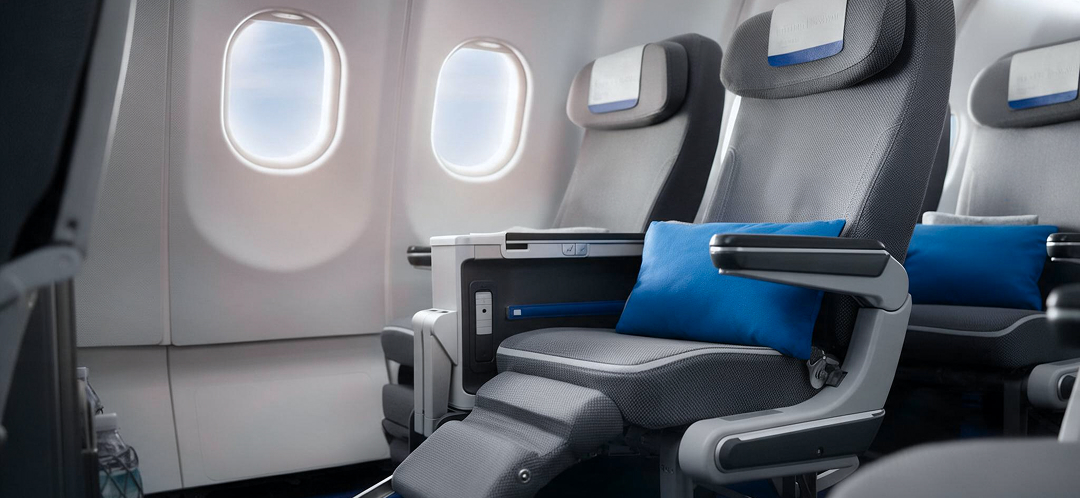
The seat itself also has to earn the extra money. More legroom is useful, but true premium economy usually adds a wider seat, deeper recline, leg or foot support, and often upgraded meals or service. However, it still isn’t business class, and nobody should pretend a reclining seat is the same as a lie-flat one.
The sweet spot is simple: enough extra comfort to feel the difference without paying so much that business class starts looking suspiciously reasonable.
How the price gap and seat actually differ by airline
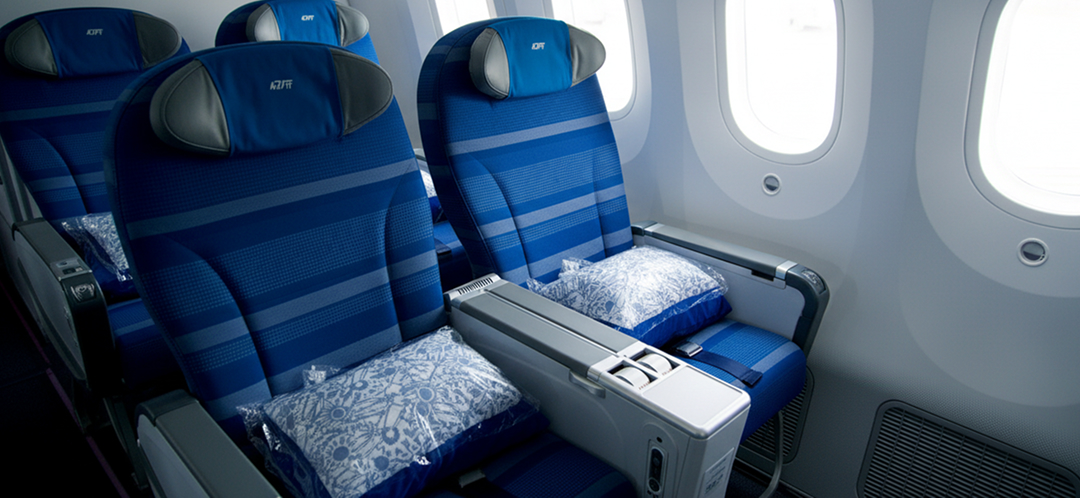
Premium economy varies enough by airline that the cabin name alone does not tell you much. Most long-haul products cluster around 38 inches (97 cm) of pitch, but seat width, recline, leg support, and meal service change the value quickly.
The table below compares the long-haul products travelers are most likely to see when flying from the United States.
| Airline | Premium economy seat | Meal upgrade |
|---|---|---|
| United Premium Plus | 38 in (97 cm) pitch; 18.5–19 in (47–48 cm) width | Yes, upgraded dining and drinks |
| Delta Premium Select | Up to 38 in (97 cm) pitch; up to 19 in (48 cm) width | Yes, upgraded meal and presentation |
| American Airlines | 38 in (97 cm) pitch; 18.5–19.5 in (47–50 cm) width, depending on aircraft | Yes, enhanced long-haul dining |
| British Airways World Traveller Plus | 38 in (97 cm) pitch; 18–19 in (45–48 cm) width | Yes, improved meals and presentation |
| Air France Premium | 37–40 in (94–102 cm) pitch; around 19 in (48 cm) width, depending on aircraft | Yes, upgraded meal service |
| Lufthansa Premium Economy | 38 in (97 cm) pitch; around 19 in (48 cm) width | Yes, better and larger meals, served on china |
| Virgin Atlantic Premium | Up to 38 in (97 cm) pitch; up to 21 in (53 cm) width, depending on aircraft | Yes, upgraded dining and drinks |
| KLM Premium Comfort | 38 in (97 cm) pitch; around 19 in (48 cm) width | Yes, separate menu and wider choice |
| Air Canada Premium Economy | 38 in (97 cm) pitch; wider seat than economy, varying by aircraft | Yes, premium meals, wine and spirits |
| ANA Premium Economy | 38 in (97 cm) pitch; 19.3 in (49 cm) width on several long-haul aircraft | Limited: economy meal plus additional drinks and snacks |
| Japan Airlines Premium Economy | 42 in (107 cm) pitch; up to 19 in (48 cm) width on the A350-1000 | Limited: economy meal plus additional snacks and drinks |
Economy and premium economy tickets are priced separately, so the price gap can shift from one flight to the next, even on the same airline. A route with a small markup over economy in October can cost nearly as much as business class during the holidays. Check the fare on your actual travel dates instead of assuming one airline is reliably cheaper than another. The better seat and service are consistent no matter when you fly. However, what exactly you are getting in premium economy depends on the airline, and all of these factors combined determine whether it’s worth it for you.
- Is United premium economy worth it? The seat and meal are solid, if not exceptional. Premium Plus seats are 18.5 to 19 inches wide with a 38-inch pitch, in line with Delta and American, plus a choice of two entrees, salad, bread, and dessert, with complimentary beer, wine, and spirits. The fare gap on this route swings widely from flight to flight, so check the actual price before assuming the seat alone justifies it.
- Is Delta premium economy worth it? Premium Select matches United and American on seat size, but the meal service adds a bit more polish. Travelers can preorder meals up to 24 hours ahead, the flight opens with a “bubbles and bites” course, and beer, wine, and spirits are complimentary on flights of 6.5 hours or more. As with United, the fare can swing widely, so check the price for your specific route.
- Is American Airlines premium economy worth it? The seat is a touch wider than United’s or Delta’s, at 18.5 to 19.5 inches depending on the aircraft, and meals arrive on real china with metal silverware from menus developed with the James Beard Foundation. The same fare volatility applies here too, so confirm the price before deciding.
- Is British Airways premium economy worth it? World Traveller Plus offers a seat close in size to the US carriers, and the meal service is a genuine step up, opening with a glass of sparkling wine before a full starter, main, and dessert. Typical fares run about 30 to 60 percent above economy, which is a reasonable trade for the extra comfort.
- Is Air France premium economy worth it? Premium seats can stretch to 40 inches of pitch on some aircraft, among the roomiest in this comparison, and dining includes champagne on boarding plus main dishes designed by Michelin-starred chef Frédéric Simonin. It tends to suit daytime flights and trips where extra space and baggage allowance matter most.
- Is Lufthansa premium economy worth it? The seat and meal service are a genuine upgrade: a starter and a choice of three main courses on porcelain tableware, with a second hot meal added on flights over nine hours. The price reflects it. On US routes, Lufthansa premium economy fares regularly run more than double the economy price, and sometimes climb to nearly five times as much. Of every carrier in this comparison, this is the one where you are most likely to hit a steep price increase.
- Is Virgin Atlantic premium economy worth it? The seat is up to 21 inches wide, the widest of any airline in this comparison, and the meal is a proper three courses of starter, main, dessert, and cheese, plus the airline’s signature Mile High Tea service.
- Is KLM premium economy worth it? Premium Comfort is in the middle of the pack on seat size, but the meal service is where it stands out, with a choice of three meals, two of them hot, and salad and bread alongside the main course.
- Is Air Canada premium economy worth it? International flights come with a three-course menu developed with chef Jérôme Ferrer. The food is served on real china, and travelers receive a sommelier-curated wine list to choose from. It is a clear step up from the standard economy tray, though how much you pay for it still depends heavily on when you book.
- Is ANA premium economy worth it? The seat measures 19.3 inches wide, among the roomier options in this comparison, though the meal is closer to the standard economy service than the fuller dining upgrade some other carriers offer.
- Is Japan Airlines premium economy worth it? On the A350-1000, the seat offers 42 inches of pitch, a fixed-back design, privacy partitions, and a motorized leg rest, the strongest space advantage in this comparison. Dining doesn’t differ considerably from economy as it does on several other carriers here, so it comes down to which matters more to you, the extra room or the meal.
Tip: Before comparing fares, make sure you are comparing the same kind of product. United Economy Plus, Delta Comfort+, and American Main Cabin Extra are extra-legroom economy products, not true premium economy cabins.
When premium economy makes sense for your trip
Price, meal service, and seat specs only tell part of the story. Whether premium economy is worth paying for also depends on what kind of trip you are taking and how important it is for you to arrive in decent shape. It is worth upgrading to premium economy when:
- You have plans soon after landing. A flight followed by a meeting, long drive, event, or full day of sightseeing makes extra recline and leg support more valuable. When the first hours or day after landing are important, paying another $200 or $300 is much easier to justify.
- You are flying overnight. Premium economy can make more sense when you actually want to sleep during the flight, as economy makes this significantly harder.
- You do not recover well from long flights. Some travelers can sleep almost anywhere. Others start bargaining with the universe for another inch of legroom by hour four.
Flight length also matters, but in practical terms. Six hours or more gives the extra space time to help. On a short daytime flight, you may barely settle into the nicer seat before it is time to put everything upright again.
Premium economy makes the most sense when the extra comfort also helps the trip after you land, not just while you are sitting on the plane.
Ready to compare premium economy fares?
See premium economy options across major airlines in one search
How to decide before you book
Once you know what the extra comfort is worth to you, the booking decision gets much simpler.
Use this checklist to make a smart decision that will benefit your trip.
- Check the total trip price. Look at what premium economy adds across the itinerary, not just the price of one segment.
- Check the exact aircraft. Seat designs can vary within the same airline, so make sure the product you researched is actually on your flight.
- Compare business class too. If a lie-flat seat costs only a little more, premium economy may start losing the argument.
- Check each direction separately. You do not need to buy premium economy both ways. An overnight outbound may justify the upgrade even when a daytime return does not.
- Set a maximum upgrade price. Decide what the added comfort is worth before the booking screen starts negotiating with you. It gets remarkably persuasive once your credit card is already out.
Do not build the whole plan around upgrading later. Airlines including Delta, American, British Airways, Air France, and JAL may sell post-booking upgrades, but those offers depend on availability and demand. A later upgrade can be cheaper, more expensive, or unavailable.
So, is it cheaper to upgrade to premium economy after booking? Sometimes, but it is not something you can always count on. If premium economy already fits your budget and you know you want the better seat, booking it from the start gives you more certainty.
Set your limit, check the aircraft, compare all three cabins, and book the option that makes sense now. Hoping for a magical last-minute upgrade is not a good strategy, unfortunately.