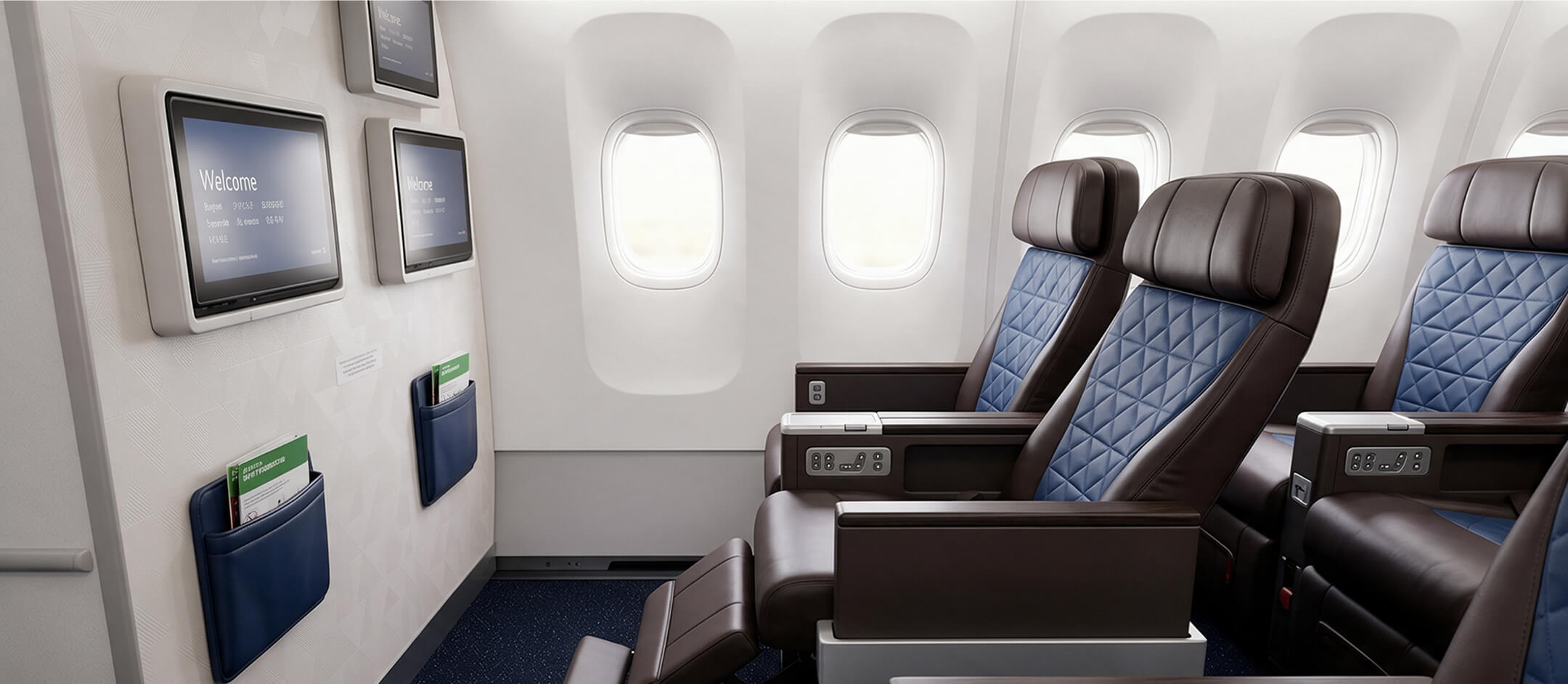

The European Parliament has approved a reform to EU261 that changes how EU flight delay compensation and return-ticket protections work: once it applies, you’ll be able to use your return flight even if you skip the outbound leg. This ends the workaround that pushes some travelers to book two one-way tickets just to protect the trip home.
This carries the most weight for travelers booking budget round-trip fares. Under current airline rules, missing the first flight can cause the airline to cancel the return, which is why some travelers split their booking into two one-way tickets to keep the flight home safe. The reform removes that risk and makes the claims process faster once a disruption happens.
This guide breaks down when the return-ticket protection actually applies, what you’re still owed if a flight is delayed or canceled, and how the change should shift your decision between booking one round trip and splitting your itinerary into two one-way tickets.
Read in this article:
How the EU261 rules affect your booking
The EU261 rules now protect your return flight even if you skip the outbound leg, while keeping every existing passenger protection in place. The European Parliament approved this reform near-unanimously on July 7, 2026, and the Council gave final approval on July 13.
Nothing you already rely on goes away. Under qualifying circumstances, you can still choose between reimbursement and rerouting after a cancellation. You can also claim compensation after denied boarding, a cancellation announced fewer than 14 days before departure, or an arrival delay longer than three hours.
Each of these protections solves a different problem:
- Reimbursement gets you back the cost of the flight you didn’t use.
- Rerouting gets you to your destination on a different flight instead.
- Compensation is a separate fixed payout for the disruption itself, on top of either of the above.
- Care covers the meals, refreshments, communication, and accommodation you’re owed while you wait.
A refund doesn’t automatically replace a compensation payment, and accepting a replacement flight doesn’t always cancel your right to claim the compensation too: the two are separate rights that can both apply to the same disruption.
Two one-way tickets vs. one round trip: what’s actually at risk
Right now, most airline fare rules require you to fly every ticketed segment in order. Skip the first flight, and the airline can record you as a no-show and cancel everything booked after it, including your return home.
This risk is why some travelers avoid booking a round trip at all, buying two separate one-way tickets instead. Many Ovago customers do this on purpose, since two one-way fares often cost less than a single round-trip ticket and let you mix airlines on each leg. Two one-way tickets carry their own ticket numbers, so missing one doesn’t affect the other. The tradeoff is that each one-way fare can come with a different price, baggage allowance, and change rules than a single round-trip booking would.
Booking two one-way tickets on purpose is also common when:
- You find a cheaper one-way outbound deal after already holding a return ticket
- Your plans change, and you need to leave earlier than planned
- You’re getting to your destination by another airline or by train, but still need your original flight home
- You’re holding a basic economy fare that isn’t worth changing, so you buy a new outbound instead
Once the reform takes effect, none of this will be necessary to protect your return flight. Airlines will have to honor the return leg of a round-trip ticket even if you never used the outbound, and they can’t charge you extra for it. This takes away the main reason to buy two one-way tickets instead of one round trip: protecting the flight home from a no-show cancellation.
The protection stops there, however. It keeps the return flight you already booked, but it doesn’t let you swap it for a different date, destination, or route for free. Changing any of those still means paying whatever fare difference or fee applies. And until the rule officially takes effect, an unused outbound flight can still cost you every segment booked after it.
The new compensation tiers by flight distance
A qualifying disruption can pay out €250 ($290), €400 ($460), or €600 ($690), depending on your flight’s distance, not on what you paid for the ticket. On a budget fare, that payout can easily be worth more than the ticket itself. The EU261 compensation table below shows the standard amount for each flight category.
EU261 compensation table
| Flight category | Standard compensation |
|---|---|
| Flights of 1,500 km (932 miles) or less | €250 ($290) |
| Intra-EU flights over 1,500 km (932 miles) | €400 ($460) |
| Other flights between 1,500 and 3,500 km (932 and 2,175 miles) | €400 ($460) |
| Other flights outside the first two categories | €600 ($690) |
On the longest routes, the €600 ($690) payment can drop to €300 ($345): airlines are allowed to cut it in half if they reroute you to your final destination and get you there within four hours of your original arrival time.
Your eligibility still depends on factors such as:
- The flight route and distance
- The airline operating the flight
- How late you reached your final destination
- What caused the disruption
- Whether the airline rerouted you
A qualifying distance and delay don’t guarantee a payout on their own; the table shows what you’re owed once a claim actually qualifies, not a payment every delayed or canceled flight automatically triggers.
How to file an EU261 claim and actually get paid
You should submit the EU261 claim directly with the airline that operated your disrupted flight, and two numbers control the whole process from there: nine months to submit your claim, and 30 days for the airline to pay it or explain a refusal.
Before you file, the airline owes you the groundwork first. It must send clear electronic instructions on how to claim within four days of your journey ending, and you shouldn’t need an account or a specific app just to receive them.
Once you’re ready to submit the EU261 claim form, gather:
- Your booking confirmation and boarding pass
- Any airline emails, texts, or app notifications about the disruption
- Your flight’s scheduled and actual arrival times
- Receipts for meals, hotels, or transportation you paid for yourself
- Any written explanation the airline already gave you
However, keep in mind that the airline can still refuse to pay if the disruption came from something genuinely outside its control, as long as it can point to a real cause and explain why. The list of accepted causes is open, but it typically includes:
- Severe weather
- Natural disasters
- War or security risks
- Airport, air traffic control, or ground-handling strikes
- Unruly passengers
Nevertheless, even when one of those applies, your right to basic assistance doesn’t disappear. If you’re stranded, the airline still owes you meals, refreshments, communication, and an overnight hotel stay with transportation to and from it. Save every receipt if you end up paying for any of this yourself.
If you choose a refund over rerouting after a qualifying cancellation, that’s a separate, simpler process: the airline returns the ticket cost automatically, with no account, app, or extra step required on your end. A refund and a compensation payout aren’t the same thing, and getting one doesn’t cancel your right to the other.
If any of this gets complicated, Ovago’s support team can help you sort out issues with your booking or your claim.

Does compensation depend on economy vs. business class?
No. EU261 delay and cancellation compensation is based on flight distance, not the price of your ticket or the cabin you booked. An economy passenger and a business-class passenger on the same qualifying delayed or canceled flight receive the same fixed amount.
Cabin class only changes the calculation when the airline moves you to a lower cabin than the one you booked. This downgrade rule already exists under Article 10 and is not changing under the reform.
If the airline downgrades you without your prior agreement, it must reimburse part of the ticket price linked to the affected flight:
- 30% for flights up to 1,500 km (932 miles)
- 50% for flights between 1,500 and 3,500 km (932 and 2,175 miles)
- 75% for longer flights
This will mainly affect Ovago travelers who booked premium economy and are moved to standard economy. On an itinerary with several flights, the percentage applies to the price connected to the downgraded segment, not automatically to the full round-trip fare.
If the airline offers you a voucher or cash instead of the Article 10 reimbursement, accepting it can mean giving up that percentage. Before you agree to anything, ask the airline to put the offer in writing and compare its value against what the reimbursement would actually pay you.
The rule also protects you when the change goes in the other direction. If the airline moves you to a better seat or higher cabin than the one you paid for, it cannot charge you extra.
Check the cabin shown on every new boarding pass after rebooking. A replacement flight can come with a different seat or cabin, even when the route stays the same.
How this changes booking strategy for budget round-trip flights
Once the return-ticket rule takes effect, the math that leads many travelers to split a booking stops holding up as often. A standard round-trip fare no longer carries the return-flight risk that used to make two one-way tickets worth the extra hassle.
A round-trip fare can still offer a lower total price, simpler baggage rules, and one booking to manage. Separate one-way tickets can still make sense when they give you cheaper fares, better departure times, or a more convenient mix of airlines.
This helps most when your plans are genuinely uncertain, such as an unconfirmed return date or a trip that ends up running longer than planned. You will still need to pay any fare difference or applicable fee if you change the return flight.
When comparing your options, check:
- Total fare and baggage costs
- Seat-selection fees
- Change and cancellation terms
- Flight times and airports
- Total travel time
- Whether the itinerary uses one or several tickets
Price and ticket rules are only part of the decision on a long-haul route. A good seat choice and a few simple preparations can also make the journey much easier, especially when you will spend eight or more hours in economy. Our guide to surviving long flights in economy covers practical ways to stay more comfortable from takeoff to landing.
Book around the return-ticket rule, not the compensation tiers or the faster claims process, since those two apply only once a disruption has already happened. The return-ticket rule is what actually shifts the round-trip-versus-one-way decision.
The reform helps, but it won’t cover every situation. If your plans are especially unpredictable, Ovago’s Extras add additional coverage, so a date change or cancellation doesn’t automatically mean losing your fare. Check the plan’s terms before adding one to your booking.
The goal is not to avoid one-way tickets altogether. It is to stop paying more or managing separate bookings when the only reason for doing so was to protect the return flight.
Ready to book smarter?
Find flights that fit your budget and your plans.
Why you can’t use these protections yet
Political approval isn’t the same as an enforceable rule. The regulation still has to be published in the Official Journal of the European Union before any of this applies to your booking.
Once that publication happens, two more waiting periods follow: the rule enters into force 20 days later, and airlines then get a full year to prepare before it actually applies to travelers. Add that up from when the reform was approved in July 2026, and the protections likely won’t be enforceable until sometime around mid-2027.
Until that application date arrives, airlines can keep enforcing their current no-show and ticket-sequence rules, regardless of how far along the reform has come politically.