
Alaska Airlines is easy to like when its routes match your plans. It has a strong West Coast network, useful Hawaii coverage, and a growing list of long-haul routes from Seattle. For some travelers, that makes it one of the smarter economy choices in 2026.
Still, Alaska might not be the best choice for every trip. Its lowest fares often limit seat selection and make changes much less flexible, while adding checked bags can raise the final cost. In the end, the cheapest fare may not give you the lowest total price.
So the real question is not whether Alaska Airlines is “good.” It is whether it gives you a better trip than the other airlines available for your route. That depends on where you fly, which fare you choose, how much luggage you bring, and whether the airline’s rewards program actually adds value to your booking.
Read in this article:
A solid choice when the route fits
Alaska Airlines is an excellent choice when its route map matches your trip. That usually means West Coast routes, Hawaii trips, and flights that connect easily through Seattle.
If you often fly from Seattle, Portland, San Francisco, San Diego, or Los Angeles, Alaska gives you better route choices than it does in most other parts of the country. From these cities, Alaska’s route network can give you nonstop flights, practical departure times, and backup options if your plans change.
Route fit deserves attention because the lowest fare does not always create the best trip. A cheaper ticket loses value when it adds a connection, leaves at an awkward time, or turns a simple flight into a longer travel day. In those cases, the extra time can cost more than the fare saves.
Alaska is especially worth checking when it gives you a route that feels easy from the start. If the schedule already works and the connection is simple, the fare comparison becomes much more useful.
Where Alaska is less competitive
Alaska might not be an ideal choice if your home airport is Chicago, Atlanta, New York, or Dallas. These cities are major hubs for airlines like United Airlines, Delta Air Lines, American Airlines, and JetBlue Airways. Because those airlines operate far more flights than Alaska from these airports, you will usually find more nonstop routes, more departure times throughout the day, and more rebooking options if a flight is delayed or canceled.
Alaska may still make sense when the fare is significantly lower, or its departure times suit your plans perfectly. However, it is often not the default choice in these markets.
The question is simple: Does Alaska offer a route that is sufficiently convenient to compete? If it does, the rest of the comparison is worth your time. If it does not, a lower fare may not be enough to make it the smarter choice.

Alaska’s extended route map
Alaska Airlines has expanded its route map in 2026. Alaska Air Group now serves 142 destinations, its largest network so far. This growth follows Alaska’s merger with Hawaiian Airlines, which expanded the group’s reach across Hawaii, the West Coast, and certain long-haul markets.
The biggest change is at Seattle-Tacoma International Airport (SEA), where Alaska has added long-haul routes to:
- Tokyo Narita Airport (NRT)
- Incheon International Airport (ICN) near Seoul
- Rome Fiumicino Airport (FCO)
- London Heathrow Airport (LHR)
- Keflavík International Airport (KEF) near Reykjavík
These routes change what Alaska can cover from Seattle. A traveler who already uses Seattle-Tacoma International Airport (SEA) can now consider Alaska for more trips to Europe and Asia, instead of treating the airline mainly as a domestic or Hawaii option.
The Hawaiian Airlines merger also supports that shift. Hawaiian’s long-haul aircraft helped Alaska open routes such as Seattle to Tokyo Narita and Seattle to Seoul Incheon. For travelers who fly to Hawaii or Asia, the combined airline group creates more ways to plan those trips under one rewards system.
This expansion won’t change the picture for everyone. If your trips don’t run through Seattle, Hawaii, or the West Coast, the bigger network probably won’t shift your options much. Where it earns its keep is on the routes that cut out a connection, land you a better schedule, or feed rewards you’ll actually use.

Alaska’s economy fares: same cabin, different rules
Alaska sells four economy options in 2026: Saver Fare, Main Cabin, Main Cabin Preferred, and Premium Class. These are not four separate cabins. There are four levels of control over seat choice, rewards earning, boarding, and changes, so the lowest fare can look good during search but be actually limited after booking.
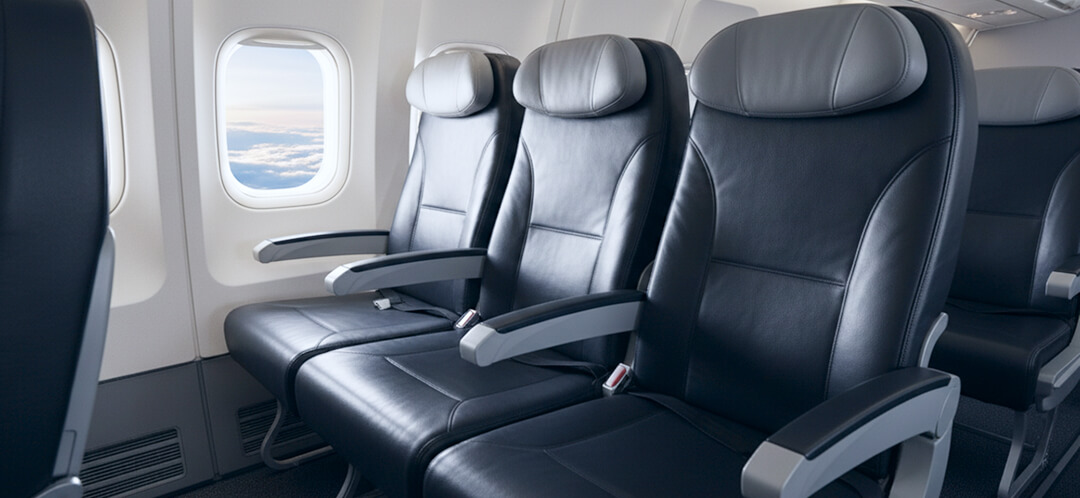
- Saver Fare: Alaska’s basic economy option includes a carry-on bag and a personal item, but Alaska assigns your seat at check-in and does not guarantee seats together for travelers on the same reservation. It works best for short, nonstop solo trips when seat location does not matter and the savings are meaningful.
- Main Cabin: Alaska’s standard economy fare includes advance seat selection, more flexible fare rules, and better rewards earning than Saver. It is a good choice for most travelers, especially on longer flights or for people traveling together.
- Main Cabin Preferred: Main Cabin Preferred gives you a regular Main Cabin seat closer to the front of the aircraft. It does not add extra legroom. It is a convenient choice for tight connections, late arrivals, or any trips where you need to leave the plane as quickly as possible.
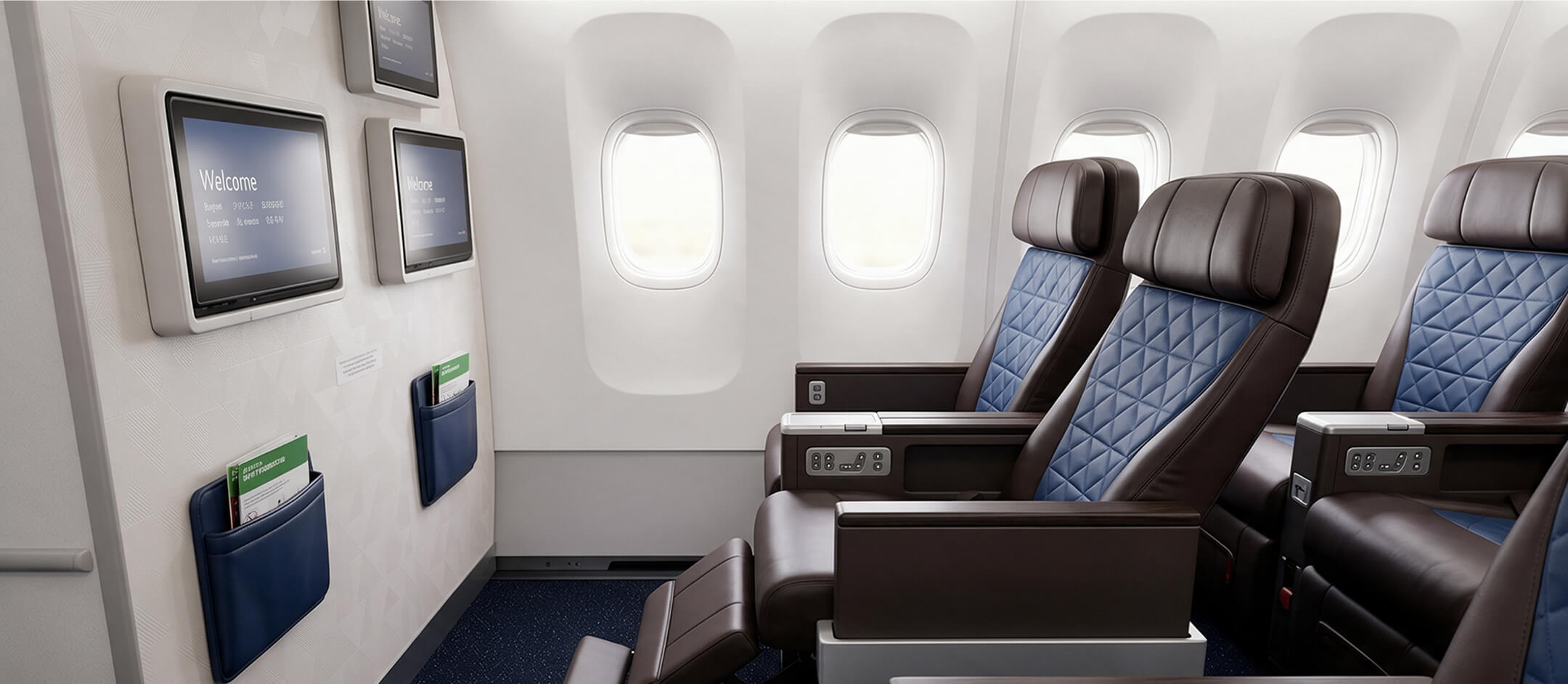
- Premium Class: Premium Class is Alaska’s extra-legroom economy option. It adds about four extra inches of legroom, earlier boarding, and complimentary alcoholic drinks on most flights over 350 miles. It is a suitable option for longer flights, where the added space will significantly improve your comfort during the flight.
Checked bags are another variable to consider when you book, as they can quickly change the final price. Alaska charges $45 for the first checked bag and $55 for the second checked bag on many North American routes, so one checked bag on a round trip adds about $90.
Thus, the cheapest Saver Fare might be the best option only when you can avoid checked luggage, because the fare still includes a carry-on bag and a personal item. If you need checked luggage, Alaska’s lowest fare loses some of its value unless you qualify for a free first checked bag through an eligible Atmos Rewards Visa card, Atmos Rewards elite status, or a qualifying companion benefit.

Atmos Rewards and upgrades reward the regulars
Atmos Rewards is Alaska’s loyalty program. Alaska replaced Mileage Plan with Atmos Rewards after combining its program with Hawaiian Airlines, so Alaska Airlines and Hawaiian Airlines now operate under one rewards system.
For economy travelers, the program does the most work when Alaska is an airline you fly repeatedly, not once in a while. Points, partner awards, and upgrades can lift the value of a booking, but they pay off best when the route and fare already make sense on their own.
When points are worth using
Short Alaska awards can start at 4,500 points, which makes the program useful when cash fares rise on a route you need. This can happen close to departure or on routes where nonstop options are limited.
Still, a low price with points does not automatically make an award a good choice. If the cash fare is reasonable, paying cash keeps your points available for a trip where the price difference is more significant.
This is where Atmos Rewards gets interesting. The same number of points usually buys a better partner ticket than it would on Alaska’s own flights. That holds on carriers like Japan Airlines, Cathay Pacific, and Qatar Airways, although in economy the difference is modest.
The bigger draw for most economy travelers is a perk almost no other US program still offers: a free stopover on most one-way awards. It lets you pause in a connecting city for up to two weeks instead of a few hours. That way, a single award ticket covers two destinations instead of one.
What upgrades are realistic
Whether you get an upgrade on Alaska depends on the fare you buy and the seats left on your flight. For most economy travelers, the simplest move is to buy Premium Class at booking or add it for a set fee later. It is still economy, just the extra-legroom section, but it brings more space, earlier boarding, and free drinks on longer flights. Its main advantage is that it doesn’t rely on status or luck.
Free upgrades into Premium Class go first to Atmos Rewards elite members, and only when seats are open, so an occasional Alaska flyer is unlikely to receive one. Fare choice sets the limits too. Saver Fare can’t be upgraded when you book, and only becomes eligible in the last two hours before departure if space is left. If there’s any chance you’ll want to move up, Main Cabin is the safer pick.
Upgrades and points are worth most when they make a trip you already planned more comfortable. They aren’t a good reason to pick a worse route or an awkward schedule.
Compare flights and choose the best airline
Compare fares, routes, and travel options to see which airline makes sense for your trip
The bottom line: when Alaska is worth booking
Alaska is a solid choice when it produces a better trip than the alternatives. That usually comes down to a cleaner route, a fare with enough flexibility, and a final price that still holds up after bags, seats, or upgrades.
Alaska is hard to beat on a nonstop, an easy Seattle connection, or a solid Hawaii route, especially when Main Cabin fits the budget, a carry-on covers the trip, or Atmos Rewards points apply to flights already planned. In those cases, the lower-effort option and the better-value option are the same one.
The picture changes when Alaska adds a connection, leaves only Saver Fare to work with, or loses its price edge once checked-bag fees are added. None of that makes it a weak airline. It just means another carrier may fit that specific trip better, and a quick comparison before booking is worth the time.