
Flying while pregnant is usually safe for most healthy pregnancies, especially during the second trimester. Still, the details of your trip can affect how comfortable and safe you feel.
You should not treat this as a one-size-fits-all decision. A short flight from New York to Chicago feels very different from a 10-hour overnight trip from Los Angeles to London. Your stage of pregnancy, medical history, and even seat choice all shape the experience in practical ways.
This guide explains what affects your comfort and safety when you travel while pregnant. You will understand when flying makes sense, what risks to watch for, and how to prepare so the trip stays smooth and manageable. For any final decision, it’s always best to discuss your pregnancy and travel plans with your doctor.
Read in this article:
Is it safe to fly while pregnant?

Generally, yes, but before you plan anything, it helps to understand what actually creates risks during a flight.
For most people, flying while pregnant is safe up to a certain point in the pregnancy. Medical professionals and airlines generally agree that uncomplicated pregnancies can handle air travel well, especially before the third trimester.
The main concerns are not the flight itself, but how your body reacts to it. Airplane cabins reduce humidity and slightly lower oxygen levels. These conditions can increase dehydration and fatigue during pregnancy.
Limited movement creates the biggest risk. Sitting for long periods slows blood circulation and increases the chance of developing blood clots. This becomes more relevant on flights longer than 4 hours, such as Boston to San Francisco or Dallas to Seattle.
You also need to think about access to care. If you fly from Miami to Cancun, you land within 2 hours. If you fly from San Francisco to Tokyo, you stay in the air for over 10 hours with limited medical support. That difference becomes important if complications arise.
Certain conditions require extra caution or mean you should avoid travel:
- High-risk pregnancy
- History of preterm labor
- Severe anemia
- Placenta-related complications
- Multiple pregnancies (twins or more)
- Preeclampsia
- Prelabor rupture of membranes (PROM)
Travel can also expose you to infections through food, water, insect bites, or crowded environments, which can affect your health during pregnancy.
In these cases, your doctor may advise against flying or suggest strict precautions.
A simple way to think about it: flying itself is not the problem. Long travel time with no access to care and limited movement create most of the risk.
Cabin pressure in commercial aircraft matches an altitude of about 6,000 to 8,000 feet. This level is safe for most pregnancies, but it explains why hydration and movement matter more than usual.
How many weeks pregnant can you fly?
Once you understand the risks, the next step is timing your trip correctly.
The timing of your flight matters more than the flight itself. Each trimester changes how your body feels and how airlines handle your travel.
- First trimester (weeks 1–12)
You can usually fly without restrictions during the first trimester. The main challenge comes from how you feel day to day. If you experience nausea, fatigue, and sensitivity to motion, these can turn even a short flight into a tiring one. A 2-hour trip from Atlanta to New York can feel much longer if symptoms appear during the flight.
From a medical standpoint, this stage also carries a higher baseline risk of miscarriage. Flying does not increase that risk in healthy pregnancies, but many people still limit non-essential trips during this period.
- Second trimester (weeks 13–27)
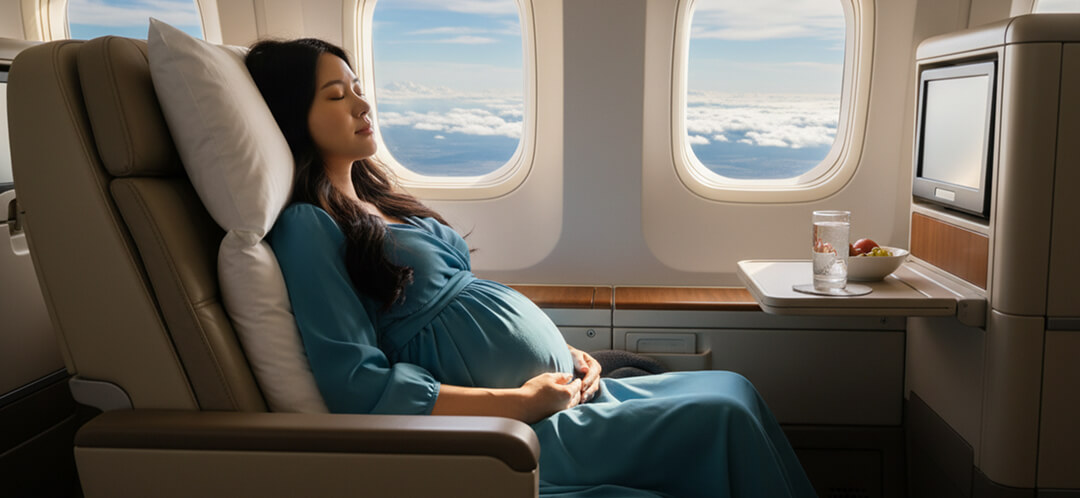
This is the most comfortable and reliable time to travel. Doctors in the US recommend the second trimester as the safest time to travel, since energy levels improve and the risk of complications is lower. Morning sickness often fades, and you can move more easily compared to the later stages. At the same time, the risk of pregnancy emergencies drops.
This combination makes a clear difference on longer trips. A long flight from Los Angeles to Paris or Chicago to Rome becomes much more manageable when you can sit, stand, and walk without constant discomfort. That is why many travelers plan long-haul or international trips during this window.
- Third trimester (weeks 28–40)
Travel becomes more limited during the third trimester. Your body carries more weight, blood circulation slows down, and fatigue builds more quickly. Even a short flight can feel more exhausting than expected.
Airlines also introduce stricter rules at this stage. After 28 weeks, some carriers ask for documentation that confirms your due date and your ability to fly. After 36 weeks, most airlines do not allow travel at all, even for uncomplicated pregnancies.
At this stage, even minor complications can require prompt medical attention. Because of that, long flights and remote destinations carry more risk, making shorter routes and access to reliable medical care more important when planning your trip.
Tip: If you are planning a trip near the end of your second trimester, book flexible tickets. A small change in your condition or your doctor’s advice can shift your travel window.
Airline pregnancy policy
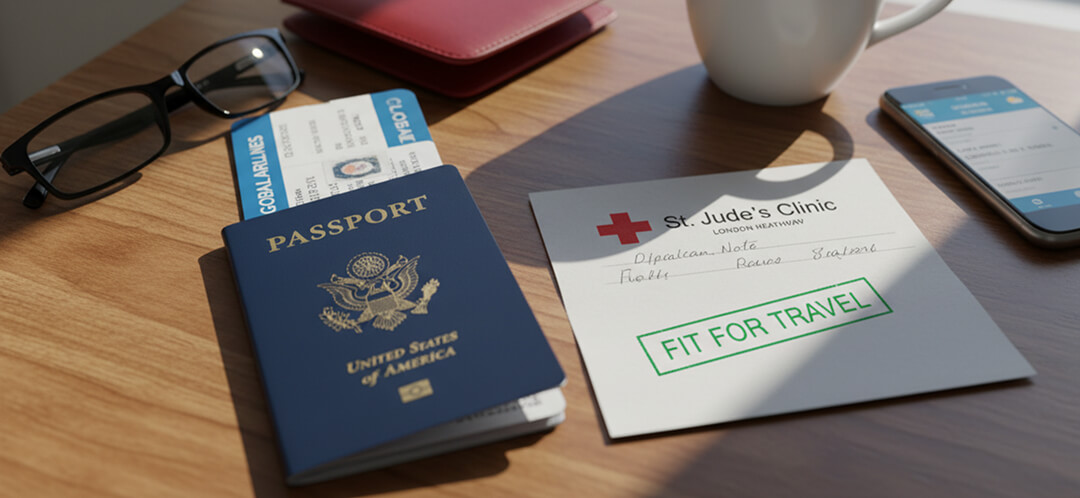
Airline policies are an important part of planning travel during pregnancy. They focus on managing risk rather than comfort. Each airline sets its own rules, but most follow a similar structure based on how far along you are.
Up to 28 weeks, airlines rarely ask for documentation. You can book and travel as usual in most cases.
Between 28 and 36 weeks, airlines start adding requirements. Many ask for a medical certificate issued shortly before your flight. This document must confirm your due date and state that you are fit to fly. In some cases, you may also need to sign a form acknowledging potential risks.
After 36 weeks, most airlines do not allow pregnant travelers to fly.
Where things get more specific is in how airlines apply these rules:
- Qatar Airways requires a medical certificate between weeks 29 and 36. If your pregnancy is high-risk, you must also submit a Medical Information Form (MEDIF). After 36 weeks, the airline does not allow travel.
- Emirates allows travel without documentation up to 28 weeks. From week 29 to 36, you must present a medical certificate. After 37 weeks, travel is not permitted. High-risk pregnancies also require a MEDIF form.
- British Airways lets you travel up to 28 weeks without paperwork. After that, you must carry a pregnancy form completed by your doctor or midwife. You can usually fly until 36 weeks for a single pregnancy, but this limit is reduced to 32 weeks if you are expecting more than one baby.
- American Airlines requires a doctor’s certificate in specific situations. For domestic flights under 5 hours, you cannot travel within 7 days of your due date without medical clearance. For international or overwater flights, you must provide a medical form if you are within 4 weeks of your due date.
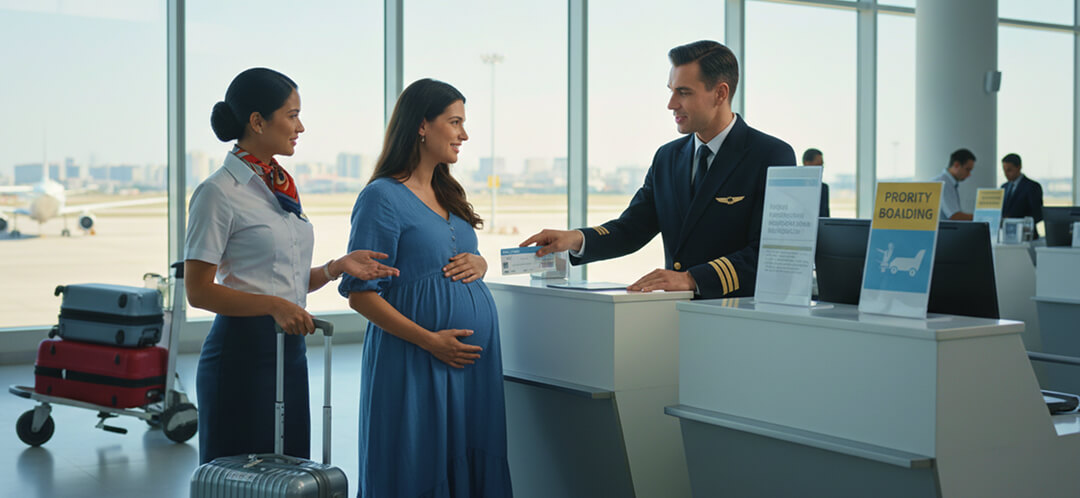
Some airlines like Air France, KLM Royal Dutch Airlines, and Delta Air Lines have more flexible policies. These airlines often do not require medical certificates for uncomplicated pregnancies, but they still recommend avoiding travel after 36 weeks. Airlines check pregnancy requirements at check-in or boarding, not when you book your ticket. You must meet all conditions on the day of travel.
The length of the route also affects how these rules apply. A domestic flight usually involves fewer checks than a long-haul flight.
Practical example: If you book a round trip from San Francisco to London at 30 weeks pregnant, the outbound flight may meet the rules, while the return flight could fall outside the airline’s limits. Flexible tickets make it easier to adjust your trip if your situation changes. If you are unsure about airline rules, Ovago’s support team can walk you through the details before you book, so you avoid issues at the airport.
Tips for flying while pregnant
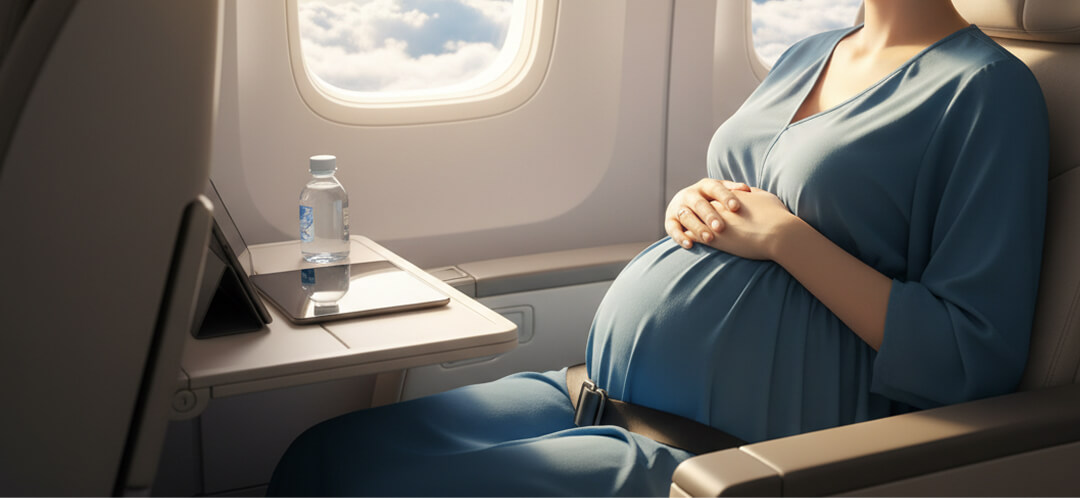
Flying while pregnant becomes easier when you manage a few key factors, especially comfort, movement, and hydration. These small choices shape how you feel during the flight.
- Choose the right seat
An aisle seat makes a real difference. You can stand, stretch, and walk without disturbing others. On flights longer than three hours, this becomes especially important.
Seats with extra legroom also help circulation. In economy seats, rows near exits or bulkheads give you more space to adjust your position.
- Support your body during the flight
Your posture changes during pregnancy, especially in your lower back. A small lumbar pillow placed behind your lower back helps reduce strain during longer flights.
You should also keep your seatbelt fastened low under your stomach, not across it. This keeps you secure without adding pressure.
- Move regularly
Do not sit for long stretches of time. Stand or walk every 1 to 2 hours. Moving around improves blood circulation and reduces the risk of blood clots.
- Stay hydrated
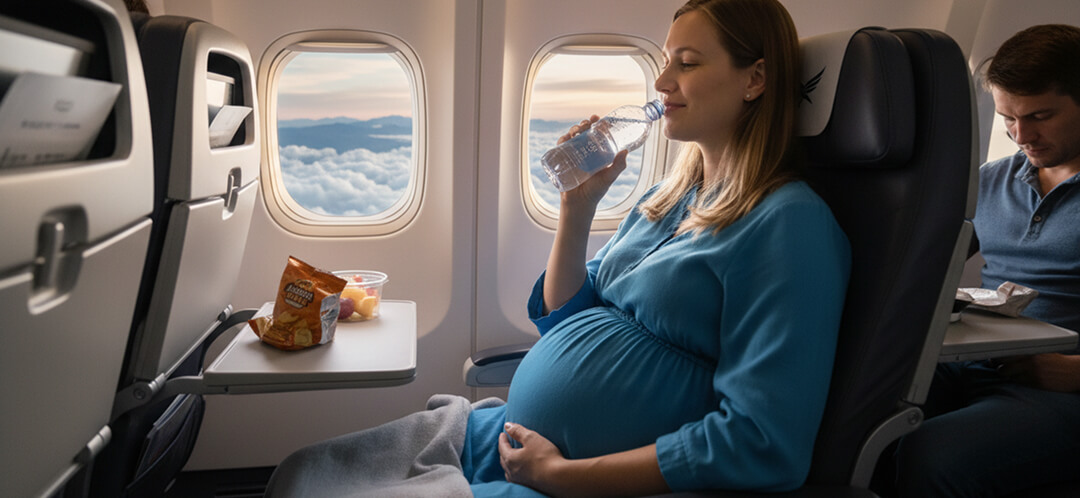
Airplane cabins have very low humidity at cruising altitude, which can leave you dehydrated more quickly than on the ground. Even mild dehydration can increase your fatigue and discomfort. Keep a bottle of water within reach and drink regularly during the flight.
- Wear compression socks
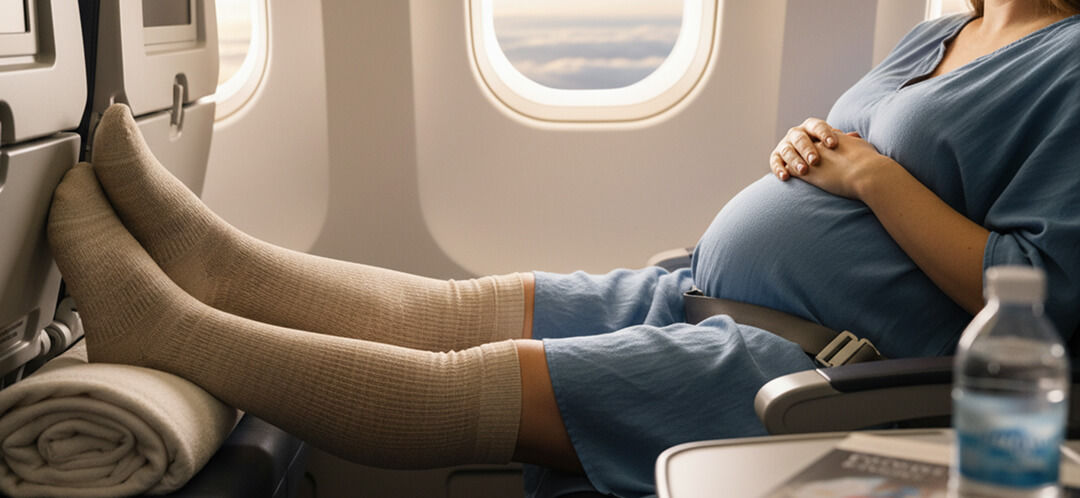
Compression socks help improve blood flow and reduce swelling in your legs and feet. This becomes especially important on flights over 4 hours.
Before you use them, check with your obstetrician. They can confirm whether compression socks are appropriate for you and recommend the right level of support based on your condition.
- Dress in layers
Body temperature can shift quickly during pregnancy. Wear light, layered clothing so you can adjust easily if the cabin feels too warm or too cold.
- Plan your departure carefully
Morning flights often feel easier. Delays happen less often, earlier in the day, and your energy levels tend to be higher.
- Pack essentials in your carry-on
Bring snacks, medical documents, prenatal vitamins, and any medications you need. Do not rely on airport shops, especially if you have a layover.
- Look at the full journey, not just the flight time
A short or moderate flight can still turn into a tiring travel day if the airport transfer is long. When you are pregnant, that added time in transit matters, especially after several hours on board. London Heathrow, for example, sits well outside central London, so the trip into the city can add another hour.
Tip: Book flights with shorter total travel time, even if the ticket costs slightly more. Saving two hours in transit reduces fatigue more than saving a small amount of money.
Read also: Flight Delay Compensation Eligibility
Long-haul flights during pregnancy
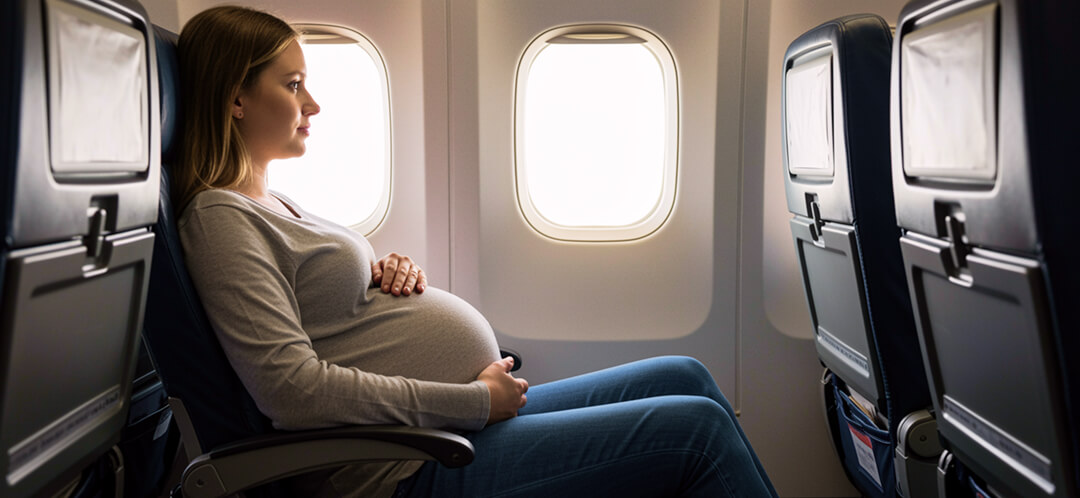
Longer flights require more planning because you remain seated for extended periods with limited chances to move. Sitting for too long slows blood flow and increases the risk of swelling and blood clots, which becomes more relevant during pregnancy.
Flights of about 8 to 10 hours already start to feel demanding, while anything beyond 10 to 12 hours requires more active management of movement, hydration, and seating.
Overnight flights can add another layer of strain. They can disrupt your sleep, especially if your seat restricts movement. A confined seat makes it harder to change position or get up regularly. Thus, on longer flights, cabin layout and seat configuration become especially important for comfort and movement.
Typical long-haul economy layouts:
- Boeing 777: often 3-3-3 or 3-4-3 seating (used by American Airlines, United Airlines, All Nippon Airways, KLM Royal Dutch Airlines, Austrian Airlines, Emirates)
- Airbus A350: usually 3-3-3 seating (operated by Lufthansa, Etihad Airways, Cathay Pacific, Virgin Atlantic, Delta Air Lines)
- Boeing 787 Dreamliner: typically 3-3-3 seating (featured by Air New Zealand, Qantas, Qatar Airways, LOT Polish Airlines)
In these configurations, a middle seat limits your ability to move, while an aisle seat lets you stand, stretch, and walk more easily during the flight.
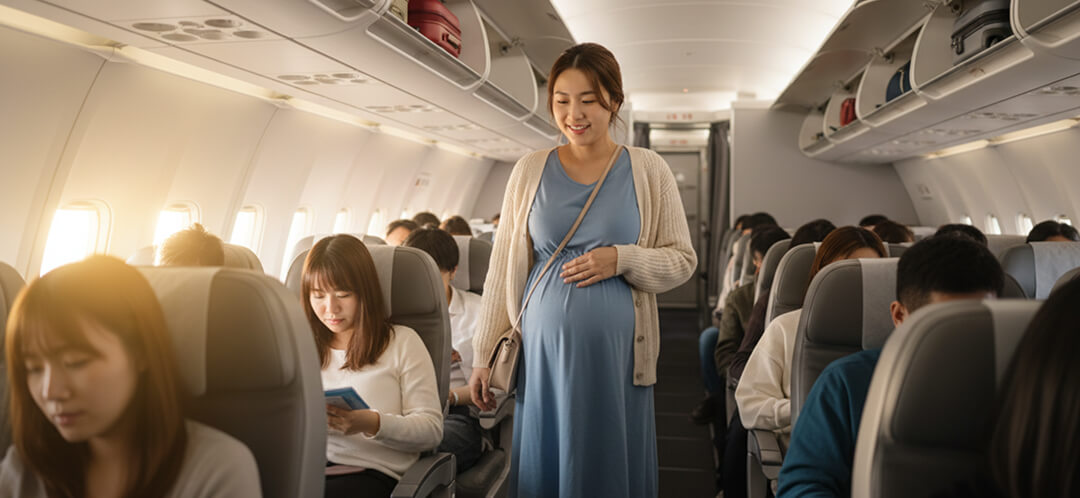
If you want more space during your flight, premium economy can make a noticeable difference. In standard economy, seat pitch usually ranges from 30 to 32 inches, which limits how much you can stretch your legs on longer flights. Premium economy seats often increase that space to around 37 to 40 inches, along with a wider seat and deeper recline. Many also include adjustable headrests and footrests, which help you stay comfortable over long periods.
Seats in the first row of each cabin section also give you extra space. There is no seat in front of you, so you can stretch your legs more easily. The exact legroom varies by aircraft, but it often feels closer to premium economy than standard economy. The downside is that these seats may have fixed armrests or tray tables stored in the armrest, which slightly reduces flexibility.
You can also consider choosing flights with layovers so you can rest between segments. For example, instead of a 13-hour nonstop flight from Chicago (ORD) to Dubai (DXB), you can choose one with Turkish Airlines that has a layover in Istanbul (IST). This way, you will split the journey into two shorter flights, which reduces continuous sitting time. It also gives you time to walk through the terminal, eat a proper meal, and rest before your next flight.
Medical access also becomes more important on long-haul trips. The farther you travel, the harder it becomes to handle unexpected medical situations. Cities like London or Tokyo offer easy access to major hospitals, while more remote destinations may require longer travel times to reach medical care.
See which economy seats offer more comfort.
A simple guide to seats with extra space on long flights.
What to avoid when flying pregnant
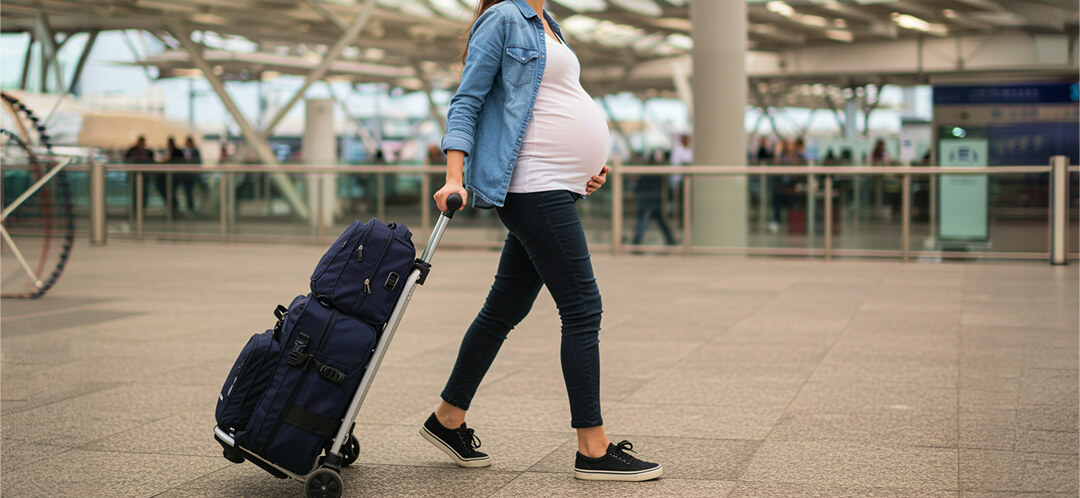
Some common choices can make the flight more difficult than it needs to be. Knowing what to avoid helps you stay more comfortable and manage the journey more easily.
- Do not choose a seat that limits your movement
A middle seat restricts your ability to stand, stretch, and walk during the flight. On longer routes, this makes it harder to manage circulation and adjust your position. An aisle seat gives you more flexibility to move when needed. - Do not remain seated for long periods without moving
Sitting for extended periods slows circulation and increases the risk of swelling. Make an effort to stand, stretch, or walk periodically, especially on flights longer than a few hours. - Limit drinks and foods that dehydrate you
Caffeinated drinks and salty snacks worsen dehydration. Along with dry cabin air, they increase fatigue and swelling. - Avoid tight or restrictive clothing
Clothing that puts pressure on your waist or legs can make swelling and discomfort worse during the flight. Choose loose, breathable layers that allow you to adjust as needed. - Do not assume airline rules are the same across carriers
Airline pregnancy policies vary more than most travelers expect. If you are close to a cutoff week, switching airlines or routes without checking can disrupt your plans. - Do not rely on airport assistance being automatic
Support services such as wheelchairs or priority boarding often need to be requested in advance. Without arranging them, you may face unnecessary walking and waiting. - Do not ignore travel insurance coverage
Not all travel insurance policies cover pregnancy-related issues, especially in later stages. This can affect access to care if something unexpected happens.